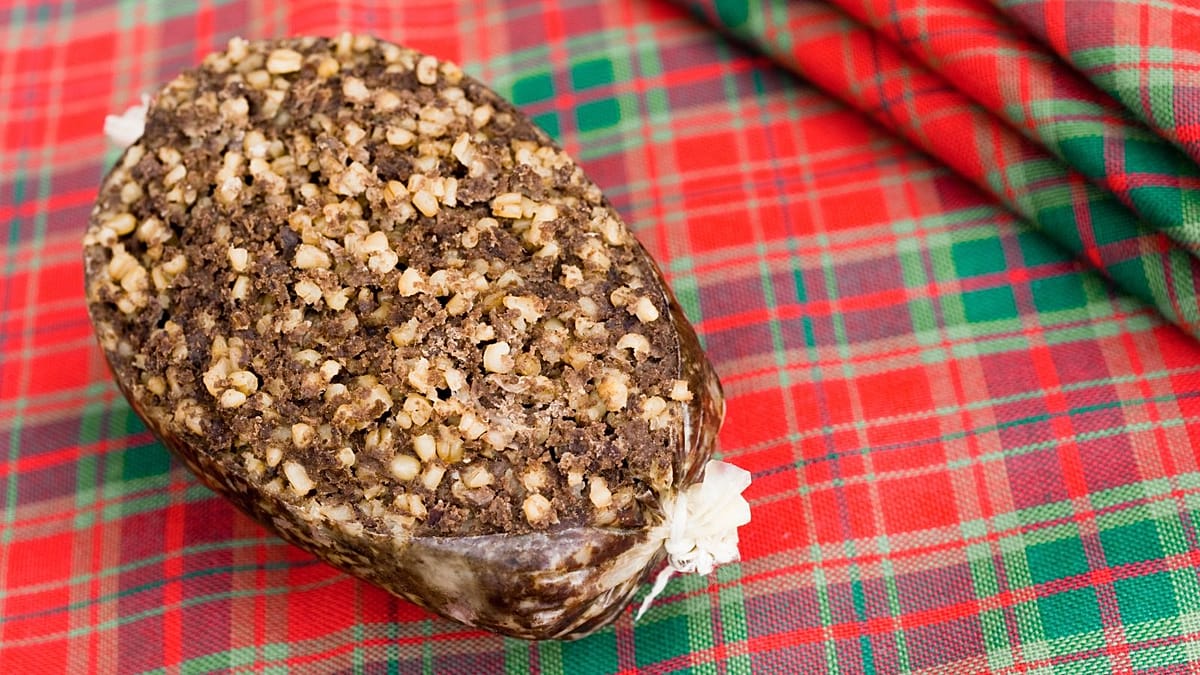
For decades, the United States has maintained a federal ban on haggis, the Scottish national dish, due to regulations on sheep lung. But after a concerted campaign by a prominent butcher and a Scottish podcaster, Massachusetts has become the first US state to legalise the delicacy — at least symbolically.
Simon Howie Butchers, one of Scotland's leading meat producers, launched a pre-World Cup push to overturn the ban. The effort gained traction when David McIntosh Jr, a Scottish podcaster and member of the Tartan Army, met with Massachusetts Governor Maura Healey. On Wednesday, Healey signed an executive order making haggis legal in the state.
In a video posted on social media from the State House in Boston, Healey is seen signing the document. The caption read: "We've made haggis legal in Massachusetts. [Un]official."
It is important to note that individual US states cannot override federal food safety and import standards. The ban on haggis, rooted in a 1970s prohibition on sheep lung, remains in place at the national level. Nonetheless, the Massachusetts order is a significant political gesture, reflecting the state's embrace of Scottish culture during the World Cup.
Governor Healey had previously welcomed the arrival of Scottish fans for the tournament. "The Tartan Army has brought the energy, joy, and enthusiasm to Massachusetts," she said. "This is truly what the World Cup is all about." She added: "Between the bagpipes, the kilts, and thousands of Scotland fans turning Boston into their home away from home, the Tartan Army has made quite an impression on Massachusetts."
More than 20,000 Scotland fans travelled to Massachusetts for Scotland's first match at Boston Stadium. Their presence has been felt beyond the football pitch. Bars across Boston have reported running low on beer since the Scots arrived, prompting the passage of the "Tartan Army Bill," which allows over 140 bars and restaurants to extend their opening hours.
The Tartan Army has also brought a beloved Glasgow tradition to Boston: placing orange traffic cones on statues. Fans have been adorning statues in the city with cones, mirroring the long-standing practice on the statue of the Duke of Wellington outside the Gallery of Modern Art in Glasgow, where a cone has been replaced whenever removed since the late 1980s.
While the legalisation of haggis in Massachusetts is largely symbolic, it underscores the cultural ties between Scotland and the United States. For Scottish expats and fans, it is a small victory in a long-running campaign to see their national dish recognised abroad. The move may also encourage other states to follow suit, though any change to federal law would require action from the US Congress.
For now, the Tartan Army can celebrate a win off the pitch as well as on it. As the World Cup continues, the Scottish fans have left an indelible mark on Massachusetts — one that includes haggis, traffic cones, and a lot of empty beer glasses.