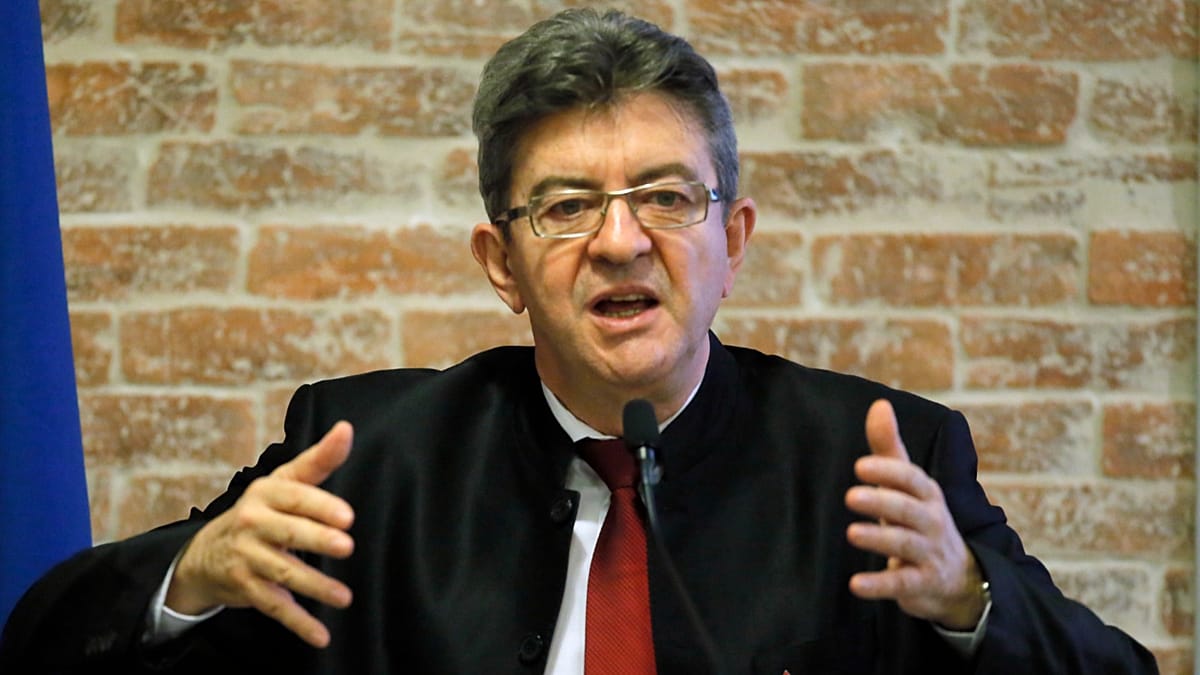
Jean-Luc Mélenchon, the leader of France Unbowed (LFI) and a front-runner for the 2027 presidential election, has reignited a controversial proposal to cancel a significant portion of France's public debt. Specifically, he wants to write off the roughly €600 billion—about 18% of the total—held by the Bank of France, arguing that this would free up funds for public investment.
Speaking at a campaign rally, Mélenchon said: "All we have to do is take the 18% held by the Bank of France and chuck it in the fire." The idea, first floated during the COVID-19 pandemic, has gained traction with prominent investment banker Matthieu Pigasse, who shared the stage with Mélenchon at a recent LFI event. Pigasse, known for advising Greece during its debt crisis and helping Venezuela restructure its debt, declared: "Public debt can be cancelled, as Jean-Luc said, without any economic or financial impact."
The proposal has, however, provoked sharp rebukes from across the political and economic spectrum. Thierry Breton, former EU Internal Market Commissioner, wrote in Les Echos that such a move would be legally impossible, as the Bank of France is part of the Eurosystem and cannot independently cancel government bonds. France's Economy Minister Roland Lescure dismissed the idea as "absolute nonsense," warning it would trigger another financial crisis. "Cancelling the debt amounts to saying we won't repay the people we owe money to... Behind the debt, there are savers, life insurance policies, and banks. If you say, 'we're cancelling it,' you destroy trust," he told BFM TV.
Olivier Blanchard, former chief economist at the International Monetary Fund, called the debate "idiotic," arguing that the net effect would be zero. If the central bank cancels the bonds it owns, the state saves on interest payments but loses the equivalent amount in profits that the central bank would otherwise transfer back to the government. Pigasse hit back, accusing Blanchard of mishandling the Greek crisis by pushing austerity rather than early debt restructuring.
Economic stakes in the 2027 race
The state of the French economy is set to dominate the presidential campaign. With public debt exceeding 116% of GDP, the next president will inherit almost no fiscal room to manoeuvre. This restricts public spending and forces candidates to confront how—or whether—the state can finance investments in strategic sectors like artificial intelligence and defence.
The political backdrop is deeply fractured. A hung National Assembly with no stable majority has left the government structurally paralysed, turning routine legislation into constant battles. This instability is likely to weigh heavily on voters' minds as they consider the candidates' economic programmes.
European Central Bank President Christine Lagarde has ruled out a presidential bid, though she has indicated she may step down to offer economic guidance to the candidates. The race formally kicks off on Thursday with a major economic debate hosted by the business lobby Medef, featuring seven hopefuls, including Mélenchon and Marine Le Pen of the National Rally. Ahead of the debate, Le Pen's right-hand man Jordan Bardella called Mélenchon's plan "nonsense."
The National Rally has itself faced criticism over the credibility of its economic policies. Once openly advocating for France to leave the EU, the party has since abandoned its "Frexit" stance, mirroring a shift seen in Italy. For investors, a second-round contest between Le Pen and Mélenchon would be a high-risk scenario, as neither has a track record of managing a large national budget or pursuing conventional economic policies.
Mélenchon's surge in the polls has already been noted, with some analysts seeing him as a potential run-off contender. The debate over debt cancellation is likely to intensify as the campaign progresses, with the French public weighing the promise of fiscal relief against the risks of financial turmoil.