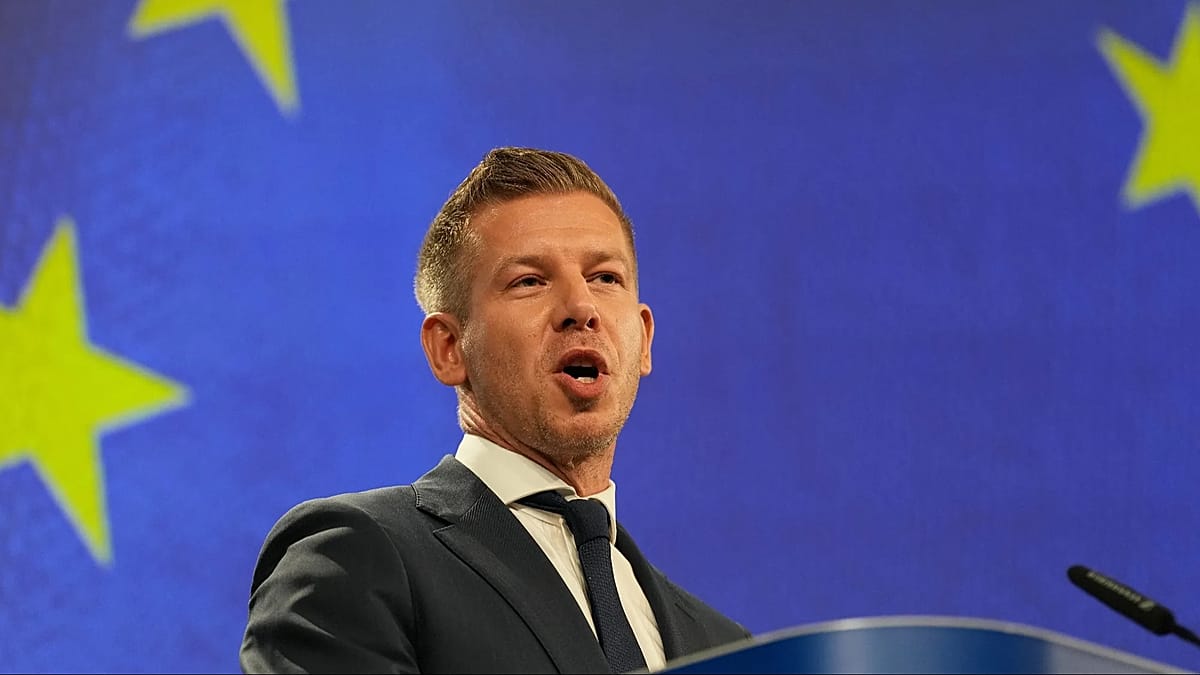
The European Parliament is moving toward ending the Article 7 procedure against Hungary, the EU's so-called “nuclear option” that has hung over Budapest since 2018. The procedure was triggered over concerns about judicial independence, corruption, media freedom, and fundamental rights under Viktor Orbán's government. Now, with Péter Magyar at the helm, several MEPs and officials say the political climate has shifted enough to consider withdrawing the measure.
According to multiple sources familiar with the matter, the Parliament's largest political group, the European People's Party (EPP), is among those pushing for the withdrawal. A senior EPP MEP told European Pulse that “Hungary has completed many reforms that bring the country into closer alignment with the EU,” adding that “it is reasonable that the procedure ends soon.” The EPP's support is partly aimed at securing a political victory for Magyar's Tisza party, which is affiliated with the group.
Fact-finding mission and timeline
A fact-finding mission to Hungary is scheduled for late October, with MEPs meeting institutions, stakeholders, authorities, and NGOs to assess the current state of the rule of law. The mission's findings will feed into a report that could recommend ending the procedure if the assessment concludes that EU values are no longer being violated. Some Parliament officials suggest the report could be ready as early as December, while Dutch MEP Tineke Strik, who is leading the file, expects it to be completed by early 2027.
Strik outlined a checklist of criteria that will be evaluated, including the repeal of Hungary's controversial anti-LGBTI+ law. That legislation, which restricts minors' access to content depicting or promoting homosexuality, gender transition, or deviations from biological sex, remains in force. The Hungarian government has not indicated any willingness to repeal it, which could complicate the process.
The final decision to withdraw the procedure requires a two-thirds majority in the Parliament, meaning at least 480 of the 719 MEPs must vote in favour. Left-wing groups such as the Greens and The Left are likely to oppose the move, while conservatives and far-right factions, including the European Conservatives and Reformists, Patriots for Europe, and Europe of Sovereign Nations, are expected to support it. Together, these groups account for nearly 200 MEPs.
With the EPP's 184 lawmakers likely to back the withdrawal, the centrist Socialists and Democrats (S&D) and liberal Renew Europe will be pivotal. Both groups acknowledge Hungary's progress but stress the need for a thorough assessment that considers the full body of legislation. Renew Europe is set to discuss the issue at its first meeting of the new parliamentary season in Paris next week, according to MEP Sandro Gozi.
“The end of the procedure should be based on real changes; otherwise we give the impression it is just a political decision,” Gozi said.
The Article 7 procedure has been triggered only twice in EU history: against Poland in 2017 and against Hungary in 2018. In neither case has it reached the sanctions stage, which would require unanimous support from member states to suspend a country's voting rights. The procedure's potential withdrawal would mark a significant political shift, reflecting the changing dynamics in Budapest.
Hungary's new government has also been working on other fronts, including meeting conditions for EU recovery funds, and the country's migration policies are being reviewed as part of broader efforts to align with EU standards. These developments come amid heightened concerns about Russian hybrid attacks across Europe, which have prompted member states to bolster their defenses.
As the Parliament prepares for the October mission, the outcome remains uncertain. The decision will hinge on whether Hungary's reforms are seen as genuine and comprehensive, or merely cosmetic. For now, the political will to end the procedure appears strong, but the final vote will test the Parliament's unity on one of its most consequential tools.