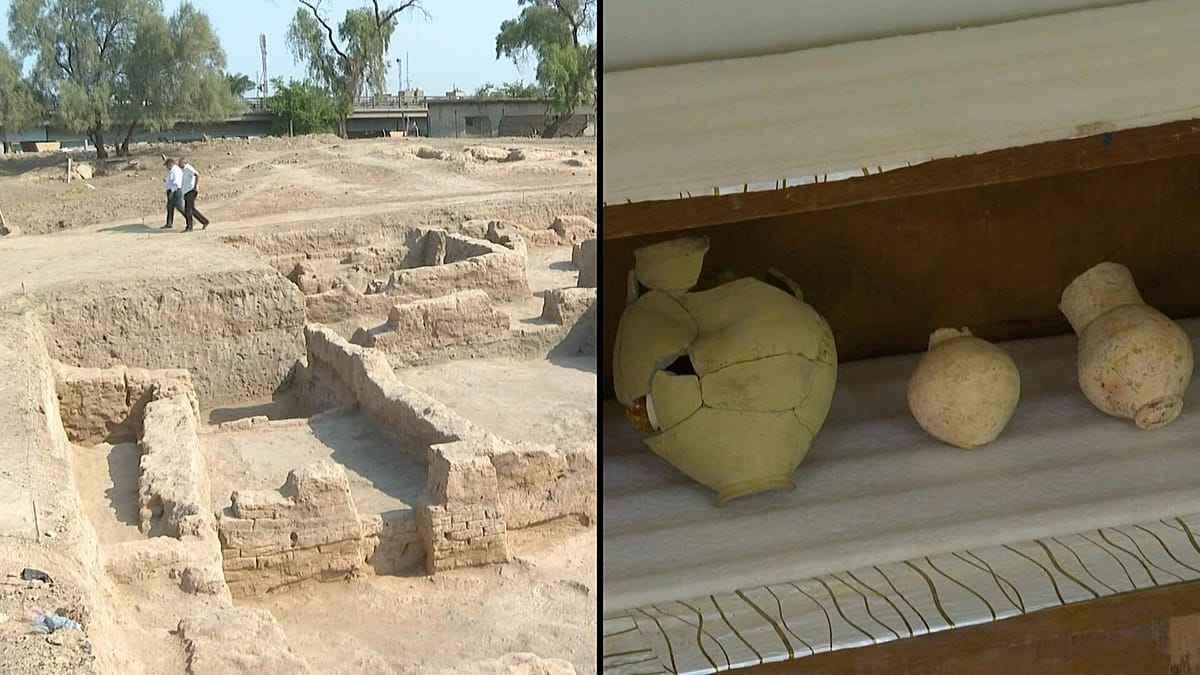
Archaeologists working at Tell Muhammad, a historic mound in the heart of Baghdad, have uncovered striking evidence of everyday life in Mesopotamia some 4,000 years ago. The site, which flourished during the reign of the Babylonian king Hammurabi (circa 2000–1600 BC), has yielded fortifications, two gates, and what appears to be a production area for bread and possibly beer.
The discoveries come from an excavation campaign that began in 2022 and has now opened a new archaeological park for visitors. The team, led by Italian and Iraqi researchers, is piecing together how ordinary Babylonians lived, worked, and ate in one of the ancient world's great urban centres.
Bread, beer, and a cuneiform clue
Among the most intriguing finds is a cuneiform tablet that appears to record a transaction involving barley and the production of a specific type of beer known as kurun. Nicola Aneri, an archaeology professor at the University of Catania who is involved in the project, described the discovery as "incredible."
"We discovered an area for production of bread and probably beer, because one tablet was found at the site related to a person receiving barley and making beer, the kurun beer, that is a very important Mesopotamian beer," Aneri said. "We are still in the process of translating this tablet."
The tablet, once fully deciphered, could offer rare insights into the economics of brewing and the social role of beer in Babylonian society. Beer was a staple beverage in ancient Mesopotamia, consumed by adults and children alike, and was often used as a form of payment for labour.
The presence of bread ovens and brewing installations suggests that Tell Muhammad was not merely a political or military outpost but a thriving community with its own food production. The fortifications and gates, meanwhile, indicate that the settlement was strategically important, possibly guarding the approaches to Babylon itself.
Preserving Baghdad's heritage
The excavation is part of a broader effort to protect and promote Iraq's archaeological heritage, which has suffered from decades of conflict and neglect. The new archaeological park at Tell Muhammad is designed to make the site accessible to both locals and international tourists, offering a tangible connection to the deep history of the region.
Local and international partners are collaborating on conservation and tourism initiatives, hoping to turn sites like Tell Muhammad into symbols of cultural resilience. The project also reflects a growing interest in the daily lives of ancient peoples, moving beyond kings and battles to the routines of bakers, brewers, and their families.
For European archaeologists and historians, the finds resonate with broader questions about the spread of agricultural and culinary practices across the ancient world. The techniques used for bread and beer production in Mesopotamia likely influenced later civilisations in the eastern Mediterranean and beyond, including the Greeks and Romans.
As the tablet is translated and further excavations continue, researchers expect more details to emerge about the social and economic fabric of Tell Muhammad. The site offers a rare window into a period when Babylon was a dominant power, and its daily rhythms are now coming back into focus.
For those interested in how ancient technologies shaped modern life, the discoveries at Tell Muhammad are a reminder that some of our most basic foods and drinks have deep roots. And as Europe debates its own agricultural and culinary heritage, the Mesopotamian legacy remains a touchstone.
The work at Tell Muhammad is a collaborative effort, with the University of Catania and Iraqi authorities leading the research. The team hopes that the new park will not only preserve the site but also inspire a new generation of archaeologists and visitors to explore the rich history of Iraq.