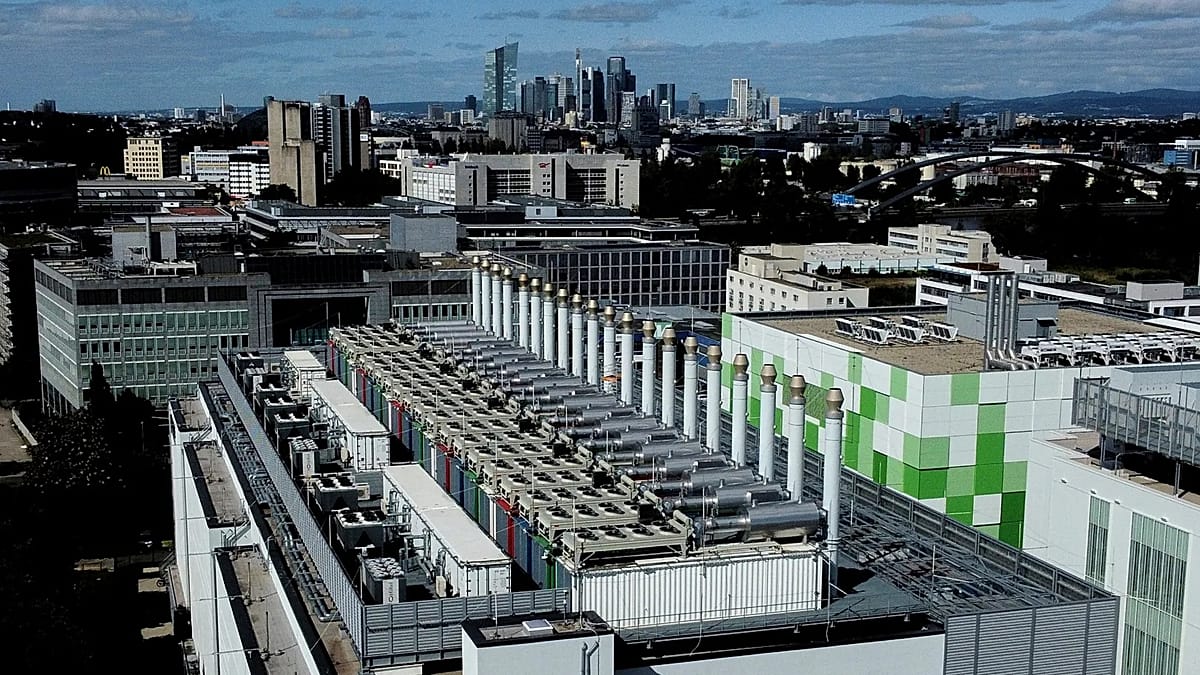
Meta, the parent company of Facebook and Instagram, has announced plans to invest more than $9.1 billion (€8.4bn) in a new artificial intelligence data centre in Sturgeon County, Alberta, Canada. The facility will be the company's largest outside the United States and marks its first such investment in Canada.
The data centre will be powered by a dedicated natural gas-fired plant, the Greenlight Electricity Centre, being developed by a consortium that includes Calgary-based Pembina Pipeline Ltd., Morgan Stanley Infrastructure Partners, and Kineticor Asset Management. The 932-megawatt plant is expected to begin operations in the second half of 2030.
Alberta's Regulatory Push for AI Infrastructure
Alberta's Technology and Innovation Minister Nate Glubish described the project as "a big deal for Alberta," noting that the province has created a regulatory framework specifically designed to attract hyperscale data centre investments. Alberta has been actively courting such projects as global demand for AI infrastructure surges, but the province's electricity grid cannot support multiple large AI data centres without dedicated power generation.
To address this, Alberta is prioritising projects that build or secure their own power supply, as Meta plans to do. The company also intends to invest $42 million (€37m) in local infrastructure, including roads and water systems.
The rapid growth of AI has raised concerns about the vast amounts of electricity and water such facilities consume, as well as their strain on power grids and nearby communities. Meta says its data centre will use a closed-loop cooling system that will not draw water from surrounding sources, a design choice intended to mitigate environmental impact.
This investment comes as European nations also grapple with the energy demands of AI. For context, similar debates are unfolding across the continent, where data centre energy consumption is expected to rise sharply. The project in Alberta highlights a broader trend: tech giants are increasingly seeking locations with favourable regulatory environments and access to dedicated energy sources, often natural gas or renewables, to power their AI ambitions.
While the data centre is located in Canada, the implications for Europe are clear. European policymakers and energy regulators are watching closely as they develop their own strategies for attracting AI infrastructure while balancing climate goals. The Alberta model—requiring developers to secure their own power generation—could serve as a reference point for EU member states facing similar grid constraints.
Meta's commitment to a dedicated gas plant also underscores the tension between AI's energy needs and the push for decarbonisation. In Europe, where the Green Deal aims for net-zero emissions by 2050, such trade-offs are particularly acute. The company's closed-loop cooling system, however, addresses water scarcity concerns that are also relevant in southern European regions prone to drought.