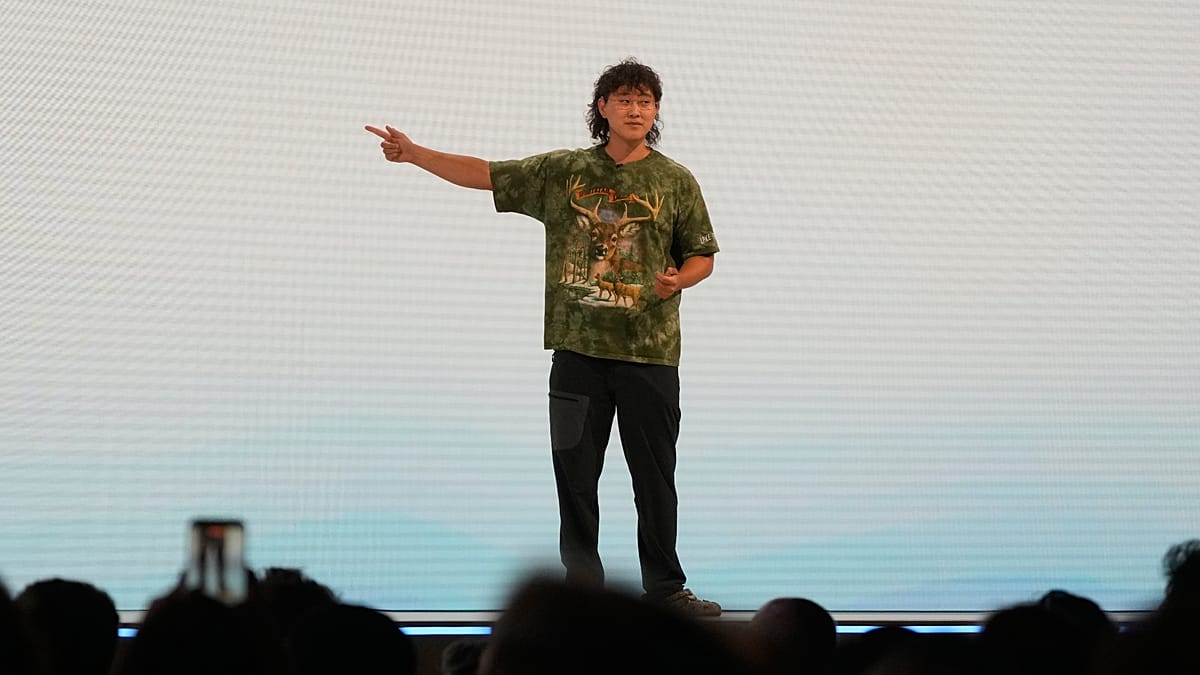
As artificial intelligence races toward what many call the era of superintelligence, Meta's chief AI officer has issued a stark warning: humanity must not simply hand over society to machines. Alexandr Wang, who leads Meta's AI efforts, took to X on Sunday to argue that the industry's current trajectory is dangerously complacent.
His comments came in response to Anthropic's announcement on Friday that one of its mathematicians had used the Claude AI model to solve the famous Riemann Hypothesis—a problem that has puzzled mathematicians for over 160 years. The hypothesis concerns the distribution of prime numbers, which appear random but may follow a hidden pattern. Proving it could have profound real-world implications, from faster computer systems to more efficient encryption.
Wang called the achievement "marking the beginning of a significant change," adding that "nothing humanity has ever accomplished compares to proving the Riemann Hypothesis in terms of sheer intellectual might and strength." But he quickly pivoted to the darker implications: if AI can solve such problems, what happens when it surpasses human intelligence across every domain?
A call for human control
Wang warned that "it is hard to imagine a world where humanity can maintain control over fully unconstrained recursive self-improvement"—a scenario where AI models improve themselves without human oversight. He also questioned whether control would be possible with "superintelligence that is 1,000-times smarter and more capable than humans in every field."
He criticized what he called "lazy thinking within the AI industry" that advanced AI surpassing human intelligence is inevitable and unstoppable. "We should not be okay with a 'handover' of society to AI," Wang wrote. "We should endeavour ourselves to build a technology which delivers a positive future for humanity, where all humans have greater agency and empowerment."
Wang acknowledged that achieving this is possible, but only if "the whole industry taking meaningfully different actions from the 'default path' in front of us."
Growing chorus of concern
Wang is not alone. On Friday, researchers at Google DeepMind, including Tim Genewein, warned that artificial general superintelligence could soon be within reach, opening the door to recursive self-improving AI. On Sunday, OpenAI publicly urged rival labs to agree on shared safety limits until better monitoring and control tools exist.
In September, Anthropic CEO Dario Amodei called for "pacing the frontier"—slowing down the development of advanced AI models to allow time for safety guardrails. His call was welcomed by European Commission President Ursula von der Leyen, who reiterated the need for global rules. However, US President Donald Trump has taken a different approach, convening a summit with America's biggest AI firms and agreeing that companies can police themselves.
The debate comes amid broader public anxiety over AI's impact on jobs, security, and human rights. Protests in 20 countries on Friday highlighted concerns about the cost of living, but also about the lack of AI regulation and fears over autonomous weapons.
For Europe, the stakes are particularly high. The continent is home to some of the world's most advanced AI research and a strong regulatory framework, with the EU's AI Act setting global standards. Yet, as the European Central Bank has warned, the AI boom may echo the dotcom bubble, with tech debt soaring. Meanwhile, data centre power use could double by 2030, straining Europe's grids. And vintage infrastructure and AI are Europe's real cyber threat, according to Cisco.
Wang's warning is a reminder that the choices made now will shape the future. Whether Europe can lead the way in ensuring AI serves humanity—rather than the other way around—remains to be seen.