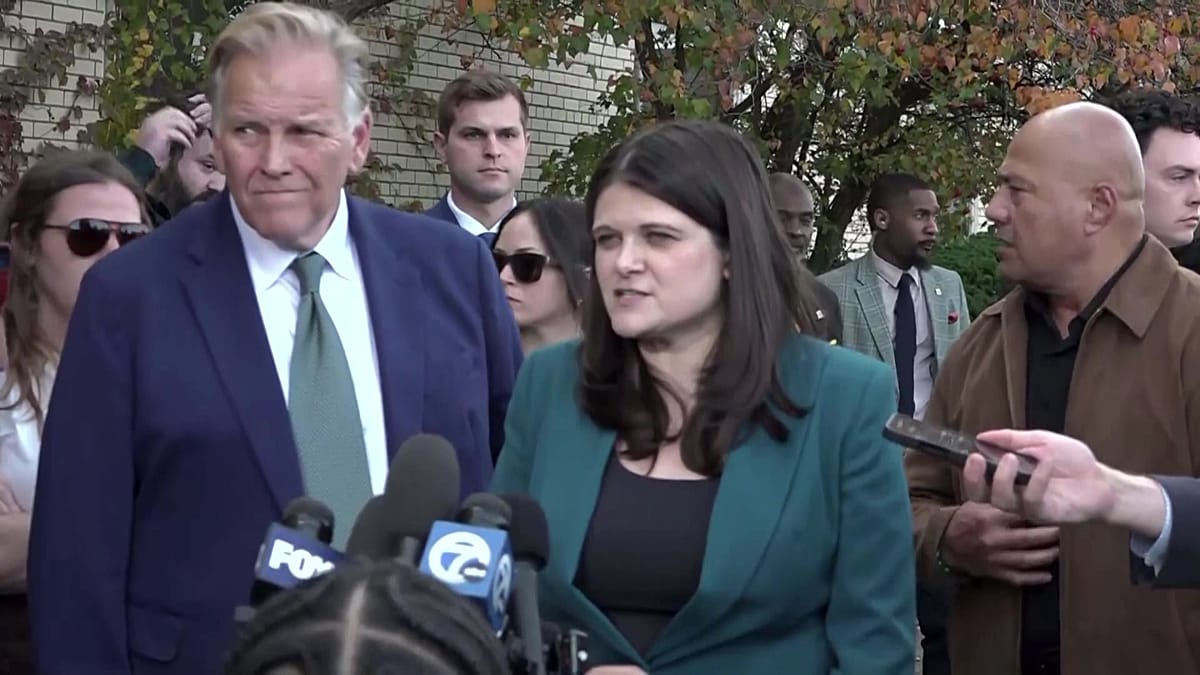
In a striking cross-party move, Democratic Representative Haley Stevens has thrown her support behind Republican Mike Rogers in Michigan's closely watched Senate race. The endorsement, announced on Sunday, comes just weeks before the US midterm elections and underscores the fractures within the Democratic Party in a state that could decide control of the Senate.
Stevens, who lost the Democratic primary in August to Abdul El-Sayed, made the announcement at a church service in Detroit, appearing alongside Rogers. Her decision follows a bitter public dispute with El-Sayed, the party's nominee, over issues ranging from Israel to campaign advertising.
A feud over Israel and campaign ads
The rift between Stevens and El-Sayed intensified after an outside group ran an advertisement linking US support for Israel to rising living costs. Stevens condemned the ad as antisemitic and demanded that El-Sayed disavow it. El-Sayed, a physician and former public health official, said the ad was not produced by his campaign and rejected its message.
The tension escalated when El-Sayed's campaign made clear that Stevens was not welcome at a joint campaign appearance in Detroit. Instead, she chose to appear with Rogers, a former FBI agent and congressman, at the church service where she made her endorsement public.
“I'm a proud Democrat, and I am endorsing Mike Rogers for the United States Senate,” Stevens said, a statement that drew immediate criticism from senior Democrats.
Rogers welcomed the endorsement, framing it as a statement about unity against hate and a commitment to Michigan's future. “This is about standing together against hate and about the future of Michigan and the United States,” he said.
The Michigan Senate race is one of a handful of contests that could determine which party controls the Senate for the next two years. The state's large and diverse electorate, including significant Arab American and Jewish communities, has made the campaign particularly sensitive to foreign policy issues, especially the conflict in the Middle East.
Stevens's endorsement is a significant boost for Rogers, who is running as a moderate Republican in a state that has trended Democratic in recent cycles. It also highlights the challenges facing El-Sayed, who must now contend with a prominent Democrat actively campaigning for his opponent.
The move has reverberated beyond Michigan, with national Democrats expressing dismay. Some see it as a betrayal of party unity, while others view it as a reflection of the deep ideological divisions within the party over Israel and other issues.
For European observers, the Michigan race offers a glimpse into the dynamics of US politics that often ripple across the Atlantic. The outcome could affect US foreign policy, including support for Ukraine and NATO, as allies worry about delays in military aid if Republicans gain ground. The midterms are also being watched closely in Brussels, where EU institutions are navigating their own political standoffs.
As the campaign enters its final stretch, the Stevens endorsement adds a new layer of unpredictability to a race that could have far-reaching consequences. Whether it will sway undecided voters or further energize the bases of both parties remains to be seen.