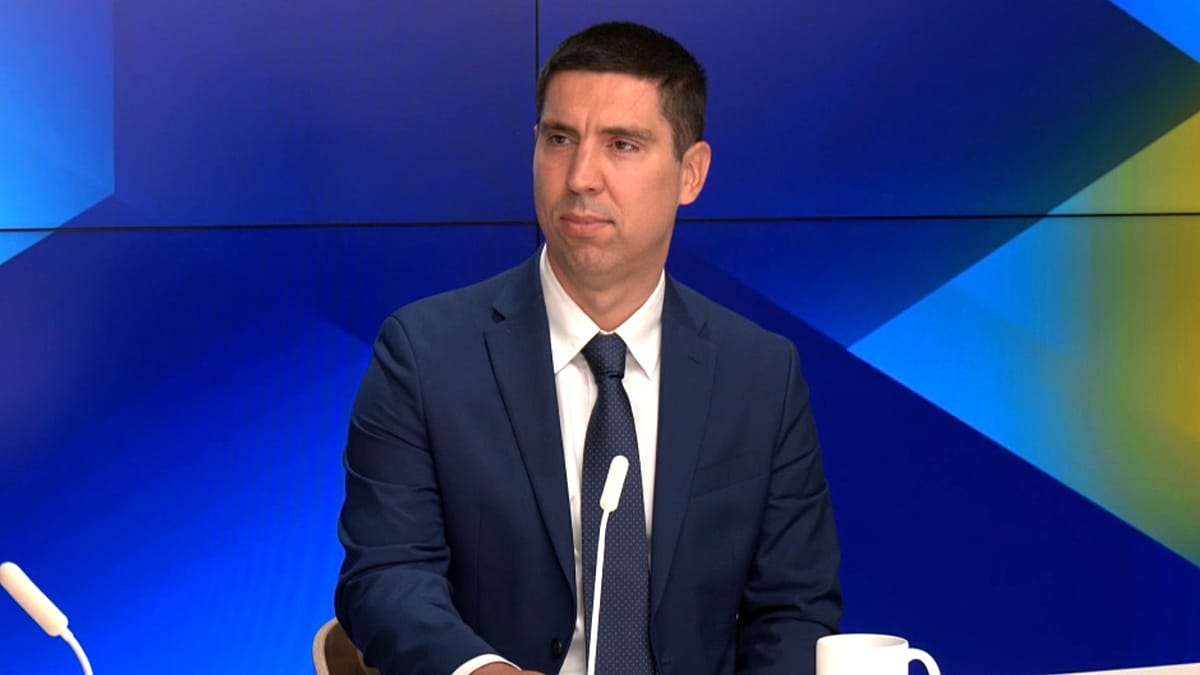
Moldovan Foreign Minister Mihai Popșoi has clarified that his country's European Union accession negotiations and the settlement of the Transnistria conflict are being pursued as separate but parallel tracks. Speaking to reporters in Chișinău, Popșoi argued that linking the two issues would hand Moscow a strategic advantage.
“We are treating these as parallel processes precisely to prevent Vladimir Putin from gaining any leverage over our European future,” Popșoi said. “If we tied them together, Russia could block our EU path indefinitely by keeping the Transnistria issue unresolved.”
The minister’s remarks come as Moldova accelerates its EU integration efforts following the European Council’s decision in December 2023 to open accession negotiations. The country submitted its membership application in March 2022, shortly after Russia’s full-scale invasion of Ukraine, and was granted candidate status that June.
Transnistria: A Frozen Conflict with Russian Troops
Transnistria, a narrow strip of land along the Dniester River bordering Ukraine, broke away from Moldova in a brief war in 1992. It is not recognized by any United Nations member state, but hosts around 1,500 Russian troops, ostensibly as peacekeepers. The region has its own currency, government, and military, and relies heavily on Russian energy subsidies.
Popșoi stressed that Moldova is working “tirelessly” to ensure all Moldovans, including those in Transnistria, benefit from EU accession. “Our goal is to make EU membership attractive for everyone on both banks of the Dniester,” he said. “That means economic development, rule of law, and better living standards.”
The minister’s comments align with broader EU signals that Moldova’s path may diverge from Ukraine’s, as noted in recent analyses. While both countries are on parallel tracks, Brussels has indicated that progress depends on each nation’s reforms, not on the resolution of frozen conflicts.
Cyprus has also vowed to push EU accession talks for both Ukraine and Moldova forward, reflecting a growing consensus among member states that enlargement should proceed despite unresolved territorial disputes. The Cypriot government, itself dealing with a divided island since 1974, has been a vocal advocate for keeping accession processes separate from conflict settlements.
EU Reforms and Russian Interference
Moldova has implemented a series of judicial and anti-corruption reforms demanded by Brussels, including vetting of judges and prosecutors. The government of President Maia Sandu has also cracked down on oligarchic networks and media outlets linked to Russian interests.
Popșoi acknowledged that Russian interference remains a significant challenge. “We see disinformation campaigns, cyberattacks, and attempts to destabilize our society,” he said. “But we are building resilience. Our EU integration is the best guarantee of our sovereignty and security.”
The Transnistria issue has gained renewed attention since Russia’s war in Ukraine, as the region’s energy dependence on Moscow has become more precarious. In early 2024, Transnistrian authorities faced an energy crisis after Ukraine blocked Russian gas transit, forcing the region to rely on emergency supplies from Moldova and the EU.
Popșoi said that the EU has already begun supporting confidence-building measures across the Dniester, including infrastructure projects and people-to-people contacts. “We want to show Transnistrians that their future is with Europe, not with a declining imperial power,” he added.
The minister’s remarks underscore a broader European strategy to decouple enlargement from frozen conflicts, a shift that could accelerate accession for several Western Balkan countries as well. For Moldova, the parallel-track approach offers a pragmatic path forward, even as Russian drones strike civilian ships in the Black Sea and Moscow continues to test European resolve.