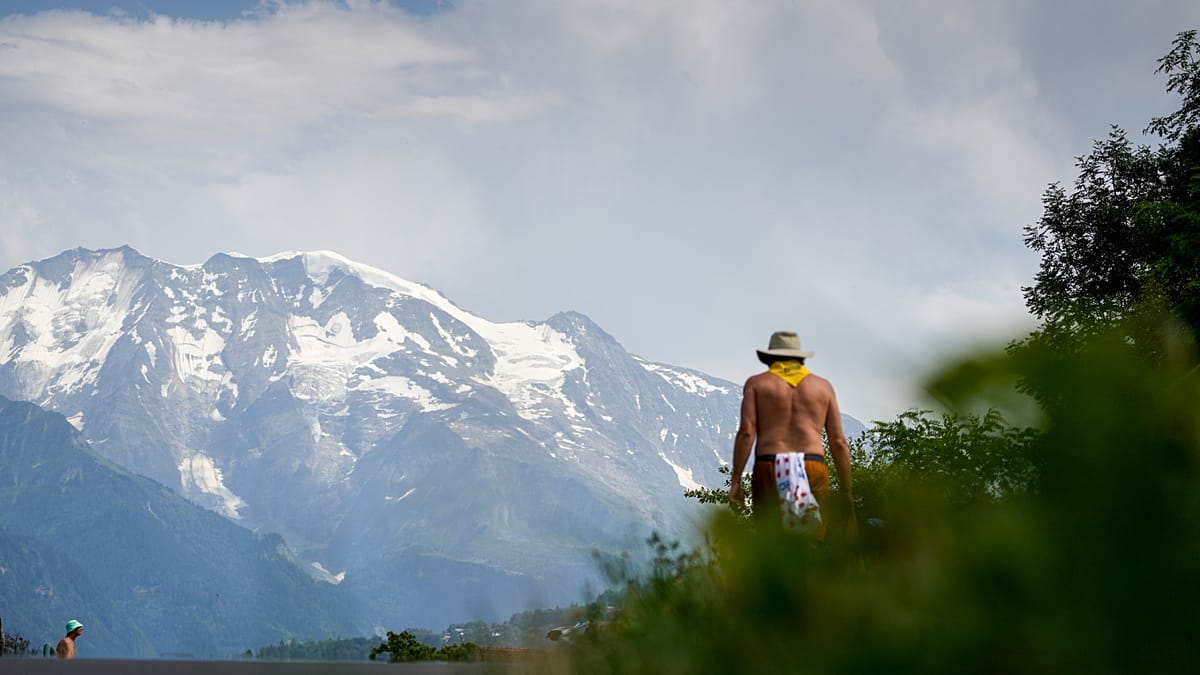
The Tour du Mont Blanc, a 170-kilometre circuit through France, Italy and Switzerland, has become a victim of its own popularity. Around 80,000 people tackle the route each year, and on the busiest stretches, hikers now move in such tight single file that there is barely a gap between groups. Local residents say the situation is no longer sustainable, and officials are preparing to introduce a reservation system.
Jean-Marc Peillex, the mayor of Saint-Gervais-les-Bains, a key starting point on the French side of the massif, told Swiss broadcaster SRF: “Today we’re moving along in single file. People can only see the backsides of those in front of them. That’s hardly ideal.” He is calling for access to be restricted from next spring, with checks and sanctions to enforce the rules.
The proposed system would require anyone walking the Tour du Mont Blanc to reserve a place in a mountain hut or an authorised bivouac zone—designated areas where overnight camping is permitted, usually with minimal or no facilities. If no space is available, hikers would have to postpone their trip until the following year, Peillex suggested.
Saint-Gervais-les-Bains lies in the Haute-Savoie department of the French Alps, and although only a small portion of the trail runs through its territory, the municipality is coordinating with other French communes along the route. They aim to have the new rules in force by spring 2026.
Switzerland seeks a coordinated approach
Across the border, Swiss authorities are watching the developments with interest but are not planning unilateral restrictions. Joachim Rausis, mayor of Orsières in the canton of Valais, acknowledged the pressure: “There are warning signs, and we need to regulate things. But above all we need coordination between Switzerland, Italy and France.” He stopped short of calling it overtourism, but stressed the need for joint management.
The influx is also squeezing mountain guides, who rely on flexible bookings. “You have to reserve hotels and huts a year in advance. For someone self-employed, that is almost impossible,” one guide said, noting that clients rarely book that far ahead.
The debate touches on a fundamental tension in Alpine tourism: how to balance the region’s international appeal with nature protection and the interests of local communities. A reservation requirement could ease the flow of visitors, but it would also challenge the long-held principle that the mountains are open to all.
Mandatory booking is not new to Mont Blanc. On the French normal route to the summit, overnight stays in the Nid d’Aigle, Tête Rousse and Goûter huts already require reservations through a dedicated system, with hikers’ names registered and booking confirmations checked. The Goûter and Tête Rousse huts, which had opened for the 2026 season, were temporarily closed on 11 August 2026 due to rockfall risk.
For those seeking alternatives, autumn hiking in Europe offers quieter trails before winter sets in. And for travellers looking to avoid crowds altogether, Europe’s second cities provide a less congested experience.
The proposed reservation system is still being refined, but its advocates argue it is a necessary step to preserve both the environment and the quality of the hiking experience. Critics, however, worry that it could make the mountains less accessible to those who cannot plan months in advance.
As the Alps face growing pressure from tourism, the Mont Blanc experiment may become a model—or a warning—for other popular routes across the continent.