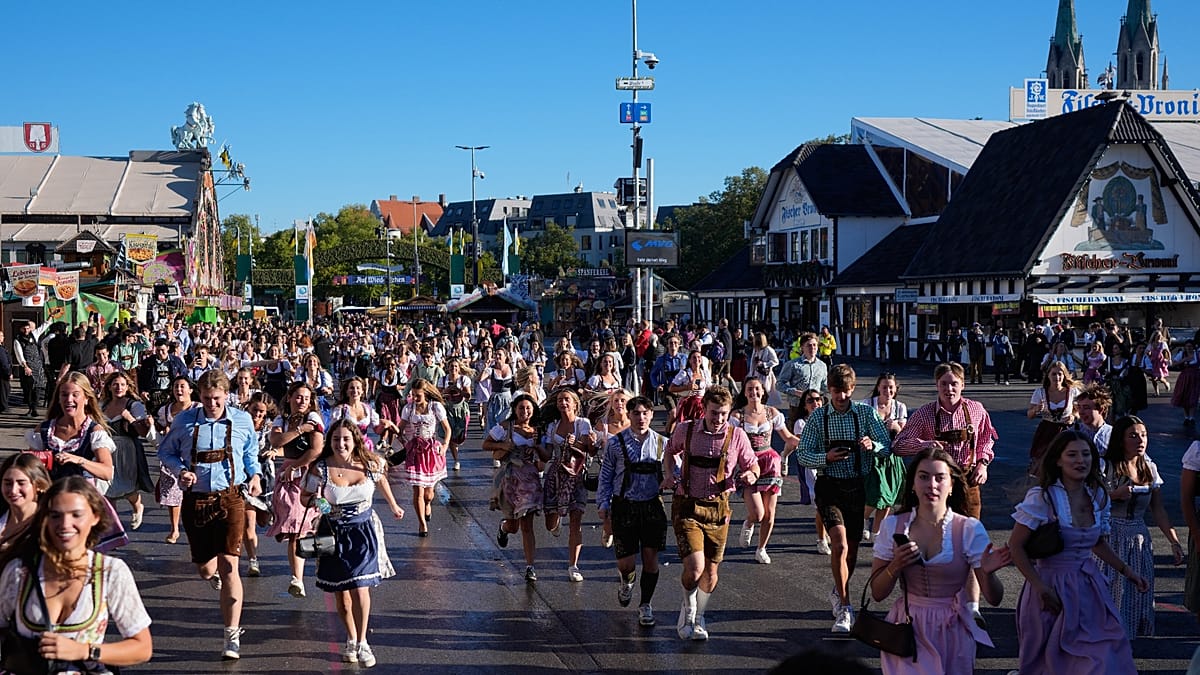
Munich's Oktoberfest passes its midpoint this weekend, with the festival's traditionally busiest stretch — the so-called Italian weekend — falling on 26 and 27 September. Organisers are watching visitor flows with unusual care after the Theresienwiese reached its capacity limits on the corresponding Saturday last year and access had to be shut off temporarily.
The scenes in 2025 were uncomfortable enough to linger in the memory. On parts of Wirtsbudenstraße the crush became so dense that movement in either direction was impossible, and videos posted by visitors described conditions bordering on a mass panic. The city is determined not to repeat that experience.
Why the Italians come — and why Munich notices
The label "Italian weekend" is not tied to any single historical event or founding year; according to the Oktoberfest press office, it emerged gradually over decades as a fixture of the calendar. What drives it is geography. Northern Italy lies a short drive over the Brenner Pass from Bavaria, and coaches, cars and motorhomes make the trip in numbers. Regional public holidays and long weekends in the Italian September calendar give families and groups the perfect excuse for a short break.
The Italian presence on the festival grounds is hard to miss. Munich's daily newspapers often print their front pages in two languages across these days, and Italian Carabinieri patrol alongside fire crews from Bolzano, working directly with Munich police on communication and crowd management.
Cameras, algorithms and a longer stay
To head off dangerous congestion before it develops, the city has expanded its use of surveillance cameras paired with AI-based crowd-tracking software. The aim is early warning: identifying bottlenecks on the Wiesn in real time rather than reacting once a situation has already become critical.
There is also a behavioural shift worth noting. An analysis of mobile phone data found that visitors who made it onto the grounds stayed roughly 15 minutes longer on average than in 2025. The busiest window during the first week fell consistently between 17:00 and 18:00 each day — a predictable spike that planners can now factor into their models.
The festival opened this year with the customary tapping of the first keg, a ritual that drew attention well beyond Bavaria. For those following the season from outside Germany, the Wiesn remains one of the continent's most visible cultural exports, and its management challenges — crowd safety, transport, alcohol policy — are increasingly studied by other European cities running large-scale public events.
Whether the Theresienwiese will need to close again this weekend is, for now, an open question. What is clear is that Munich has moved from a reactive posture to a predictive one, betting that data and cameras can do what barriers and stewards alone could not last September.