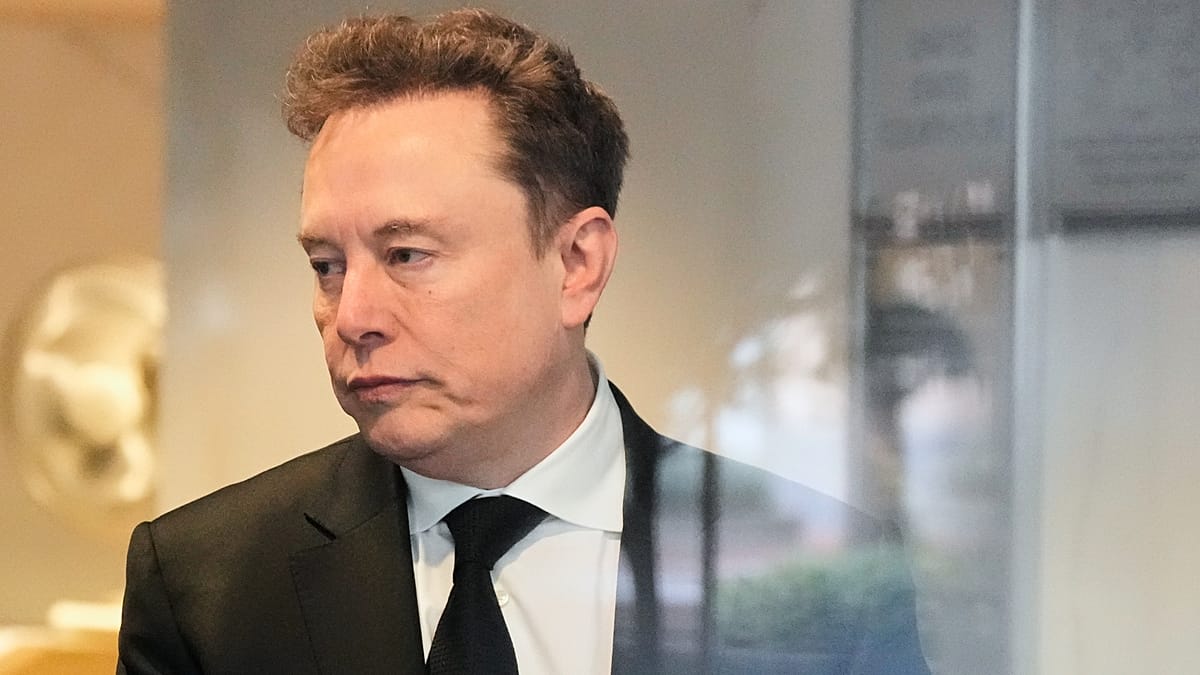
Elon Musk, the billionaire owner of Tesla, SpaceX, and the social media platform X, has waded into French politics by endorsing Marine Le Pen, the National Rally (RN) candidate for the 2027 presidential election. In a post on X on Wednesday, Musk wrote, "She is France's last hope," responding to a claim that Le Pen's voting intentions had surged in recent weeks.
This is not Musk's first expression of support for Le Pen. In April 2025, after she was initially sentenced to five years of ineligibility for misuse of public funds in the European parliamentary assistants case, Musk urged her to "overcome this persecution and to stand in the next presidential election." On 7 July, an appeals court reduced her sentence to three years in prison—two suspended and one to be served under arrangements—and a 45-month ban from holding elected office, with 30 months suspended. The ruling leaves her eligible to run for the presidency.
Accusations of Foreign Interference
Musk's latest intervention has drawn sharp criticism from French political figures. Foreign Affairs Minister Jean-Noël Barrot responded on X with a French proverb: "Only fools never change their minds." Thierry Breton, former European Commissioner and former French economy minister, warned that "the season of interference is beginning." He added, "Elon Musk is therefore backing Marine Le Pen. That is his right. It is up to the authorities to ensure that X's algorithm does not favour any candidate," stressing that "the rule of law applies to everyone, without exception."
Nathalie Loiseau, a Renew Europe MEP, condemned the endorsement, urging voters to "take a good look at who Marine Le Pen is the favourite of: Elon Musk, the richest man in the world, the champion of profit at all costs, the man who flouts European laws and backs the most extremist parties all over Europe, the one who has made up with Donald Trump." On the left, Antoine Léaument, a deputy for La France Insoumise (LFI), denounced "foreign interference" and called on Arcom, the French audiovisual and digital communications regulator, to act. He noted that "algorithmic manipulation of the election is among the risks highlighted in my parliamentary report on the organisation of elections in France."
Musk's Broader European Meddling
Musk's foray into French politics is part of a pattern of interventions in European elections. In December 2024, he claimed that the German party Alternative for Germany (AfD) was the only party capable of "saving Germany." In an opinion piece for Die Welt, he argued that "presenting AfD as a far-right party is clearly false if you consider that Alice Weidel, the party's leader, has a same-sex partner from Sri Lanka! Does that remind you of Hitler? Come on!" The piece provoked widespread backlash across the German political spectrum.
Musk also commented on Romanian politics, calling constitutional judges who annulled the first round of the presidential election "dictators" after suspicions of Russian interference in favour of nationalist candidate Călin Georgescu. He has posed for photographs with Nigel Farage, leader of the populist Reform UK party, and Nick Candy, the party's treasurer, before reports emerged that Musk was considering a donation.
These actions have raised questions about the influence of foreign billionaires on European democratic processes. As France prepares for its 2027 presidential election, the role of social media platforms and their owners in shaping public opinion is under increasing scrutiny. The French government has already taken steps to address such concerns, including summoning the Russian envoy over a widespread cyber espionage campaign earlier this year.
Meanwhile, the broader European context includes ongoing debates about digital sovereignty and the regulation of tech giants. The European Union's Digital Services Act, which imposes strict rules on platforms like X, is designed to mitigate algorithmic manipulation and foreign interference. Whether it will be effectively enforced in the run-up to the French election remains to be seen.