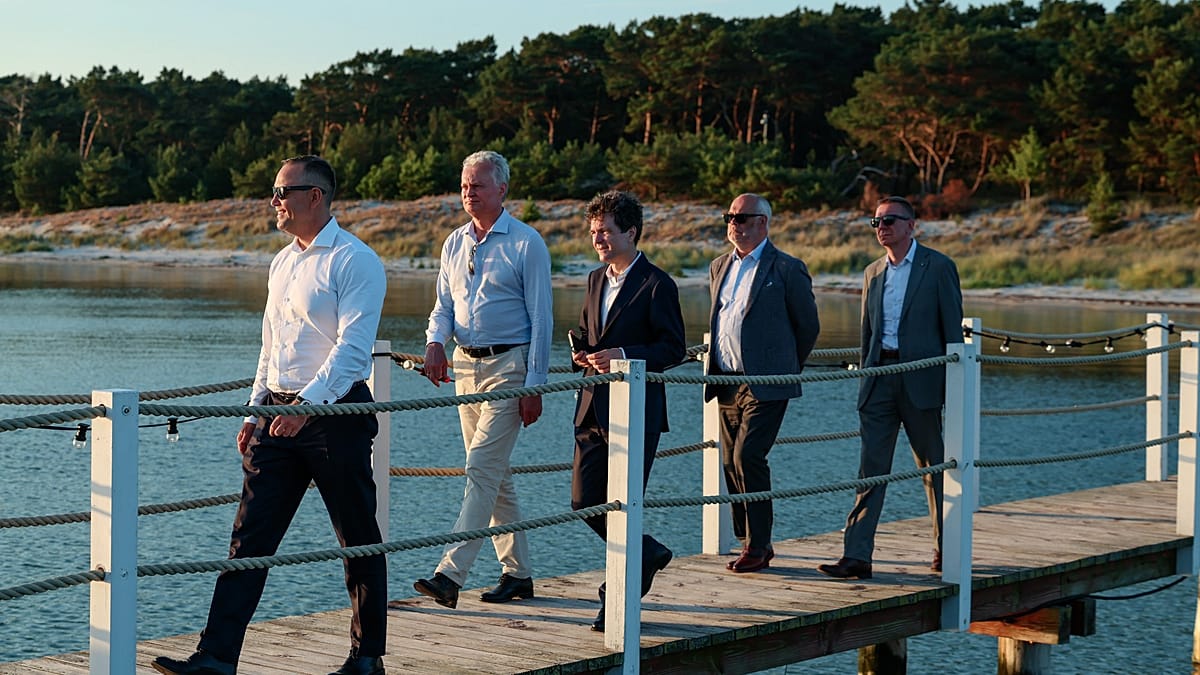
Polish President Karol Nawrocki convened an informal meeting of leaders from Lithuania, Latvia, Estonia, and Romania at the presidential residence in Jurata, a Baltic coastal resort, to coordinate positions ahead of the upcoming NATO summit in Ankara. The gathering, held on the eve of the alliance's high-level talks, underscored the strategic importance of the Baltic and Black Sea regions in the context of Russia's ongoing war against Ukraine.
Security and Infrastructure Priorities
According to a statement from the Polish Presidential Chancellery, the discussions centered on strengthening NATO's eastern flank, enhancing Europe's defence capabilities, and advancing cooperation within the Bucharest Nine and the Three Seas Initiative. The leaders also addressed the development of energy and transport infrastructure across the region, as well as the future of the European Union and the bloc's main challenges. Before the talks, the presidents visited the Naval Port in Gdynia, a symbolic gesture highlighting the maritime dimension of regional security.
The meeting comes at a time when transatlantic relations are under scrutiny, with NATO Chief Mark Rutte recently meeting former US President Donald Trump to ease tensions before the July summit. The Ankara summit is expected to reaffirm commitments to collective defence, but internal disagreements—particularly between Poland and Ukraine—threaten to overshadow the agenda.
Nausėda Offers to Mediate in Polish-Ukrainian Dispute
A key topic of the informal talks was the deteriorating relationship between Poland and Ukraine. Lithuanian President Gitanas Nausėda, who had earlier expressed readiness to mediate between Warsaw and Kyiv, reiterated his offer during the Jurata meeting. “In an informal setting, we will also talk about this issue, which is extremely important to me,” Nausėda said. He added that he wanted to hear President Nawrocki’s perspective on the roots of the conflict and potential pathways to resolution. “The past matters, but the present is even more important, especially while Russia’s brutal war against Ukraine continues,” he stressed.
The dispute escalated after Ukrainian President Volodymyr Zelenskyy decided to name a military unit “Heroes of the UPA,” a reference to the Ukrainian Insurgent Army (UPA), which is held responsible for the genocidal ethnic cleansing of Poles in Volhynia and Eastern Lesser Poland between 1943 and 1945. The move drew sharp criticism from Polish Prime Minister Donald Tusk, Deputy Prime Minister and Defence Minister Władysław Kosiniak-Kamysz, and Deputy Prime Minister and Foreign Minister Radosław Sikorski. In response, Nawrocki stripped Zelenskyy of the Order of the White Eagle, Poland's highest honour, which the Ukrainian president returned by courier.
This honours dispute has further strained relations between two key allies at a critical juncture in the war. The Polish-Ukrainian rift is particularly sensitive given Poland's role as a logistical hub for Western military aid to Ukraine and a host for millions of Ukrainian refugees. The incident has also drawn attention to the broader historical sensitivities that continue to shape politics in Central and Eastern Europe.
The Jurata summit signals an effort by regional leaders to present a united front ahead of the Ankara NATO summit, even as bilateral tensions simmer. The Bucharest Nine format, which includes NATO members on the alliance's eastern flank, and the Three Seas Initiative, which focuses on infrastructure and energy connectivity between the Baltic, Black, and Adriatic seas, remain key platforms for coordinating positions. The leaders also discussed the EU's future, including challenges related to enlargement, rule of law, and economic resilience.
As the war in Ukraine enters its third year, the ability of European leaders to manage historical grievances while maintaining strategic cohesion will be tested. The Jurata meeting, though informal, provided a venue for frank exchanges on how to balance these competing pressures. With the Ankara summit approaching, the outcomes of these talks may influence the alliance's posture on everything from troop deployments to defence spending targets.