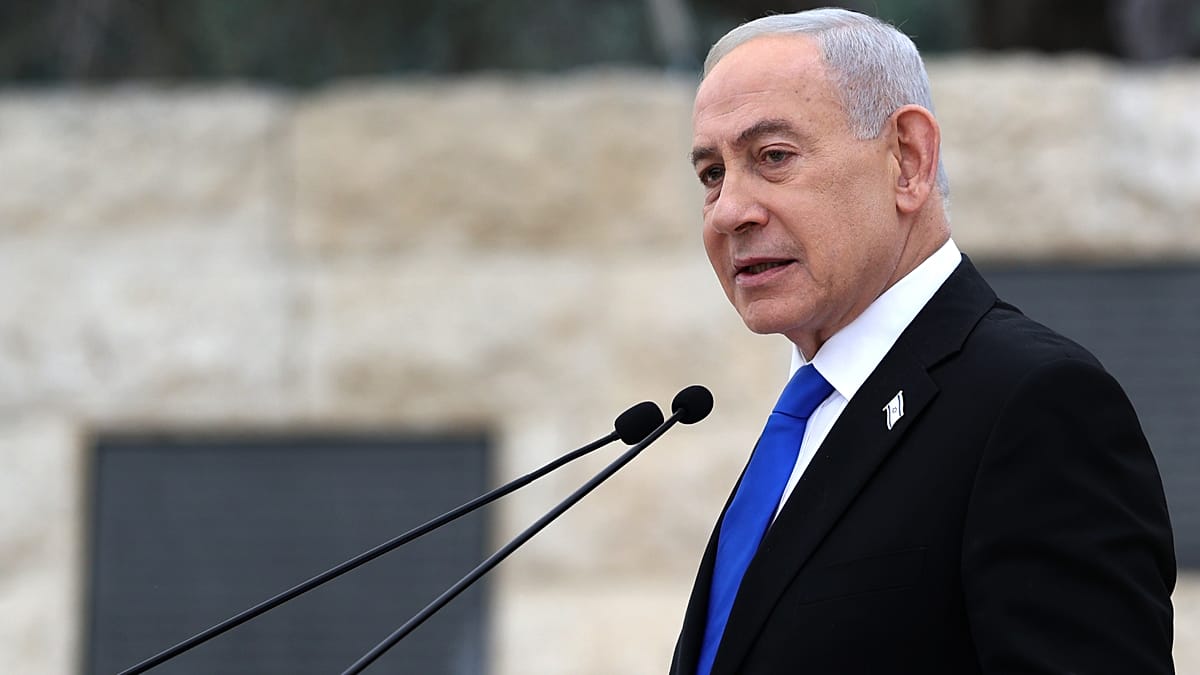
Israeli Prime Minister Benjamin Netanyahu has publicly rebuked his National Security Minister, Itamar Ben-Gvir, after a video surfaced showing the minister taunting detained activists from the Global Sumud Flotilla. The flotilla, which set sail from Turkey last week, was attempting to breach Israel's naval blockade of Gaza to deliver humanitarian aid.
The footage, released by Ben-Gvir himself earlier this week, depicts him berating the detainees while waving a large Israeli flag as they kneel with their hands tied behind their backs. “Welcome to Israel, we are the landlords,” he says in the video.
Netanyahu's Response and Internal Criticism
In a statement, Netanyahu asserted that Israel has “every right” to stop “provocative flotillas of Hamas terrorist supporters from entering our territorial waters and reaching Gaza.” However, he stressed that Ben-Gvir's conduct was “not in line with Israel’s values and norms.”
The incident has sparked widespread condemnation, including from senior figures within the Israeli government. Foreign Minister Gideon Sa'ar wrote on X that Ben-Gvir had “deliberately caused damage to the state in this disgraceful performance, and not for the first time.” Sa'ar added, “No, you are not the face of Israel.”
Ben-Gvir fired back, claiming that “there are those in the government who still haven't figured out how to behave toward supporters of terrorism.” He continued, “Israel's Foreign Minister is expected to understand that Israel has stopped being a pushover. Anyone who comes to our territory to support terrorism and identify with Hamas will get slapped, and we won't turn the other cheek.”
International Reaction and European Implications
Australia's Foreign Minister, Penny Wong, called the footage “shocking and unacceptable” and reiterated calls for the release of 11 Australian nationals detained by Israeli forces for their role in the flotilla. The incident also resonates in Europe, where several EU member states have citizens among the activists. The flotilla's spokesperson, Rania Batrice, told the Associated Press, “If they’re doing that to Europeans and Americans and people from South Africa and all over the world, imagine what they’re doing to the Palestinian people.”
The episode comes amid heightened tensions in the Middle East, which have already impacted global energy costs and economic forecasts. The UN recently cut its global growth forecast, citing the crisis as a key driver of energy price volatility. European capitals, already grappling with the fallout from the war in Ukraine, are closely monitoring the situation. The incident also echoes broader debates about security and human rights, as seen in recent discussions at the G7 finance ministers' meeting in Paris, where Iran tensions and US tariff fears were on the agenda.
The Global Sumud Flotilla, which included activists from several European countries, was intercepted by Israeli naval forces off the coast of Cyprus. The Israeli military has defended the interception as a necessary measure to prevent what it describes as a provocation by groups linked to Hamas. Critics, however, argue that the blockade itself is illegal under international law and that the treatment of the detainees reflects a broader pattern of impunity.
For European readers, the incident underscores the complex interplay between security, diplomacy, and human rights in the region. As European Union member states continue to navigate their relationships with Israel and the Palestinian territories, the video and its aftermath may influence public opinion and policy debates from Berlin to Paris. The European Pulse will continue to follow developments as they unfold.