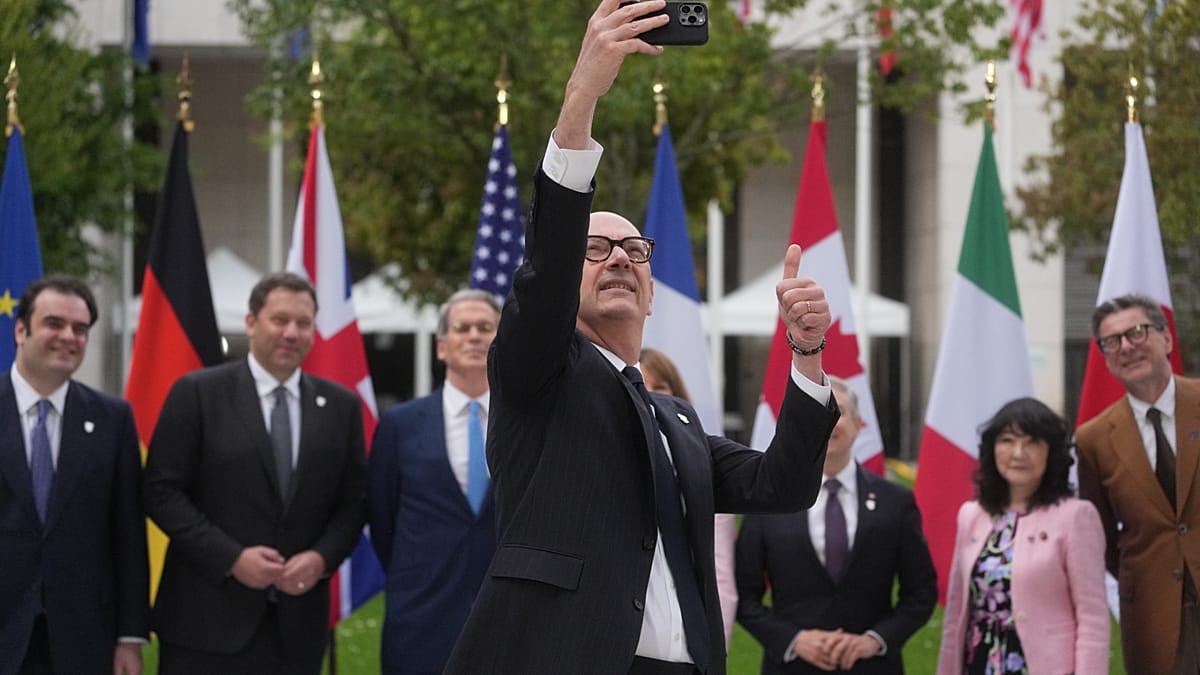
Finance ministers from the Group of Seven (G7) economies convened in Paris for a second day of high-level talks on Wednesday, addressing a range of global economic pressures that have direct implications for European stability. The meeting, hosted at the French Ministry of Economy and Finance on the Rue de Bercy, brought together representatives from Canada, France, Germany, Italy, Japan, the United Kingdom, and the United States, alongside European Union officials.
The discussions centered on three interconnected challenges: the escalating conflict with Iran, the persistent threat of US tariffs on European goods, and the disruptions to maritime trade through the Strait of Hormuz. These issues have created a volatile economic environment for Europe, where member states are already grappling with sluggish growth and high energy costs.
Iran Tensions and Energy Security
The situation in the Middle East, particularly the ongoing tensions with Iran, dominated the agenda. The Strait of Hormuz, a critical chokepoint for global oil shipments, has seen increased instability, threatening energy supplies to Europe. Italy and Greece, which rely heavily on imported oil, are especially vulnerable to any disruption. The G7 ministers discussed coordinated measures to ensure energy security, including potential strategic reserves releases and diversification of supply routes.
European Commission Vice President Valdis Dombrovskis, who attended the talks, emphasized the need for unity. "The European Union stands ready to work with our G7 partners to mitigate the economic fallout from any escalation in the region," he said. The discussions also touched on the broader implications for the global economy, with the International Monetary Fund warning that a prolonged conflict could reduce global GDP growth by up to 0.5 percentage points.
US Tariffs and Trade Uncertainty
Another key topic was the ongoing trade friction between the United States and Europe. The Trump administration has threatened to impose tariffs on European automobiles and other goods, citing national security concerns. This has created uncertainty for European exporters, particularly in Germany, where the automotive sector is a cornerstone of the economy. The G7 ministers explored ways to de-escalate the trade dispute, with French Finance Minister Bruno Le Maire calling for a "constructive dialogue" to avoid a full-blown trade war.
The talks also referenced the broader context of Europe facing a hostile economic order, as G7 tensions and the energy crisis mount. The ministers acknowledged that the current trade environment is undermining business confidence, with EU business investment hitting an 11-year low due to tariff and climate uncertainty.
Strait of Hormuz Disruptions
The disruptions in the Strait of Hormuz have already begun to affect European shipping and insurance costs. The G7 ministers discussed contingency plans, including the possibility of naval escorts for commercial vessels, as well as diplomatic efforts to reduce tensions with Iran. The European Union has been a key player in these efforts, with France and the UK leading initiatives to maintain freedom of navigation.
The meeting also touched on the broader implications for the global financial system. The ministers agreed to monitor the situation closely and to coordinate with central banks to ensure liquidity in case of a major disruption. The discussions were informed by a recent report from the European Central Bank, which highlighted the risks to financial stability from geopolitical shocks.
European Perspectives
For Europe, the G7 talks are part of a broader effort to navigate a challenging economic landscape. The G7 finance talks in Paris also focused on the energy shock and Russian sanctions, reflecting the ongoing impact of the war in Ukraine. The ministers reiterated their commitment to maintaining sanctions on Russia while exploring ways to mitigate their effects on European economies.
As the meeting concluded, the ministers issued a joint statement reaffirming their commitment to multilateral cooperation. "We will continue to work together to address the global economic challenges we face," the statement read. The next G7 finance meeting is scheduled for June in Italy, where the focus will likely shift to the upcoming G7 summit in Sicily.