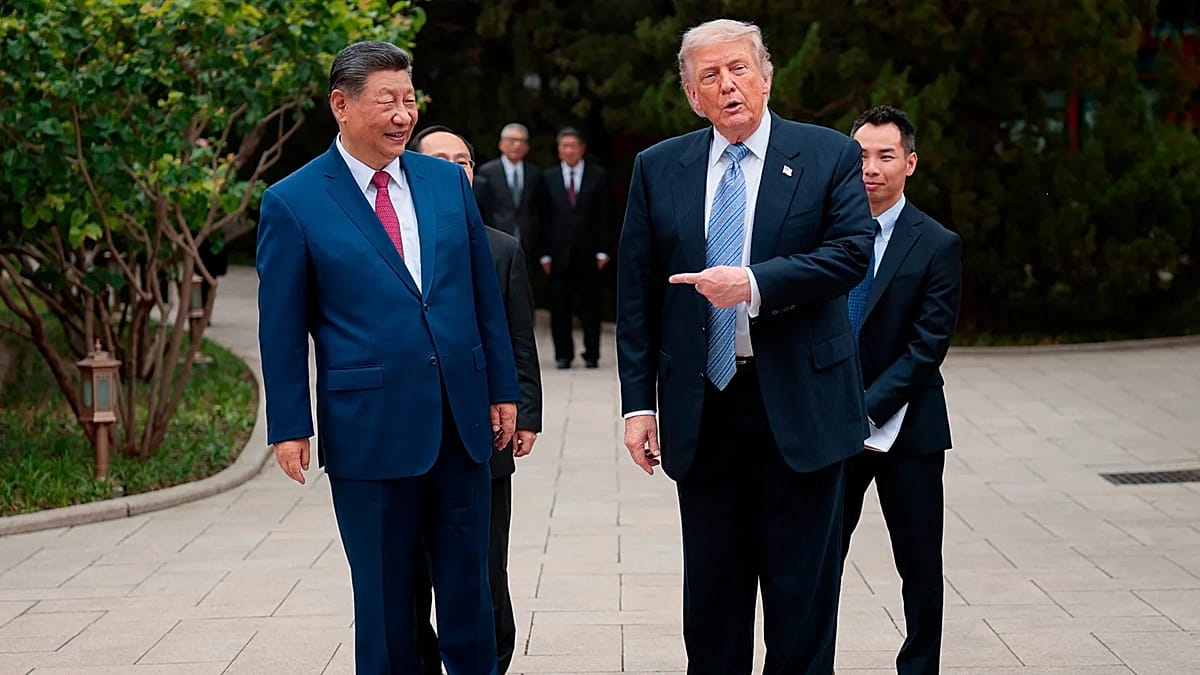
After more than a year of escalating trade tensions, Beijing and Washington have signalled a willingness to reduce tariffs on tens of billions of dollars in goods. China's commerce ministry confirmed on Wednesday that both sides have agreed in principle to discuss a framework for reciprocal tariff reductions on products of equivalent scale. The intended cuts would affect goods worth at least $30 billion (€27.3 billion) on each side, according to an unnamed ministry official.
The announcement follows a one-year truce reached between US President Donald Trump and Chinese President Xi Jinping during their summit in South Korea last October. As part of that agreement, a trade council has been established to oversee negotiations. The commerce ministry expressed hope that the US side would honour its commitments and called for an extension of the truce agreements.
However, analysts remain cautious about the potential impact. Zhiwei Zhang of Pinpoint Asset Management noted that the tariff reductions are "not significant enough to change the market's GDP forecast." He added, "Nonetheless this is a positive step in the right direction. As long as the two countries are talking to stabilise the bilateral relations, it is good news for global investors."
Limited Scope, Broader Implications
The proposed cuts represent only a fraction of the tariffs imposed during the trade war, which saw duties levied on hundreds of billions of dollars in goods. For European observers, the development is a reminder of the volatility that has reshaped global supply chains. The EU has already prepared defensive measures to protect its own industries from the fallout of US-China tensions.
Beyond tariffs, China also announced it would restore registrations for some US beef exporters, which had lapsed during the height of tensions. Additionally, Beijing confirmed it would purchase 200 aircraft from US aerospace giant Boeing, though it did not specify models. US media had previously reported that the order could include 500 single-aisle 737 MAX jets and around 100 larger 787 Dreamliners and 777s.
On the critical issue of rare earths—a sector dominated by China and subject to biting export restrictions last year—the ministry's statement offered little detail. This omission is notable given the strategic importance of rare earths for European industries, from electric vehicles to defence. The ESA's collaboration with China on the SMILE mission highlights the complex interplay between scientific cooperation and geopolitical competition.
For Europe, the US-China trade détente carries both opportunities and risks. A reduction in tariffs could ease pressure on global supply chains, benefiting European exporters who rely on components from both countries. However, the limited scope of the cuts suggests that deeper structural issues remain unresolved. The EU Parliament's approval of a US trade deal amid lingering tariff threats underscores the bloc's efforts to navigate this uncertain landscape.
As the world's two largest economies continue to negotiate, European policymakers will be watching closely. The outcome of these talks could influence everything from trade policy to investment flows, with implications for the continent's economic resilience. For now, the modest tariff cuts offer a glimmer of progress, but the road to a stable trade relationship remains long.