Good morning from Brussels. Mared Gwyn here with today's edition of European Pulse.
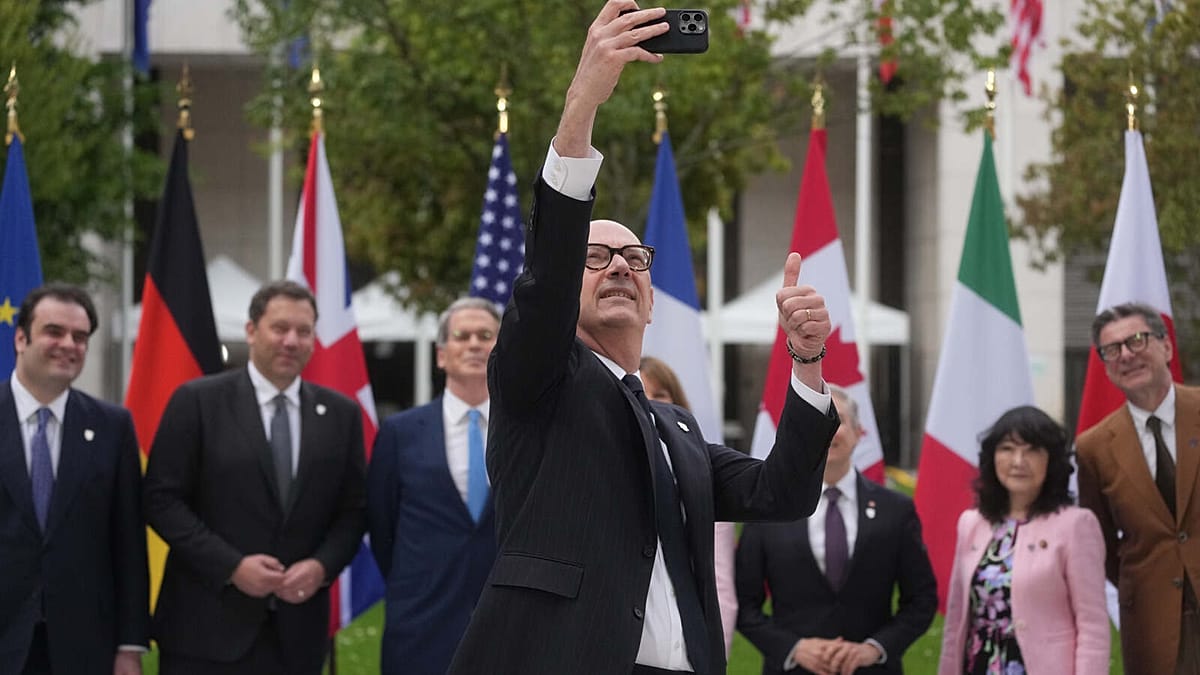
As G7 finance ministers gather in Paris for a second day of talks, Europe confronts an increasingly hostile economic order. The deadlock between the United States and Iran over the Strait of Hormuz continues to send shockwaves through global markets, while inflationary fears have driven bond yields across the continent to multi-year highs.
French Finance Minister Roland Lescure, who chairs the meeting, described the bond market movements as a “correction” rather than a collapse. He insisted that the ministers would demonstrate that “multilateralism is useful and that it works,” even as trade tensions within the Group of Seven reach unprecedented levels under US President Donald Trump's tariff threats.
Higher borrowing costs combined with a prolonged energy shock pose a nightmare scenario for European governments with limited fiscal space. This combination also threatens to undermine the continent's push to restore global competitiveness — a priority that French President Emmanuel Macron had hoped to cement by summer.
Italy's Meloni Demands Fiscal Flexibility
Italian Prime Minister Giorgia Meloni has threatened to withdraw from the EU's flagship €150 billion defence loan programme, known as SAFE, unless Brussels relaxes fiscal rules to allow governments more flexibility in mitigating the energy crisis. Meloni is seeking a special exemption from EU rules that cap deficits at 3% of GDP for “investments and extraordinary measures needed to address the energy crisis.” A similar national escape clause already exists for defence spending, and Meloni argues the energy crisis warrants the same radical response.
Meanwhile, the United States has extended a waiver on sanctions against Russian seaborne oil by another month, a move Treasury Secretary Scott Bessent communicated to his G7 counterparts. The extension aims to curb soaring crude prices.
In Strasbourg later today, the European Commission is expected to unveil a plan to use untapped agriculture funds to support farmers with fertiliser costs, which have spiralled due to the closure of the Strait of Hormuz, according to a report from France Info.
Trade Deficit with China Adds Pressure
The urgency around Europe's economic challenges is heightened by a ballooning trade deficit with China, which risks further eroding the bloc's struggling industries. The European Commission is preparing a range of tools to shield the bloc from cheap Chinese imports, including reducing dependence on Chinese components and imposing tariffs on strategic sectors. An “orientation debate” on these tools is scheduled for May 29, with discussions expected to continue at the G7 leaders' summit in Évian, France, and a gathering of EU leaders in Brussels in mid-June.
Among the measures being floated: requiring European companies to source materials from at least three separate suppliers to reduce reliance on Beijing, targeted tariffs on strategic sectors to tackle Chinese overcapacity, and anti-dumping or anti-subsidy duties on products where import prices fall below those on the Chinese market.
This comes after a pompous meeting between Trump and Chinese President Xi Jinping last week that failed to deliver any real progress on trade. There are mounting fears that cheap Chinese exports are being increasingly rerouted to Europe since Trump slapped steep tariffs on Chinese goods last year, effectively shutting the US market.
NATO Military Chiefs Meet Amid Weapons Shortages
In Brussels, the military chiefs of all 32 NATO allies are meeting this morning to discuss the urgent need to ramp up weapons production. Extra pressure is mounting in light of the war in Iran, as the US has burned through stockpiles of high-quality munitions, including significant portions of its expensive air and missile Patriot defence systems, our correspondent Shona Murray reports.
Allies will hear from General Alexus G. Grynkewich, Supreme Allied Commander Europe (SACEUR), and his assessment of the alliance's overall capabilities and deterrence posture — including the impact of relocating assets from Europe to the Strait of Hormuz in preparation to reopen the passage when hostilities end. The assessment will also cover the impact of Washington's abrupt decision to cancel a brigade of around 4,000 soldiers en route to deployment in Poland.
“We’ve been saying for years that we need to increase production,” one NATO official said. “Now the reality is catching up with us.”
For more on the trade negotiations, see our piece on Brussels and Washington at Odds Over Trade Deal as Trump's Deadline Nears. And for a deeper look at the NATO situation, read NATO Military Chiefs Convene as Iran War Strains Alliance Munitions.