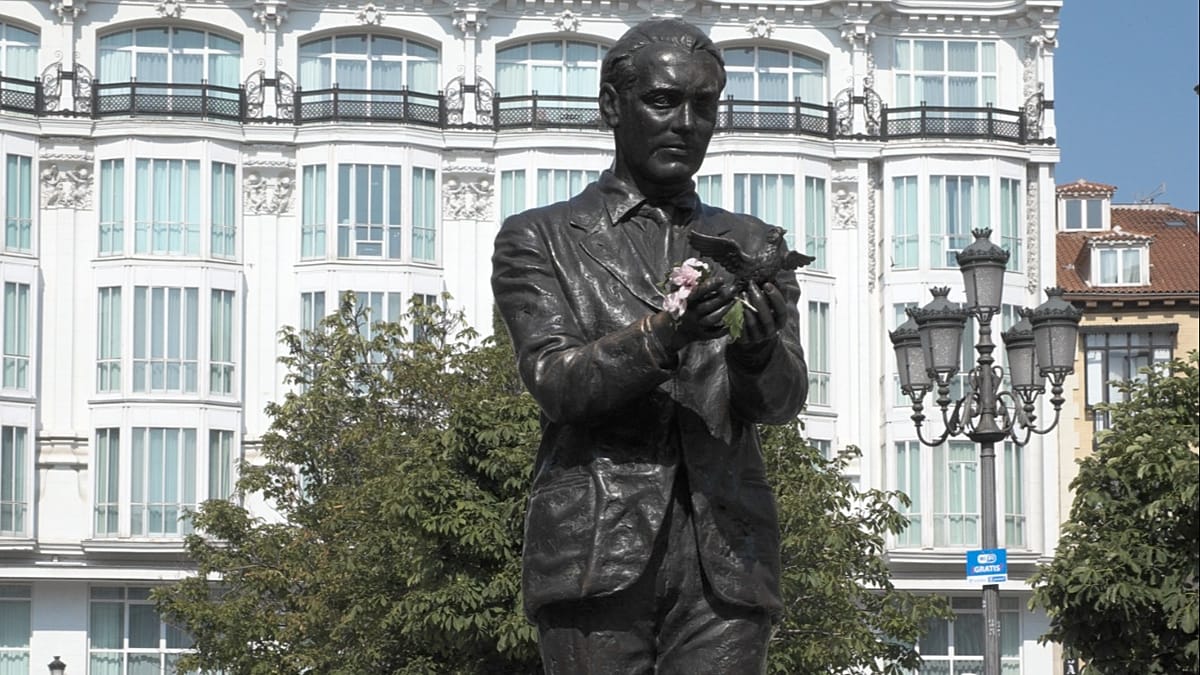
Ninety years after Federico García Lorca was shot by Nationalist forces near Granada, his literary estate is still yielding surprises. Two recent discoveries—a love letter written days before his death and an unpublished poem—offer fresh insight into the final weeks of Spain's most celebrated poet and playwright.
A letter from the brink
On 18 July 1936, as the military uprising that would ignite the Spanish Civil War spread across the peninsula, Lorca sat down in his family's summer home, the Huerta de San Vicente, to write a brief note. The recipient is believed to have been Juan Ramírez de Lucas, a young art critic from Albacete, then just sixteen. Lorca was thirty-eight. Their relationship, kept discreet for decades, is thought to have inspired the poet's Sonnets of Dark Love.
Ramírez de Lucas kept the letter, along with drawings and a diary, for seventy years. Shortly before his death in 2010, he handed the collection to his siblings. When it was made public in 2012, experts identified the note as the last letter Lorca wrote before his arrest and execution at an unmarked spot between Víznar and Alfacar. The letter never received a reply.
The discovery underscores how much remains unknown about Lorca's final days—and about the broader toll of the war. Spain's Ministry of Territorial Policy and Democratic Memory has registered more than 3,000 mass graves, with victims' associations estimating that between 114,000 and 130,000 people still lie unexhumed. Lorca's own body has never been found.
An unpublished poem surfaces
Another recent find is a poem about time, a theme that resonates through Lorca's work. The manuscript, acquired by flamenco singer Miguel Poveda, bears an unpublished poem on its back. Lorca scholar Pepa Merlo has authenticated the handwriting. Together, Poveda and Merlo have published Las cosas del otro lado. Lo inédito en Federico García Lorca, which examines these and other discoveries.
The poem will be added to the catalogue of the cultural centre now housed in Lorca's childhood home at 50 Acera del Darro in Granada, which recently reopened after restoration. The house, a ground-floor flat in the city's Nasrid quarter, was where the poet lived from 1900 to 1916.
Lorca's influence endures beyond the page. A fragment from his play Así que pasen cinco años was famously adapted by flamenco singer Camarón de la Isla, and more recently by the duo Los Javis for the trailer of La Bola Negra, a film inspired by Lorca's life and loves that won the Best Director prize at the Cannes Film Festival.
Two biopics are in development. Director Fernando Franco's film, due in 2027, will reconstruct Lorca's final weeks, from his escape from Madrid after the uprising to his execution. Whether it will include a tribute to the letter to Ramírez de Lucas remains to be seen.
These finds are part of a wider cultural recovery across Spain, where the legacy of the Civil War is still being reckoned with. As Europe's own foundations are debated, the recovery of Lorca's work reminds us that the continent's cultural memory is still being written.