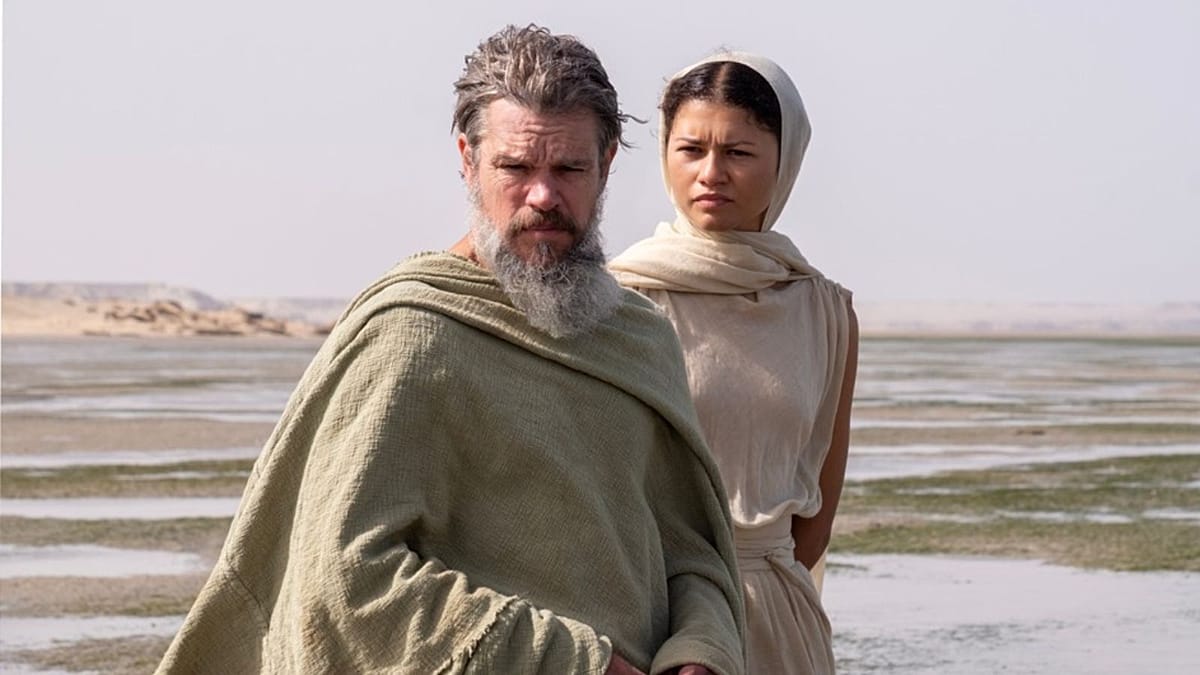
The first trailer for Christopher Nolan's adaptation of Homer's The Odyssey has landed, and while it showcases beards, a puppy, and plenty of shadowy visuals, the reaction has been dominated by a different kind of storm: criticism over the choice of accents and dialogue. The film, Nolan's first since his Oscar-winning Oppenheimer in 2024, is already one of the most anticipated releases of 2026, but the trailer has divided audiences across Europe and beyond.
Viewers have taken particular issue with the prevalence of American accents, which many argue feel out of place in an ancient Greek setting. The cast includes Matt Damon as Odysseus, alongside Robert Pattinson and Tom Holland—both British actors—who deliver lines that have drawn sharp reactions. In one scene, Damon's Odysseus shouts “Let’s go!” as a battle cry, a phrase that has been widely mocked for its anachronistic tone. More controversially, Pattinson's character Antinous confronts Holland's Telemachus with the line: “You’re pining for a daddy you didn’t even know, like some sniveling bastard.” The use of the term “daddy” has sparked a wave of memes and disbelief on social media.
Accents and Authenticity
On Reddit, one user wrote: “The American accents are incredibly jarring for a movie in this time period.” Another commented: “For something as big as The Odyssey, you’d think they’d make the way the characters speak to each other sound less... modern?” The criticism is particularly pointed given that both Pattinson and Holland are British, raising questions about Nolan's directorial choices. Some observers have suggested the modern dialogue is intentional, perhaps to make the epic more accessible to contemporary audiences, but reactions remain mixed.
This is not the first time Nolan has faced scrutiny over his casting and language decisions. His films often blend historical or mythological elements with a distinctly modern sensibility, but for many European viewers, the disconnect between the ancient Greek source material and the American-inflected speech feels particularly stark. The debate echoes broader conversations in European cinema about authenticity and cultural representation, especially in adaptations of classical works.
Despite the linguistic backlash, the film has generated significant buzz. It is the first feature shot entirely on IMAX cameras, and Nolan has described the project as a return to the epic scale of his earlier work. In an interview with Stephen Colbert's The Late Show, he drew parallels between Homer's epics and modern blockbusters. “Even comic-book culture, whether you're talking about Marvel or DC or the rest, a lot of it comes pretty directly from the Homeric epics,” Nolan said. “The thing about Homer is it's the Marvel of its day, I mean, that's the thing, and so I think there's very directly this desire for us to feel or believe that Gods can walk amongst us, and I think the modern comic book is kind of our expression of that.” He added: “The thing about Homer is nobody knows if that was a person, they don’t know, I mean, Homer, in a way, is the sort of George Lucas, maybe of his time. I mean, nobody really knows who this person was or whether it was more than one person.”
The controversy over accents and dialogue is part of a wider pattern of cultural debates in European cinema. For instance, the recent Meloni deepfake controversy in Italy highlighted how technology and language intersect with public perception. Similarly, the backlash against Palantir's 'Technological Republic' manifesto underscored European sensitivities around cultural claims and technological influence.
Elon Musk, predictably, weighed in with a nonsensical take on the trailer, but the film's production has also faced logistical challenges, including disputes over shooting locations. Nevertheless, The Odyssey remains a major cinematic event, with its release scheduled for 2026. Whether the accent controversy will affect its reception in European markets—where audiences often have strong opinions about historical authenticity—remains to be seen.