Norway is pushing the boundaries of subsea engineering with the Rogfast project, a 26.7-kilometre road tunnel that will become the longest and deepest of its kind in the world. Running beneath the country's iconic fjords, the tunnel will reach a maximum depth of 390 metres below sea level, making it a landmark in European infrastructure.
The Rogfast, officially known as the Rogaland fixed link, is part of the E39 highway that snakes along Norway's west coast. When it opens in 2033, it will slash travel time between Stavanger and Bergen by 40 minutes, replacing ferry crossings that currently connect the region's coastal towns. The Norwegian Public Roads Administration, which oversees the project, says the tunnel will ease daily commutes for workers and improve access to key industries.
“Stavanger is the fourth-largest city in Norway, and Bergen is the second largest, so we hope that this project will reduce travelling time for workers when they are travelling to either city on a daily basis,” said Oddvar Kaarmo, project manager at the Norwegian Public Roads Administration.
An island roundabout deep underground
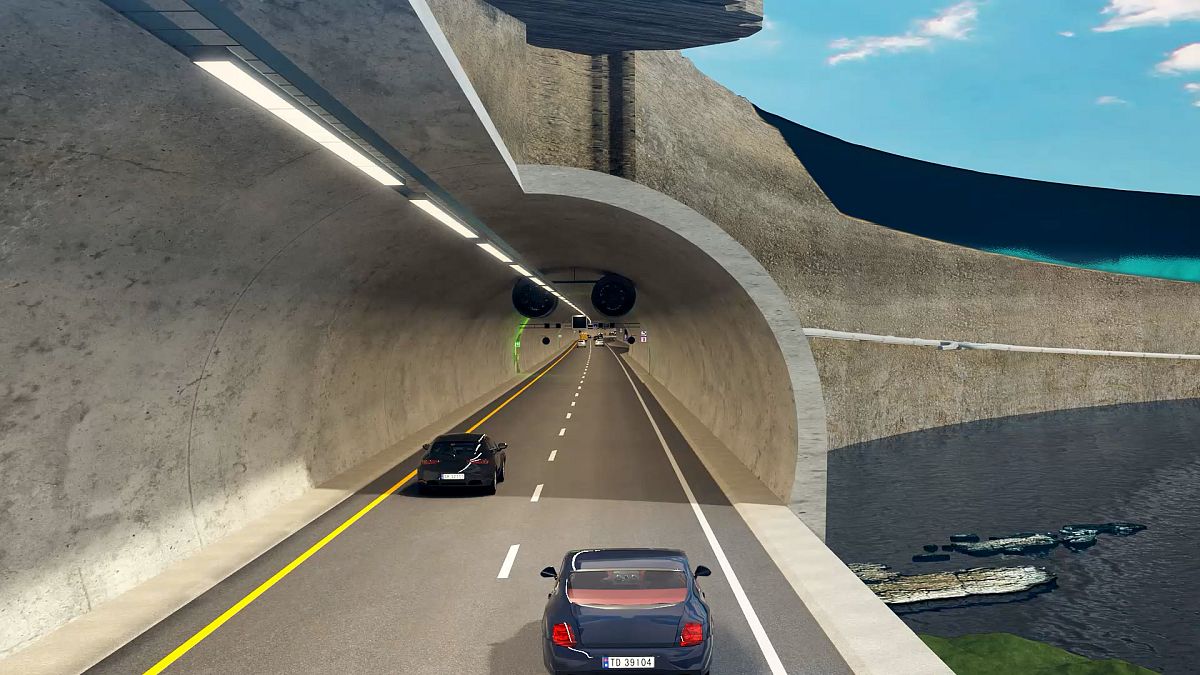
One of the most striking features of the Rogfast tunnel is its design around the island of Kvitsøy, Norway's smallest municipality. At roughly the midpoint of the tunnel, two roundabouts are being carved out of the rock 260 metres below sea level. These will connect the island to the main tunnel and allow traffic to continue flowing even if one of the twin tubes is closed.
“We have produced roundabouts in tunnels before, but this might be one of the earliest constructions where we have this cross-section area with two roundabouts in the tunnel,” Kaarmo said. The twin-tube structure also enhances safety: if a fire breaks out, drivers can escape through green emergency doors into the parallel tube, where cameras track their location and rescue teams can reach them quickly.
Norway's approach to tunnel construction differs from other major European projects. Unlike the Fehmarn Belt fixed link between Germany and Denmark, which uses prefabricated immersed sections, Rogfast is being drilled and blasted directly through solid bedrock. Norwegian regulations require at least 50 metres of rock cover between the tunnel roof and the seabed, ensuring stability under immense water pressure.
“We have about 40 subsea road tunnels in Norway, and we are familiar with the construction. Normally it's easier and cheaper to build a subsea road tunnel than a bridge to the same island,” Kaarmo explained. The project, which broke ground in 2018, is now about halfway complete, with the northern section 65% finished and the southern end at Randaberg 45% done.
The €2 billion investment is expected to bring significant economic benefits. “It will help seafood producers reach the market in a better way without ferries,” Kaarmo said. “It will see working travellers, industry, and probably also tourism, because the west coast of Norway is a part that tourists often seek.” The Norwegian roads authority estimates that by 2053, the tunnel will carry around 13,000 vehicles per day.
As Europe invests in major transport links, the Rogfast project stands out as a testament to Norwegian engineering prowess. It also complements other digital and physical connections across the continent, such as Google's Nuvem subsea cable linking Portugal and the US, which underscores the importance of infrastructure in binding Europe together.
For Norway, the tunnel is more than a convenience—it is a strategic investment in regional cohesion and economic resilience. By linking communities that have long depended on ferries, Rogfast will transform the west coast into a more integrated and accessible region, benefiting both residents and visitors alike.