This weekend, Notting Hill Carnival returns to the streets of west London for its 60th anniversary. What began in 1966 as a small children's street party has grown into one of the world's largest street festivals, drawing millions of visitors over the August bank holiday. For six decades, it has been a vibrant, physical expression of Afro-Caribbean influence on British culture, rooted in the Windrush generation and the sound system traditions brought from Jamaica.
The festival's origins are inseparable from the racial tensions that gripped Notting Hill in the late 1950s. After the 1958 race riots and the 1959 murder of Antiguan carpenter Kelso Cochrane by a gang of white men, local social worker Rhaune Laslett organised a street party to bring the divided community together. When Trinidadian steelpan player Russell Henderson and his band took to Portobello Road, the foundations of Carnival were laid.
By the 1970s, sound systems had become central to the festival, with organiser Leslie Palmer introducing more Caribbean masquerade and live music. As he put it: "The sound systems were the voice of the youth." Since then, the soundtrack has continually evolved—from calypso, reggae, dub and soca to jungle, drum & bass, hip-hop, grime and UK garage.
To mark the big 6-0, we asked ten people who have shaped, celebrated and documented Carnival to choose one track that, for them, epitomises the festival. Their selections span decades and genres, but all capture the spirit of resistance, unity and joy that defines Notting Hill.
Mikey Dread (Channel One)
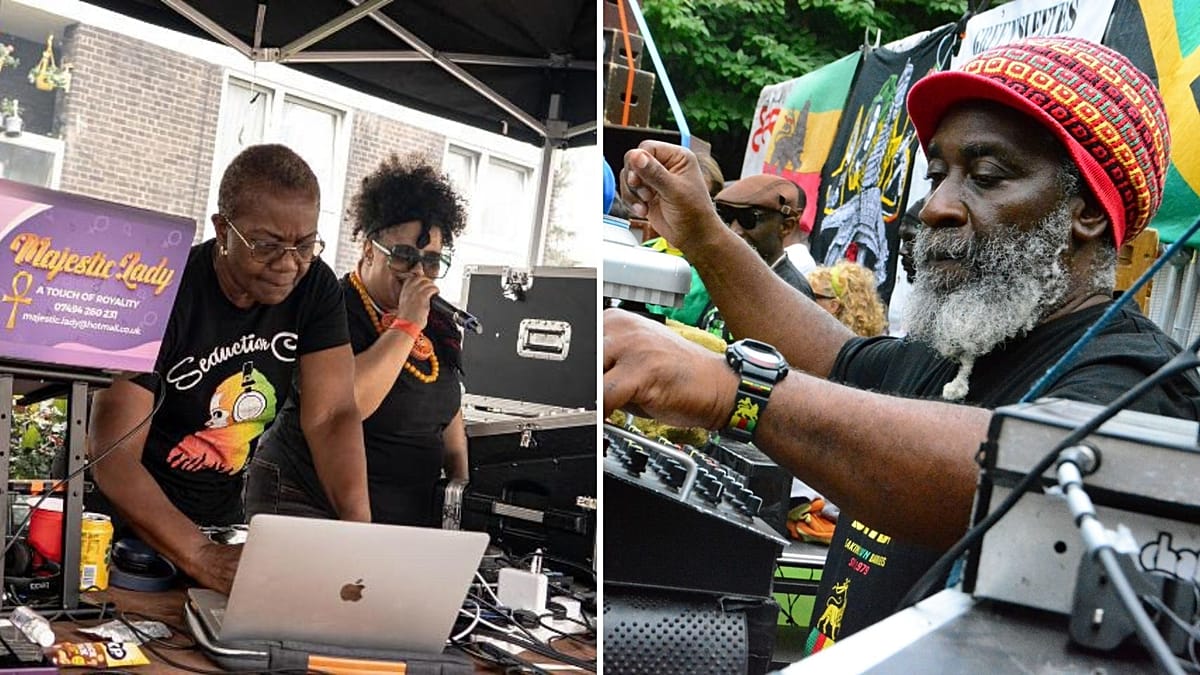
Mikey Dread co-founded the legendary Channel One Sound System and has been behind the decks since 1983. He'll be playing conscious reggae and exclusive dubplates this weekend on the corner of Westbourne Park Road.
His pick: 'Guess Who's Coming To Dinner' – Black Uhuru (1979)
We choose this tune because it's what Channel One is about. Roots, Rastafari, heavyweight bass and unity—from Jamaica to London, we've carried that message at Carnival for over 40 years.
Wayne Crichlow
Crichlow is a London-based documentary photographer who has spent more than 15 years immersed in Carnival. His photobook Carnival of Resistance, co-authored with Wayne Campbell, documents the festival's sound systems, Mas, dancers, community and spirit of resistance.
His pick: 'Warrior Charge' – Aswad (1980)
I was never really a soca or calypso guy growing up—my musical world was much more reggae, hip-hop and, later, jungle—but 'Warrior Charge' takes me straight back to my early years at Notting Hill Carnival. I remember standing around sounds like Aba Shanti-I and Jah Observer, physically feeling that deep, rolling bass, with those huge brass lines sounding almost like a chant of resistance. You didn't just hear that music at Carnival—you felt it through your body. For me, that sound captures something fundamental about Carnival. Beneath the colour and celebration, there has always been resistance, identity, community and the assertion of Caribbean culture in Britain.
Linett Kamala
Linett broke into London's sound-system culture as a teenager, becoming one of the first women to DJ at Notting Hill Carnival. She is now a Notting Hill Carnival Board Director and has spent decades promoting music and art, and ensuring the next generation of women get their rightful turn behind the decks.
Her pick: 'Rum & RedBull' – Beenie Man, Future Fambo, Seanizzle
Absolute Notting Hill Carnival timeless anthem. It's a guaranteed crowd pleaser, which completely sums up the vibes, because Jamaican dancehall classics like this being pumped out of a giant sound system speaker is unsurpassed!
Oxman (Greensleeves HiFi)
Oxman is the primary host and selector of Greensleeves Hi-Fi, the sound system project carrying the name of one of reggae's most iconic labels. This Carnival weekend he'll be on deck duties with Becca D and YNG CPTN at The Hoxton in Shepherd's Bush.
His pick: 'Police and Thieves' – Junior Murvin (1976)
The soundtrack to a time where it felt as though the song was penned for that specific event. A bittersweet feeling of enjoying the carnival but being weary of the police at the time.
These selections, from roots reggae to dancehall, reflect the festival's evolution and its enduring role as a space for cultural pride and political expression. As Carnival celebrates its 60th year, it remains a testament to the resilience and creativity of London's Caribbean communities—and a reminder of the broader European story of migration, identity and belonging.