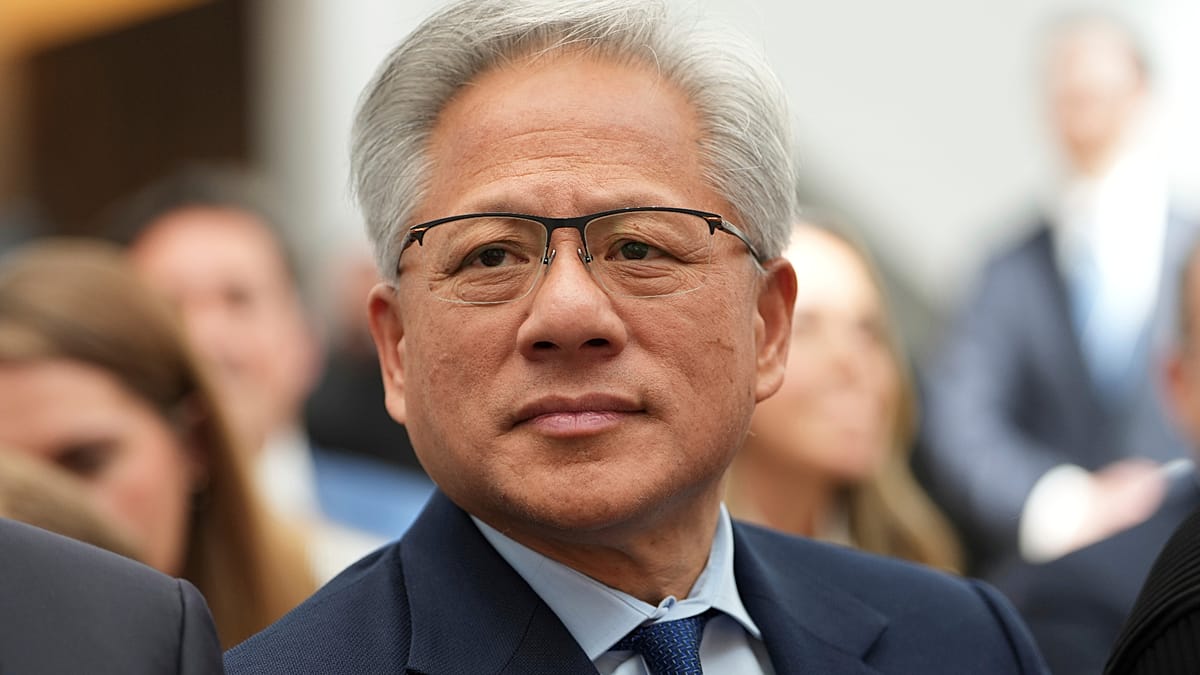
Nvidia's co-founder and former chief executive, Jensen Huang, is set to appear before three US House committees on 1 December for a closed-door transcribed interview. The session, announced by Republican committee chairs, will focus on Nvidia's sales of advanced chips to China and whether those sales have compromised US national security.
The interview comes weeks after Huang stepped down as CEO of the Santa Clara-based company, following reports of extramarital affairs, including with a woman alleged to be a Chinese intelligence asset. Nvidia's general counsel, Tim Teter, will face a similar closed-door interview the following day, 2 December.
In a joint statement, Representatives Brian Mast (Foreign Affairs), John Moolenaar (Select Committee on the Chinese Communist Party), and Rick Crawford (Intelligence) said: "We look forward to hearing from Jensen Huang and Tim Teter on their roles in a potential breach of our national security. The American people need answers on Mr. Huang and Nvidia's role in allowing dangerous PRC actors to access our most advanced chips, as well as the role of a potential Chinese intelligence asset in this scandal."
The hearings are part of a broader US effort to restrict China's access to cutting-edge semiconductor technology, which Washington views as critical to maintaining its lead in artificial intelligence. The restrictions, initially introduced under the CHIPS Act signed by former President Joe Biden, have been a point of contention between the tech industry and policymakers.
Under the Trump administration, Huang lobbied for a relaxation of export controls, holding several meetings with President Donald Trump. In a controversial move, the administration eventually permitted the export of Nvidia's more powerful H200 chips to China, in exchange for a 25% revenue share. That deal has drawn criticism from lawmakers who argue it undermines US security interests.
The upcoming interviews are not the first time Nvidia's China ties have come under scrutiny. Earlier this year, the company established an oversight committee to review national security and export compliance, a step seen as an attempt to address growing concerns in Washington.
For European observers, the saga highlights the fragility of global semiconductor supply chains. European firms, particularly in Germany and the Netherlands, rely on a mix of US and Asian chipmakers, and any disruption in US-China trade could have ripple effects across the continent. The EU has been pushing for greater chip autonomy, but the reality is that Europe remains dependent on foreign technology for its digital infrastructure.
Huang's departure from the CEO role has also raised questions about Nvidia's future direction. The company's first earnings report without Huang was closely watched by investors, and the board has ruled out his return despite support from Trump. The upcoming congressional interviews could further complicate Nvidia's position, as it navigates a delicate balance between commercial interests and national security demands.
The case also underscores the broader geopolitical tensions between Washington and Beijing, with Europe often caught in the middle. As the US tightens its export controls, European governments are being forced to make their own choices about technology partnerships. Some, like France, are seeking alternative sources for critical materials, such as the rare earths partnership with Malaysia to reduce reliance on China.
While the hearings are a US domestic matter, their outcome could have significant implications for the global tech industry, including European companies that depend on Nvidia's chips for AI development. The closed-door nature of the interviews means that the public may not learn the full details, but the political fallout is likely to be felt on both sides of the Atlantic.