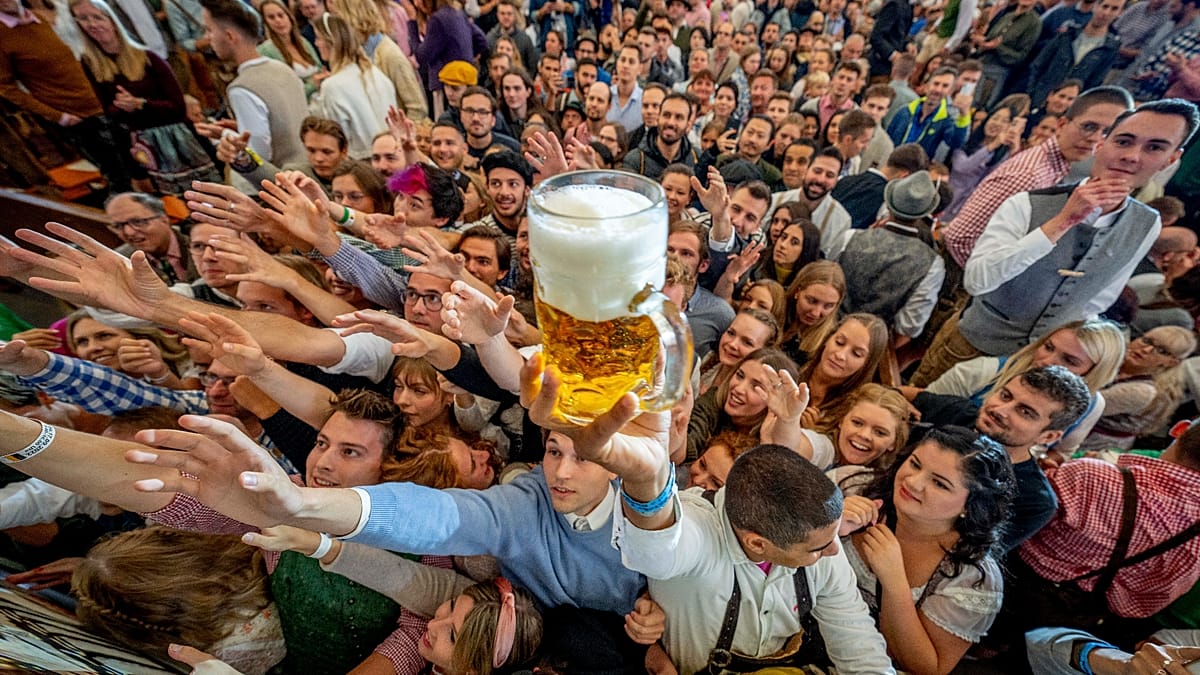
When Munich's mayor, Dominik Krause, taps the first barrel on the Theresienwiese on 19 September, the traditional cry of "O'zapft is" will signal the start of Oktoberfest 2026. The world's largest folk festival runs until 4 October, and organisers expect more than six million visitors to the Bavarian capital.
But before raising a stein, attendees should familiarise themselves with a set of regulations that have tightened in recent years, particularly around cannabis and the safety of young children.
Cannabis ban with heavy fines
Since July 2024, Bavaria's Cannabisfolgenbegrenzungsgesetz has prohibited cannabis consumption in certain public spaces, and the festival grounds are strictly off-limits. Anyone caught smoking cannabis on the Wiesn faces a fine of €1,500; repeat offenders can be charged more than €5,000. Munich police recorded 27 such breaches last year. Possession of up to 25 grams remains legal for adults under national law, but lighting up is not tolerated.
Tobacco smoking is still allowed outdoors and in beer gardens, though a strict ban has applied inside the tents since 2010. Most tents provide designated smoking areas or balconies, and ignoring the rules can cost up to €1,000.
Children and prams: strict time limits
Families with young children need to plan carefully. From Sunday to Friday, prams and buggies are welcome until 6 pm; after that, the crowds become too dense. On Saturdays and on 3 October, prams are banned entirely for safety reasons.
Inside the beer tents, children under six must leave by 8 pm, even with their parents. Those under 16 are not allowed on the fairground after 8 pm unless accompanied by a legal guardian. Teenagers aged 16 and 17 may stay until closing time, though in some tents like Käfer or the Weinzelt, the night ends at midnight.
Getting there: no bikes or scooters on site
Bicycles, e-scooters, skateboards, and inline skates must be parked outside the entrances. After a few Maß, hopping on an e-scooter or bike is risky: a blood alcohol concentration of 0.5% can lead to a €500 fine, two penalty points on your licence, and a possible one-month driving ban. This aligns with broader European efforts to regulate micro-mobility, as seen in Athens' recent crackdown on e-scooters.
Cocaine: a growing concern
Cocaine remains one of the most common illegal drugs at the festival. In 2025, around 100 people were caught using it on the Wiesn. The Bavarian State Office of Criminal Investigation (BLKA) reported that cocaine offences in Bavaria rose from 2,148 in 2020 to 3,972 in 2024 – an increase of nearly 85%. Munich itself saw 1,396 drug offences involving cocaine or crack in 2025, up 13.8% from the previous year.
Drinking contests and table climbing banned
Organisers draw a clear line between a lively atmosphere and a loss of control. Drinking contests, where guests down a Maß as quickly as possible or encourage others to drink excessively, are strictly prohibited. Climbing on tables or benches, which endangers other visitors, can lead to immediate ejection.
For those who follow the rules, the festival remains a celebration of Bavarian culture. But it comes at a cost: a Maß of beer now costs between €14.80 and €15.90, an average increase of 2.38% compared to last year. As the EU pushes for more sustainable practices, visitors might also note the EU's repair rules that aim to reduce waste – a reminder that even at Oktoberfest, sustainability is a growing theme.
With these rules in mind, visitors can enjoy the Wiesn responsibly, raising a glass to the traditional toast: Ein Prosit der Gemütlichkeit!