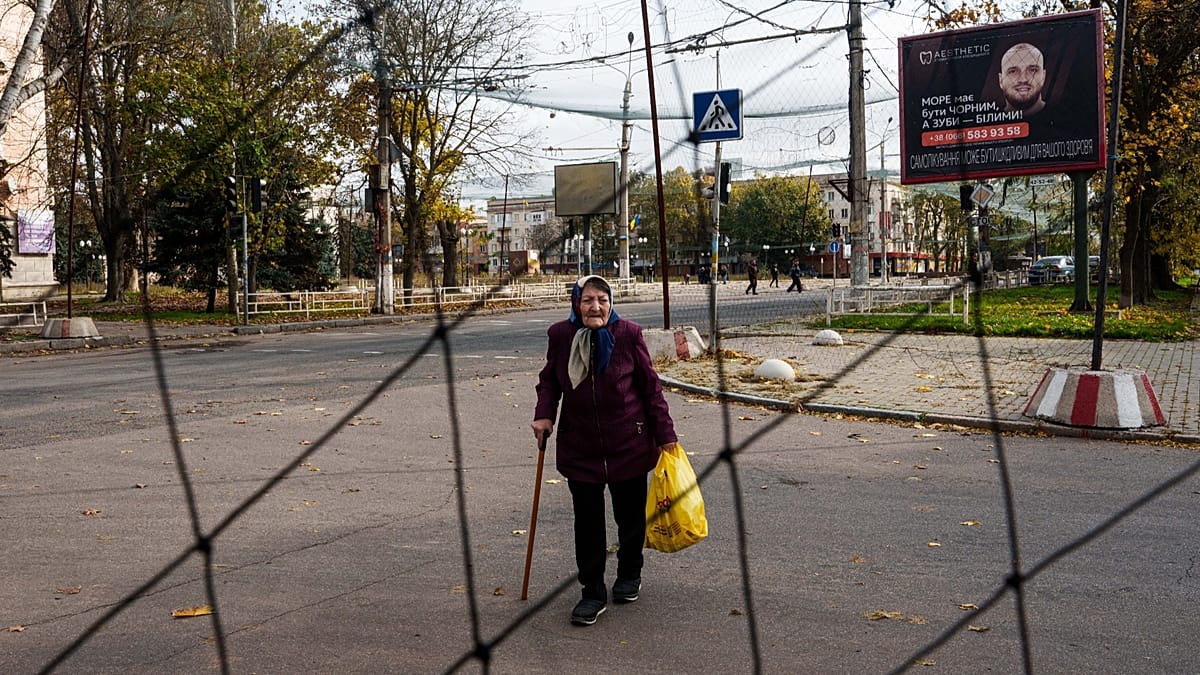
For the first time in years, a humanitarian convoy is expected to enter the Russian-occupied town of Oleshky in southern Ukraine, bringing food, medicine, and the possibility of evacuation to roughly 2,000 residents who have endured months of deprivation. The operation, scheduled for Friday, is the result of a temporary ceasefire that runs until Sunday, but it offers no easy answers for those trapped inside.
Former Ukrainian Prime Minister Arseniy Yatseniuk described the situation in stark terms on Europe Today: “What is happening right now in Oleshky is a humanitarian disaster and it's actually a living hell.” He warned that Moscow cannot be trusted to honor the truce, accusing the Kremlin of using civilians as hostages and staging the operation to cast itself as a rescuer rather than an occupier.
A town on the edge
Oleshky, located on the Dnipro River’s left bank in the Kherson region, has been under Russian control since late 2022. The town has been systematically destroyed, with residents reportedly forced to eat weeds to survive. Tetiana Hasanenko, head of the Oleshky city military administration, painted a grim picture: “People have been forced to eat weeds. The city is practically destroyed.”
The humanitarian mission, agreed with the involvement of US First Lady Melania Trump, marks a rare moment of international attention on a town that has largely slipped from global headlines. But the ceasefire’s short duration presents a harrowing dilemma for residents: they can either risk evacuation through Russia or occupied Crimea, with no guarantee of reaching Ukrainian-controlled territory, or remain in a place where basic necessities are increasingly scarce.
All eyes will be on Oleshky to see if the operation proceeds without incident, and whether the truce holds beyond Sunday. The stakes are existential for the town’s remaining civilians.
Meanwhile, the broader conflict continues to shape European security. The EU and Canada are deepening their partnership, with a summit in Montréal that underscores a transatlantic realignment. European Commission President Ursula von der Leyen has revived her push for Canada to become the bloc’s first “associate member,” a concept that has met resistance from Germany. Chancellor Friedrich Merz instead endorsed an “alliance for the future,” while Canadian Prime Minister Mark Carney has embraced the associate membership language, leaving the idea’s fate uncertain.
In a separate development, the European Commission has proposed sweeping reforms to Frontex, the EU’s border and coastguard agency, granting it unprecedented powers to deport irregular migrants, monitor social media, and respond to mass arrivals. Critics warn the expanded mandate could lead to rights violations, with some MEPs drawing parallels to US Immigration and Customs Enforcement.
Closer to home, Albania has introduced heavy fines for people present at demonstrations that turn violent, a move aimed at curbing months of anti-government protests in Tirana. The fines, up to €5,500, apply to anyone who remains in a crowd engaged in violence or looting, a significant sum in a country where the average monthly salary is around €930.
As the world watches Oleshky, the fragility of the ceasefire and the humanitarian operation’s outcome will test whether international engagement can make a difference in a war that has already claimed tens of thousands of lives. For the residents, the choice is stark: leave with no assurances, or stay and hope for a miracle.