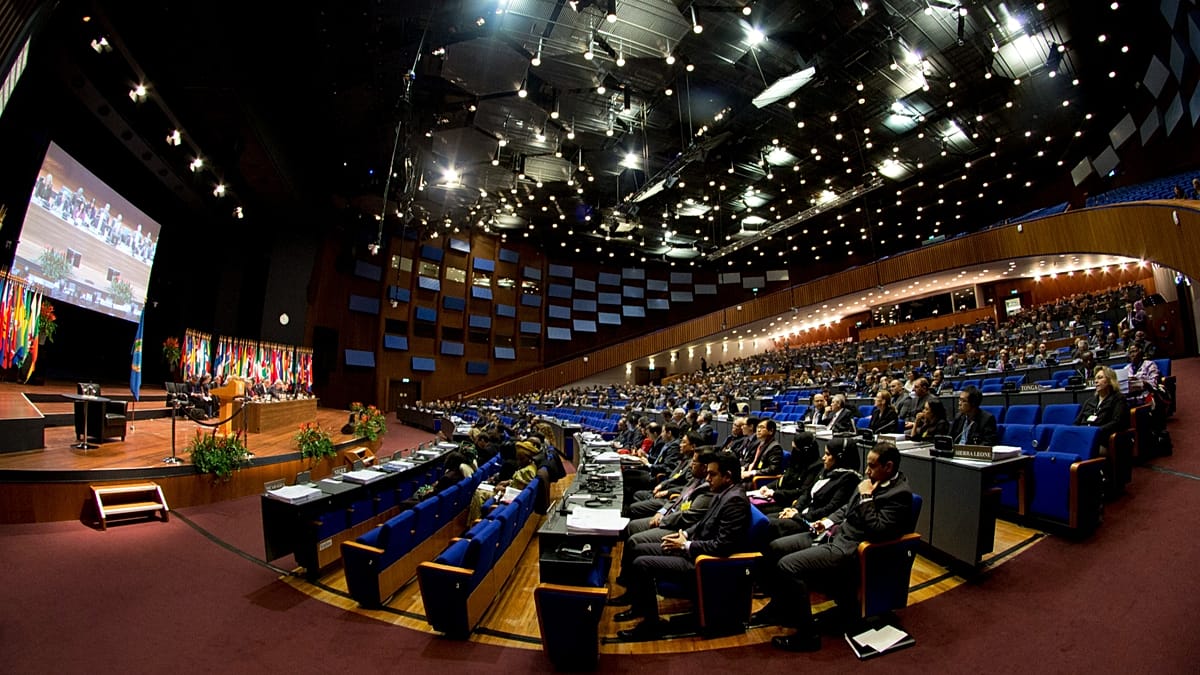
The Organisation for the Prohibition of Chemical Weapons (OPCW) announced on Thursday that it has reinstated Syria's voting rights, a decision driven by what the watchdog described as a 'significant change in circumstances' following the collapse of Bashar al-Assad's regime. The move marks a dramatic reversal from 2021, when the OPCW took the unprecedented step of stripping Syria of its voting privileges after concluding that its air force had used sarin and chlorine gas against civilians during the country's brutal 13-year civil war.
Since Assad's overthrow in late 2024, the new government in Damascus has pledged full cooperation with the OPCW to eliminate the chemical weapons that the former president was repeatedly accused of deploying. The OPCW's statement noted that the Syrian authorities have taken 'concrete steps' to cooperate, including allowing inspectors to establish a permanent presence in the country to document suspected chemical weapons sites and interview witnesses to past attacks.
Diplomatic Shift and International Reaction
The decision, which restores Syria's right to vote in OPCW meetings, was welcomed by Syria's foreign ministry as a reflection of 'the international community's confidence in the transformation that Syria has undergone.' The ministry specifically thanked Qatar for its diplomatic efforts in achieving consensus. OPCW Director-General Fernando Arias described the reinstatement as 'another milestone in the OPCW's efforts to achieve the complete and verified elimination of all remaining chemical weapons associated with the former Syrian government.'
The reinstatement comes after a period of intense diplomatic engagement. Arias has visited Damascus, and Syrian officials have addressed the OPCW at its headquarters in The Hague. The watchdog urged the new government to continue cooperating 'towards closing the chemical weapons dossier inherited from the former regime.'
This development is part of a broader European engagement with post-Assad Syria. French President Emmanuel Macron made a historic visit to Damascus earlier this year, becoming the first Western European leader to travel to the country since the civil war began. During that trip, explosions were reported in Damascus as Macron met with Syrian President al-Sharaa, underscoring the fragile security situation.
The OPCW's decision also highlights the evolving role of international institutions in post-conflict reconstruction. For European policymakers, the reinstatement signals a cautious willingness to engage with Syria's new leadership, provided it meets its disarmament obligations. The European Union has long been a key supporter of the OPCW, both financially and politically, and the watchdog's work in Syria remains a priority for Brussels.
Syria's original agreement to join the OPCW in 2013 came under intense pressure from Russia and the United States, after a suspected chemical attack on the Eastern Ghouta suburb of Damascus killed more than 1,000 people. At the time, the Assad regime denied involvement and blamed rebels, but it agreed to disclose and hand over its toxic stockpile to avert the threat of US-led airstrikes. However, the regime later failed to declare all of its chemical weapons programme and attempted to mislead inspectors.
The reinstatement of Syria's voting rights is a significant step, but challenges remain. The OPCW has urged Damascus to maintain transparency and fully dismantle the chemical weapons infrastructure left by the former regime. For Europe, which has seen a resurgence of interest in chemical weapons proliferation amid conflicts in Ukraine and elsewhere, the Syrian case serves as a reminder of the importance of robust verification mechanisms.