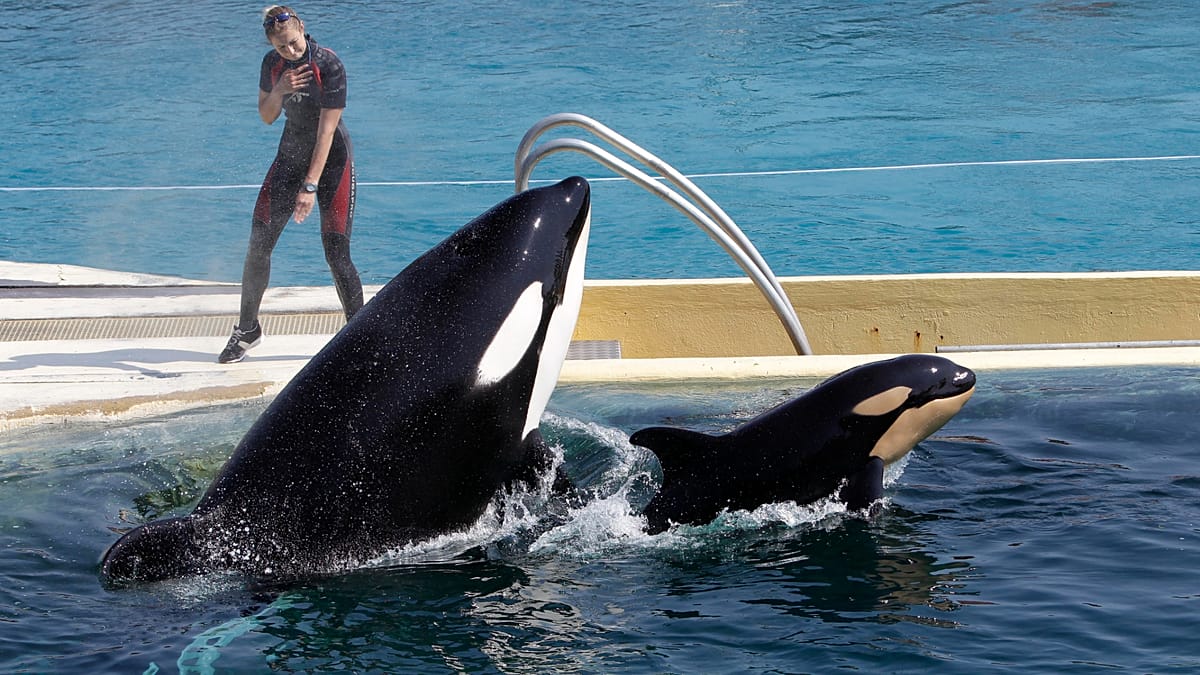
Two orca whales, Wikie and Keijo, who were retired from a French theme park shuttered under a 2021 law banning the use of marine mammals in performances, are now destined for Loro Parque in Tenerife, Spain. The decision has drawn sharp criticism from a coalition of twelve European environmental organisations and wildlife charities, who argue the facility is unsuitable and that the whales will continue to be exploited.
From Antibes to Tenerife: A Controversial Journey
Mother and son Wikie (24) and Keijo (12) have been housed in a tank at Marineland in Antibes, on the French Riviera, since the park closed in 2025. The closure followed France's landmark legislation that ended the use of whales and dolphins for public entertainment. The pair remain there alongside twelve bottlenose dolphins, while authorities debated their fate—including a previously considered option of euthanasia, which was rejected after government intervention.
Last week, Mathieu Lefèvre, France's Minister for Ecological Transition, announced that the whales would be transferred to Loro Parque in Puerto de la Cruz, Tenerife, within weeks, before the end of June. This marks a reversal from an earlier government position that had rejected the Spanish zoo as a destination. Lefèvre had previously approved a plan to send the whales to a seaside sanctuary in Nova Scotia, Canada, but that plan stalled after experts raised concerns that the water temperatures there would be too cold for the animals.
During a surprise visit to Marineland on 15 May, Lefèvre noted the “progressive deterioration” of the pools, which he said justified the urgent move. “I remind you that two cetaceans have already died here. So I'm not going to take the risk of this happening again,” he told Le Figaro, standing beside a damaged section of the tank.
Welfare Groups Sound Alarm
UK-based wildlife charity Born Free has expressed “deep concern” over the transfer, stating that at Loro Parque the orcas “would likely continue to be exploited for public entertainment, and potentially for breeding.” The charity notes that Spanish authorities themselves had previously deemed the conditions at the dolphinarium unfit for Wikie and Keijo, and that four orcas have died prematurely at Loro Parque between 2021 and 2024.
Charles Vinick, CEO of the Canadian Whale Sanctuary Project—which had been approved to accept the whales—called the decision “devastating for Wikie and Keijo.” He pointed out that the 2021 French law was explicitly designed to end captive breeding and performance-based programming. “Transferring Wikie and Keijo into that environment risks perpetuating the very system the law was designed to phase out,” he said.
In response, Martin Böye, scientific director of the Loro Parque Fundación, defended the facility, saying that when orcas have died there, “thorough investigations have been conducted by top experts with full transparency toward authorities and stakeholders... The causes have always been clearly identified and were not related to habitat conditions.”
Europe’s Remaining Captive Orcas
Wikie and Keijo are among only six orcas still held in captivity across Europe. According to the archive Inherently Wild, which tracks the stories of captive orcas, Wikie was artificially inseminated at age eight and gave birth to her first calf, Moana, in 2011. She later mated with her half-brother Valentin, producing Keijo in 2013. The pair have spent their entire lives in concrete tanks, and experts say they cannot be released into the wild because they lack the necessary survival skills.
The transfer, expected to cost several hundred thousand euros, will be carried out by cargo plane. Marineland management says it must happen before the end of June, or be postponed due to summer heat. Loro Parque President Wolfgang Kiessling stated the zoo has “the willingness and firm commitment to collaborate with public authorities, assisting and rescuing Wikie and Keijo,” but stressed that final approval from the Spanish government is required.
The controversy highlights the ongoing tension between animal welfare legislation and the practical challenges of rehoming captive marine mammals. While France’s 2021 law was a progressive step, the fate of Wikie and Keijo underscores how difficult it is to break the cycle of captivity once it has begun.