Bumblebees are essential pollinators, yet their populations across Europe are in steep decline. A new study from Lancaster University offers a surprising potential remedy: well-managed solar farms. The research, published in Global Change Biology, suggests that solar installations, if designed with biodiversity in mind, could become vital refuges for these insects.
The study modelled bumblebee foraging and population dynamics across 1,042 operational solar farms in Great Britain. It found that the number of bumblebees within these sites could more than double if the land is managed to encourage wildflowers rather than turf. “Solar farms can be refuges for bumblebees in the present day and in the future and could play a part in mitigating habitat loss – if managed well,” said Dr Hollie Blaydes, Senior Research Associate at Lancaster University and lead author.
Bumblebees are among the most effective pollinators, contributing to about 75 per cent of global leading crops and a third of the world's food production. Yet a 2023 study in Nature projected that 38 to 76 per cent of European bumblebee species currently classified as ‘Least Concern’ could lose at least 30 per cent of their ecologically suitable territory by 2061–2080. In the UK, 2024 was the worst year on record for bumblebees, according to the Bumblebee Conservation Trust.
Why Solar Farms Matter for Bees
The decline is driven by land-use change, intensive agriculture, invasive species, infectious diseases, and climate change, which intensifies extreme weather and disrupts life cycles. Solar farms, which cover large areas of land, are often planted with turf grass that offers little food for pollinators. But if seeded with wildflowers, they can provide a rich source of nectar and pollen.
Community solar farms are already widespread across Europe, from Germany to Spain, offering citizens the chance to invest in local clean energy projects. These schemes often provide financial returns or cheaper energy, and now there is an added ecological incentive. The Lancaster study is the first to examine the role of solar farms in future biodiversity conservation at such a detailed scale. “The model predicts how bees use these landscapes based on foraging and nesting resources,” Blaydes explained. “This aspect of the work was particularly novel – it is unusual for modelling like this to be done in such detail.”
The findings come as Europe accelerates its renewable energy rollout. Renewables have already slashed European electricity prices by 25 per cent, and solar capacity continues to grow. However, the researchers caution that solar farms alone cannot reverse the broader trend of habitat loss. “Solar farms alone will not be able to counteract the effects of all future land use changes on bumblebees and other biodiversity,” Blaydes said.
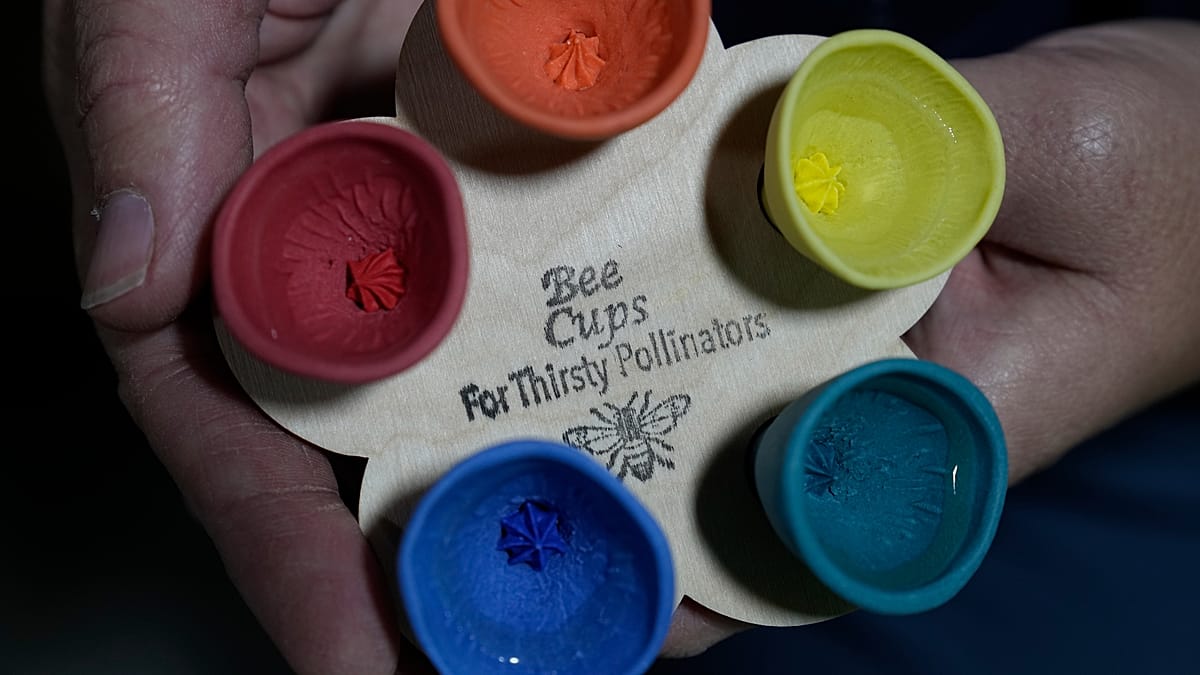
For individuals, there are also simple steps to help. The UK's RSPCA recommends creating DIY bee drinking stations, as heatwaves dry up natural water sources. Planting bee-friendly flowers – such as lavender, foxglove, and wild marjoram – provides food throughout the season. And for those with the means, investing in a community solar farm can support both clean energy and pollinator habitats.
The study underscores a broader point: the transition to renewable energy need not come at the expense of nature. With careful planning, solar farms can serve dual purposes – generating clean power and bolstering biodiversity. As Europe faces both a climate and biodiversity crisis, such synergies are increasingly valuable.