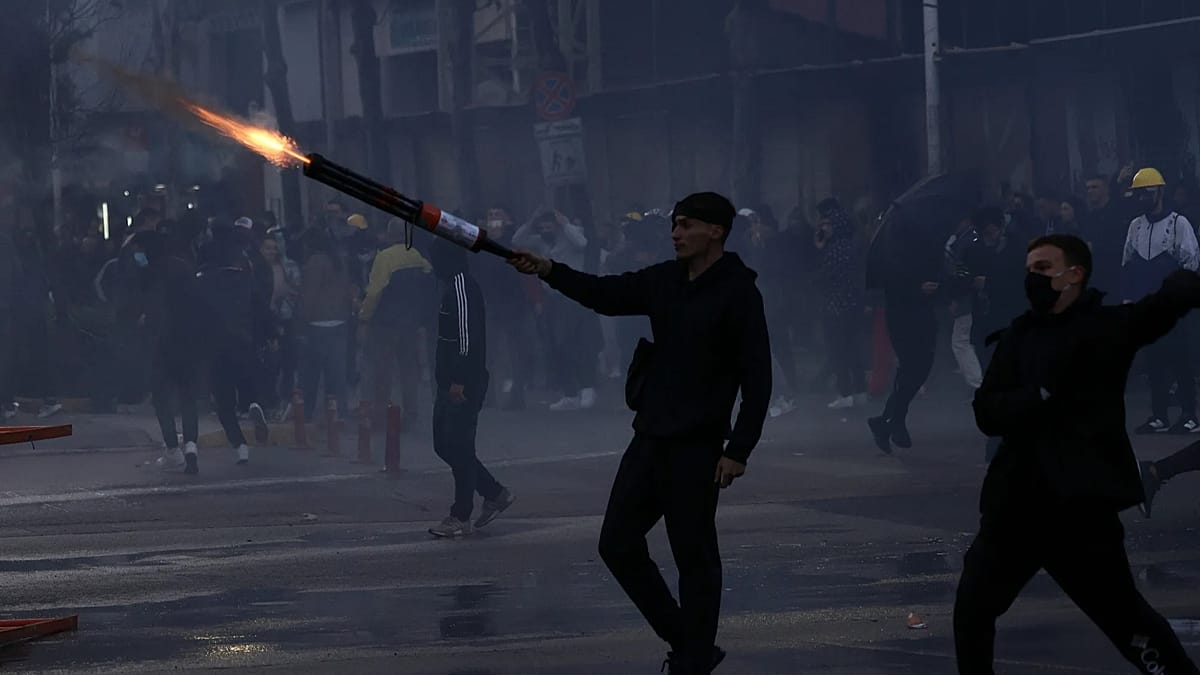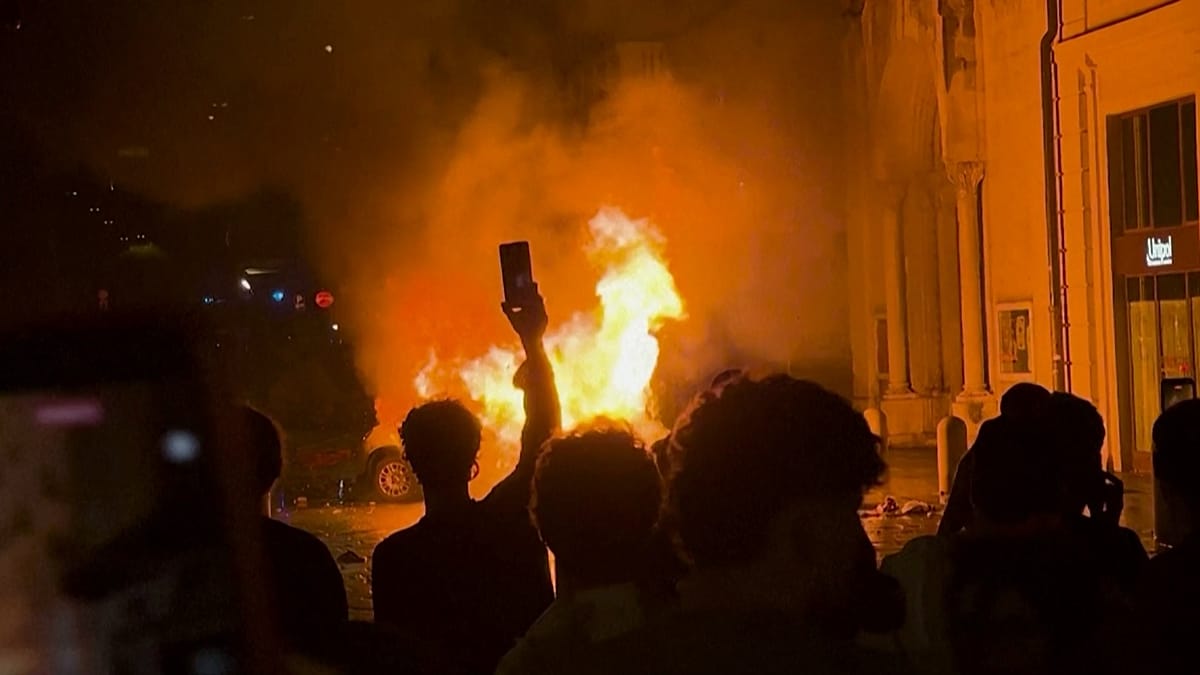
Anger is mounting across Italy after a 42-year-old Moroccan man died while being restrained by police officers in Bologna, with video footage showing him repeatedly calling for help before losing consciousness. The case has drawn comparisons to the murder of George Floyd in the United States six years ago and has reopened a fierce debate about policing tactics and immigration policy in Giorgia Meloni's Italy.
Abderrahim Fakir, who moved to Italy from Morocco at the age of five and reportedly suffered from heart issues and asthma, died on Sunday after two police officers forcibly held him down on the ground. In a video widely circulated by Italian media, Fakir can be heard shouting “aiuto, aiuto, basta” (“help, help, that's enough”) as the officers sit on him while ambulance workers stand nearby. After he stops moving, the officers bind his ankles together. Only after a pause do they and the medical team check his vital signs.
Political divisions over police conduct
The incident has triggered a protest in Bologna on Monday, with demonstrators demanding “justice and truth for Fakir”. Opposition politicians have been quick to condemn the officers' actions. Senator Ilaria Cucchi, whose own brother died in police custody in 2009, expressed disgust at what she called the “solidarity and thanks” offered to the police after an “inhumane act”. Cucchi, a member of the Greens and Left alliance (AVS), accused the far-right government of fostering a climate of violence through “policies seeped in hatred and racism”.
Francesco Boccia, head of the centre-left Democratic Party (PD) in the Senate, told Repubblica that “if the right wants to import the ICE model, this is the wrong country for it. We have democratic antibodies.” The reference to the US Immigration and Customs Enforcement (ICE) under Donald Trump has become a recurring theme in the debate, with critics arguing that Italy's hardline approach to migration is encouraging heavy-handed policing.
On the other side of the political spectrum, Italy's far-right Deputy Prime Minister Matteo Salvini defended the police, while Galeazzo Bignami, head of Prime Minister Giorgia Meloni's Brothers of Italy party in the lower house, praised the officers' “professional conduct”. Interior Minister Matteo Piantedosi told state broadcaster Rai1 that “whoever makes insulting remarks against the police shows they have no trust in our law enforcement nor in our justice system (and) should look into what happened.”
Legal shield and investigation
Prosecutors in Bologna have opened an investigation and requested body-camera footage from the officers involved. Pending the results of an autopsy and further evidence, a so-called “legal shield” has been activated for six people: the two police officers and four medical workers. Justice Minister Carlo Nordio explained to Corriere della Sera that the measure is not immunity but a procedural step to avoid automatic entry in the register of suspects, which he said “has become a kind of conviction in advance”. The shield applies when conduct may have been justified by self-defence or fulfilment of duty, leaving the judiciary to assess the facts.
Information obtained so far indicates that the officers used pepper spray on Fakir before pinning him to the ground. The man had wounds to his head and face, though how he sustained them has not yet been determined. The case has also drawn attention to broader tensions around policing in Italy, where thousands of military and police personnel recently marched in Rome over pay and pensions, highlighting a force under strain.
The Fakir case is the latest in a series of incidents that have tested public trust in Italian law enforcement. For many, it echoes the death of Stefano Cucchi, Ilaria's brother, who died in police custody in 2009, a case that led to widespread protests and reforms. The current government's tough stance on immigration and crime has only deepened the divide, with critics arguing that it emboldens officers to use excessive force, particularly against migrants and minorities.
As the investigation unfolds, Bologna remains a focal point of anger and grief. The city's mayor has called for calm, but the political fallout shows no signs of abating. For a country already grappling with environmental challenges like the Po River algae bloom and a heated debate over labour practices in its luxury sector—police recently raided brands like Bulgari and Chanel over supply chain abuses—the Fakir case adds another layer of tension to a nation in flux.