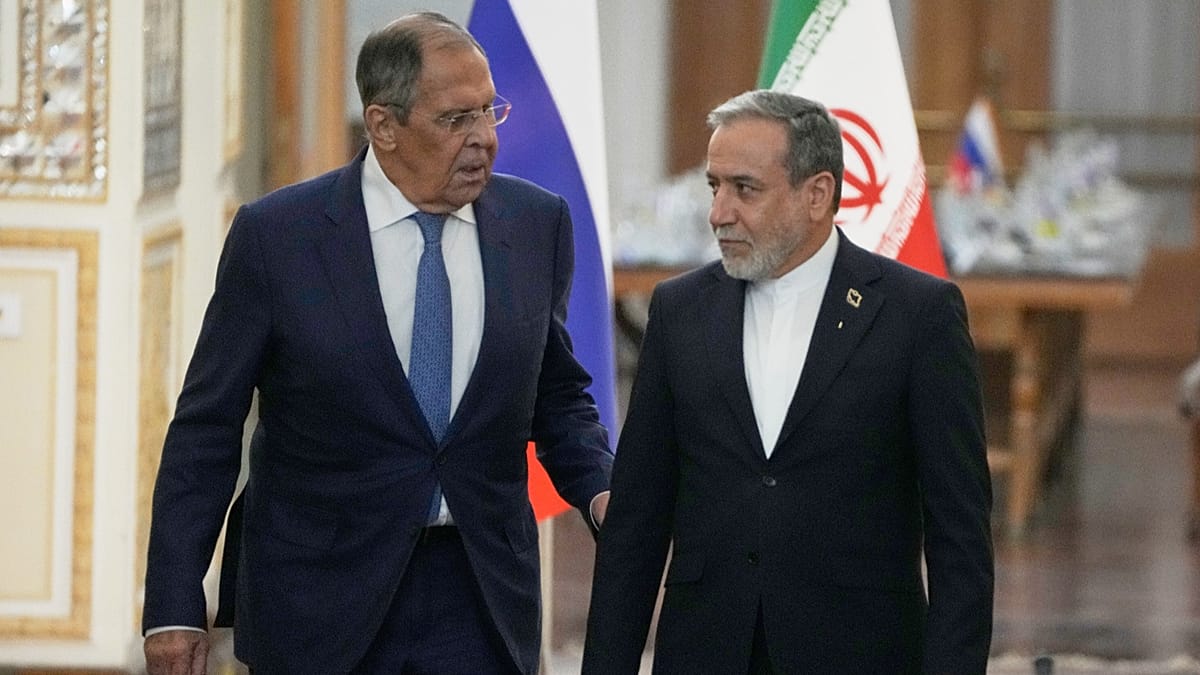
In a pointed rebuke to Washington, Russian Foreign Minister Sergei Lavrov declared on Monday that Iran's struggle is a "just cause," echoing Moscow's own narrative, during a joint press conference in Tehran with his Iranian counterpart, Abbas Araghchi. The remarks came just hours after US President Donald Trump publicly downplayed Russia's assistance to Iran, saying Moscow was doing "very little, if anything" to help the Islamic Republic.
Lavrov accused the United States and Israel of launching an unprovoked military campaign against Iran and reaffirmed Moscow's commitment to continue supporting Tehran. "We once again expressed our country's readiness to assist in finding mutually acceptable solutions to overcome this man-made crisis," he said, according to Kremlin-controlled media.
Moscow's dual track: diplomacy and economics
While offering diplomatic support, Lavrov also made clear that Russia would not abandon its economic partnership with Iran. "Despite the difficult circumstances, Russia does not intend to abandon the implementation of agreements with Iran in the economic and investment spheres," he said. This includes ongoing humanitarian aid, such as medicines and regular food shipments, as well as broader trade ties.
Lavrov welcomed Tehran's stated willingness to engage in diplomacy and called for a return to conditions that prevailed before the conflict in the Persian Gulf and the Strait of Hormuz, including restoring freedom of navigation and securing guarantees against renewed military action. He also claimed that Moscow had worked at the United Nations to block attempts to justify US and Israeli strikes against Iran.
Trump's balancing act
Trump's comments, posted on Truth Social on Sunday, were part of a broader defence of his decision to ease economic pressure on Moscow. He argued that further sanctions could jeopardise negotiations to end the war in Ukraine. "I am in the process of negotiating Peace in the war between Russia and Ukraine, and don't want to do anything that will drive, foolishly, Russia away from the bargaining table," he wrote.
The US president also directed fresh criticism at Ukrainian President Volodymyr Zelenskyy, accusing Kyiv of damaging global diesel markets by continuing strikes against Russian oil refineries. Trump claimed it was Ukraine's attacks, not Russia's invasion or Washington's campaign against Iran, that were hurting American farmers, businesses and consumers. He praised Russia for agreeing to supply diesel to international markets at relatively low prices.
Trump's remarks follow Washington's decision to waive a new sanctions package targeting Russia and to ease restrictions on Russian diesel, measures that have drawn criticism for potentially providing Moscow with additional revenue while its war against Ukraine continues. The move has also raised questions about the consistency of US policy, as Trump's blame game masks deeper policy failures that European allies are watching closely.
For European capitals, the episode underscores the fragility of transatlantic unity on both Iran and Ukraine. While the EU has maintained a coordinated sanctions regime against Russia, Washington's waivers create a potential rift. The Visegrád Four's pushback on the EU's 2027 Russian energy exit plan is a reminder that internal European divisions also persist.
Meanwhile, Moscow's pivot to Asia and the Middle East continues, as Russia turns to Asia as European tourism collapses, and its diplomatic overtures, such as Putin's proposed three-way summit with Trump and Xi, are seen by many as attempts to reshape global alliances.
Lavrov's unequivocal backing of Iran sends a clear signal that Moscow will not be swayed by US pressure, even as Trump seeks to keep Russia engaged in Ukraine negotiations. The coming weeks will test whether Washington's softer line on Moscow yields any diplomatic dividends, or whether it merely emboldens Russia's support for Tehran.