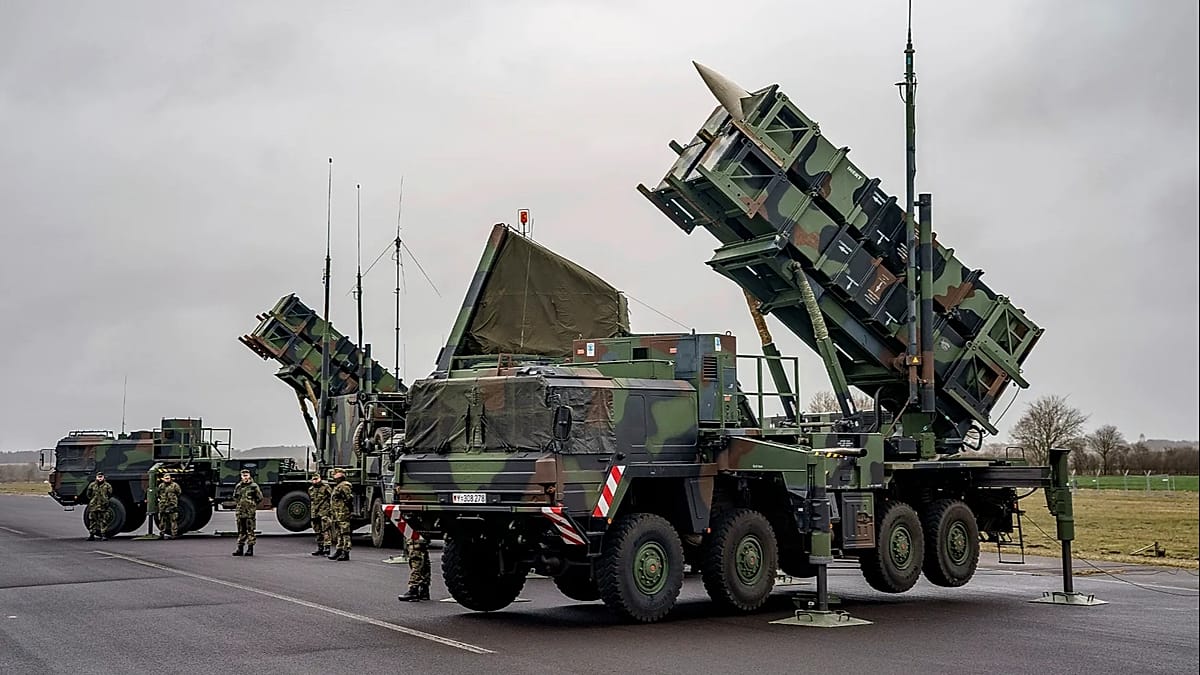
Washington has poured cold water on hopes that Ukraine could soon start producing Patriot interceptor missiles under licence, a move Kyiv sees as vital to withstand Russia's relentless missile barrages. Matthew Whitaker, the US ambassador to NATO, said on Monday that no long-term production agreement would be concluded before winter, citing strict US export controls and the sensitivity of the technology.
“A long-term production agreement will not be concluded before this winter. So we will continue working on it,” Whitaker told Fox News, adding that PAC-3 interceptors are tightly controlled and that “we do not allow anybody but US manufacturers to make those in the United States.”
The remarks come after weeks of mixed signals from the Trump administration. At a NATO summit in Ankara on 8 July, President Donald Trump said the US would grant Ukraine a production licence. But by 31 July he had backtracked, calling the move “a big step” and saying no final decision had been taken. The uncertainty has left Ukrainian officials and European allies guessing just as Kyiv braces for another winter of Russian strikes on its energy grid.
Kyiv's urgent calculus
For Ukraine, the licence is about more than immediate survival; it is about long-term resilience. Ukrainian officials argue that co-production would speed up supply and tie Ukraine more closely into the Western defence-industrial base. President Volodymyr Zelenskyy has made expanding domestic defence production a central pillar of the war effort, including deeper cooperation with US firms such as Lockheed Martin, which manufactures the interceptors alongside Raytheon.
But the numbers are stark. According to Kyiv, Lockheed Martin produces roughly 60–65 interceptors per month, while Russia is manufacturing around 120 ballistic missiles monthly, along with other systems. Moscow has also tailored its strikes to exploit gaps in Ukraine's air defence, as seen in recent deadly attacks on Kyiv and other cities.
The global Patriot stockpile has been further depleted by US operations in the Gulf, where Washington has used the systems extensively. This has made allied transfers of surplus interceptors—one of the few short-term options—more difficult.
Whitaker said Washington and its allies were focused on meeting Ukraine's immediate needs “as quickly as possible,” either through allied transfers or expanded US production. He also pointed to broader defence-industrial cooperation with Ukraine and European partners, saying there are “co-production opportunities that we can do with the Ukrainians, that we can do with the Europeans, to increase the industrial base and support the defence of Ukraine and the defence of Europe.”
Those words offer some hope, but no concrete timeline. The issue was discussed at a meeting between Trump and Zelenskyy in Washington on 29 July, where the two leaders explored options for expanding Ukraine's domestic defence production. Zelenskyy said the talks covered potential licences for Patriot interceptors, but Trump gave no further clarity on timing.
Meanwhile, Trump's special representatives, Steve Witkoff and Jared Kushner, are expected to visit Kyiv in the second half of August, according to media reports. Zelenskyy said on 28 July that they could arrive within two weeks, with the trip likely to coincide with events marking the 35th anniversary of Ukraine's independence. He said he wanted to discuss ways to revive peace talks and give the envoys a first-hand look at the situation.
The delay is a blow to Ukraine's hopes of reducing its dependence on external supply, especially as European allies have their own Patriot shortages. The debate also touches on broader questions about technology transfer and the future of European defence, with some EU capitals watching closely to see whether Washington is willing to share such sensitive systems. As support for Ukraine's EU bid varies across the continent, the Patriot licence issue could become a test of transatlantic solidarity.
For now, Kyiv must continue to rely on a patchwork of allied donations and its own evolving drone and missile programmes, which have already shown their reach in attacks on Russian logistics. But without a reliable supply of Patriot interceptors, Ukraine's cities and energy infrastructure remain dangerously exposed as winter approaches.