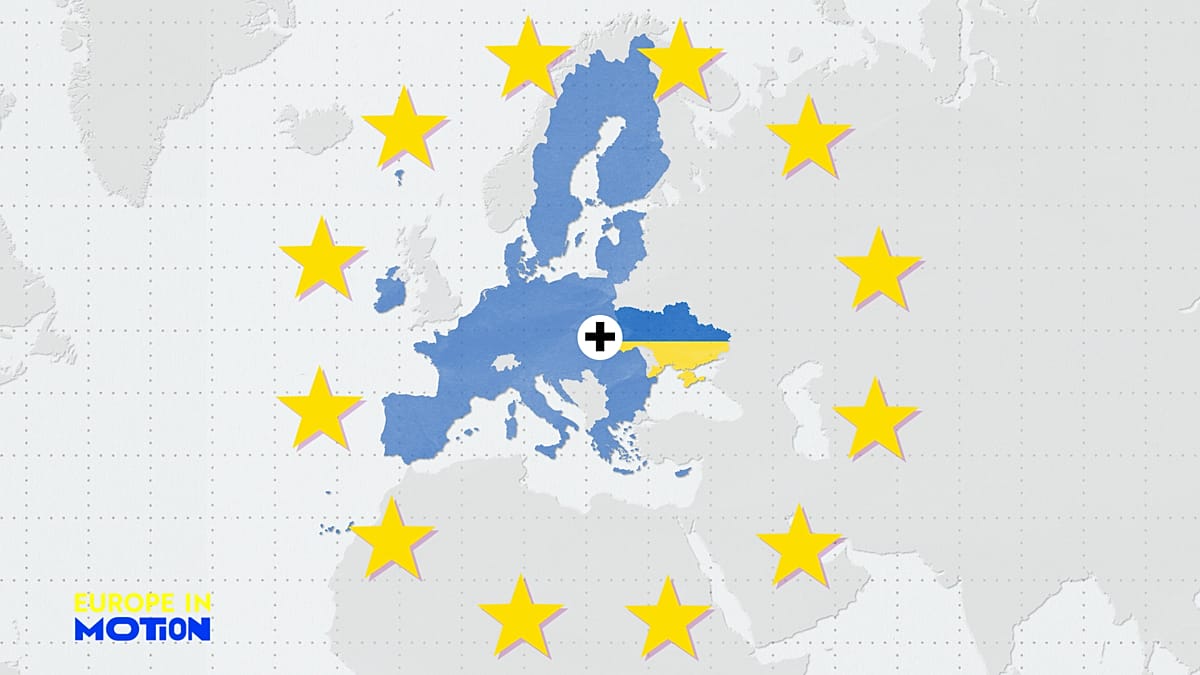
As Ukraine's EU accession negotiations move forward with the opening of a new policy cluster, a fresh cross-European survey offers a snapshot of public opinion on Kyiv's eventual membership. The results reveal a continent divided not only between east and west, but also among some of Ukraine's most vocal political backers since Russia's full-scale invasion in 2022.
According to a Polling Europe survey conducted in early July, 49% of respondents across the EU support Ukraine joining the bloc, while 39% are opposed at this stage and 12% remain undecided. The figures mask significant national variations, with enthusiasm strongest in southern and western Europe and scepticism most pronounced in several countries that have been at the forefront of military and diplomatic aid to Kyiv.
Spain and Italy lead the way
Support is most pronounced in Spain, where 65% of those polled back Ukraine's accession. The strength of Spanish sentiment reflects a deepening bilateral relationship since the invasion began. Madrid has trained more than 9,000 Ukrainian military personnel and, in 2026, announced a €1 billion military aid package. The Spanish public's endorsement aligns with the government's active role in European defence discussions, though it also comes amid broader debates about the EU's eastern enlargement and its budgetary implications.
Italy also shows clear majority support, with 52% in favour. However, many Italian respondents conditioned their backing on Kyiv implementing substantial reforms, particularly in governance and the rule of law. This pragmatic stance mirrors the official Italian position, which has been supportive but cautious, emphasising the need for Ukraine to meet all accession criteria before any final decision.
Surprising opposition in key allies
The poll's most striking finding is the shift in opinion in France, Germany and Poland – three countries that have been among Ukraine's strongest supporters since 2022. In each, a plurality of respondents now oppose Ukraine joining the EU as a full voting member. In Poland, opposition reaches 49%, the highest among all countries surveyed.
The Polish numbers are particularly noteworthy given Warsaw's role as a frontline state and a primary hub for Western military aid. The survey was conducted immediately after a major diplomatic row between Poland and Ukraine, which may have influenced public sentiment.
The Order of the White Eagle dispute
In early July, Polish President Karol Nawrocki stripped Ukrainian President Volodymyr Zelenskyy of the Order of the White Eagle, Poland's highest state honour. The decision came in response to Ukraine naming a military unit after the Ukrainian Insurgent Army (UPA), a World War II partisan force that fought both Nazi and Soviet forces but also carried out ethnic cleansing operations against Poles in Volhynia and Eastern Galicia between 1943 and 1945.
Zelenskyy, who had received the honour in April 2023, returned the medal with a curt statement, noting that Poland had not revoked the honour from figures such as Italian dictator Benito Mussolini (awarded in 1923) or former German Chancellor Gerhard Schröder, a longstanding associate of Vladimir Putin. The exchange underscored the deep historical sensitivities that continue to shape Polish-Ukrainian relations.
In the weeks following the dispute, Zelenskyy sought to mend fences. He granted exhumation permits and archive access related to the Volhynia tragedy, a move that Polish officials welcomed with “satisfaction and hope.” These steps may help ease tensions, but the poll suggests that the immediate fallout had already left its mark on Polish public opinion.
Negotiations continue amid mixed sentiment
Despite the public divisions, the EU's institutional machinery continues to advance. Accession talks are currently focused on cluster six, which covers external relations – including defence, trade and international policy alignment. This technical progress is separate from public opinion, but the gap between elite momentum and popular scepticism could become a political issue as the process moves toward more sensitive chapters, such as agriculture and cohesion funds.
The survey's overall 49% support rate suggests that while a majority of Europeans are not yet convinced, there is no overwhelming hostility to Ukraine's eventual membership. The challenge for Brussels and Kyiv will be to maintain public backing in the face of enlargement fatigue and the economic costs of integrating a large, war-affected country.
For now, the clearest message from the data is that support for Ukraine's EU bid is strongest in the Mediterranean and weakest in the countries that have borne the greatest burden of solidarity. Whether that pattern holds as negotiations progress will depend on both Ukrainian reforms and the EU's ability to frame enlargement as a shared strategic investment rather than a concession.