Poland's ambitious effort to build a hydrogen-powered public transport system is hitting serious roadblocks, according to a new report from the NGO Central and Eastern Europe Bankwatch Network. The analysis reveals that many municipalities are now retreating from hydrogen buses after discovering that fuel costs are dramatically higher than electricity, while refueling infrastructure remains woefully inadequate.
Polish cities initially embraced hydrogen buses because EU and state subsidies covered up to 100% of vehicle purchase costs, compared to 60–80% for electric buses. But once in service, operators found hydrogen fuel was far more expensive. In Rybnik, hydrogen fleets cost more than three times as much as diesel and four times as much as hybrids. In Rzeszów, projected fuel costs over 15 years exceeded the purchase price of the buses themselves.
By the end of April, Poland had 247 hydrogen buses deployed or contracted, with 140 in service and 107 still pending. Yet the country had only nine hydrogen refueling stations by the end of 2025, far short of the 32 envisioned in the government's 2021 hydrogen strategy. In contrast, Poland boasts more than 12,500 electric charging stations by early 2026.
Questioning 'Zero-Emission' Claims
The report also challenges the environmental credentials of hydrogen buses. Over 97% of Poland's hydrogen is produced from fossil gas, meaning the buses are labeled “zero-emission” only because they emit no tailpipe exhaust, while ignoring upstream emissions. “Polish hydrogen buses were widely presented as clean and zero-emission, but in practice the fuel was mostly fossil-derived and even the limited electrolytic hydrogen did not meet strict EU renewable standards,” the study states, noting that Poland uses biomass-generated electricity that does not qualify as green energy.
Battery-electric buses, by contrast, have advanced rapidly in range, charging infrastructure, and economics during the same period. Poland's electricity sector is shifting from coal to renewables like wind and solar, with renewables now generating about 30% of electricity, though coal still accounts for roughly half. Cities including Wrocław, Płock, and Żory have revised procurement plans after concluding electric vehicles offer lower risk and lower costs. Kraków also scaled back its hydrogen ambitions due to uncertainty over fuel supply and infrastructure.
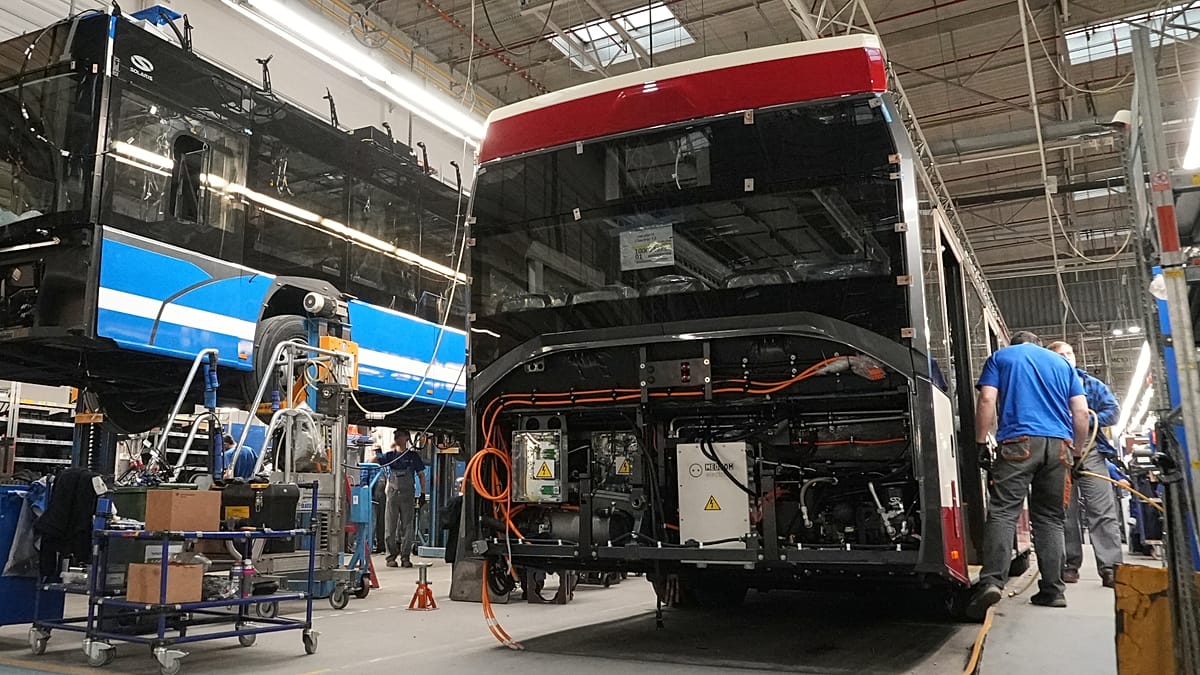
Polish automakers Solaris Bus & Coach and NesoBus have deployed numerous hydrogen and electric vehicles in cities such as Poznań, Konin, Lublin, and Wałbrzych. Meanwhile, the Polish government received a new batch of EU funds on 23 April totaling €7.2 billion, of which €500 million is intended to unlock hydrogen investments. With these grants, Warsaw is considering deploying more than 1,000 electric or hydrogen buses and trolleybuses, but questions remain about which technology will be prioritized.
The CEE Bankwatch Network claims projects involving hydrogen buses or refueling stations have received over €120.7 million in non-repayable grants and nearly €6.08 million in loans, backing 163 buses and two stations. An additional 73 fuel-cell electric buses and one station were funded through projects that also included battery-electric buses, making it impossible to determine the precise share allocated to hydrogen. “Hundreds of millions of euros from EU public funds spent to artificially create demand for hydrogen in Polish public transport could and should have been used to deploy real, tried-and-tested solutions which already offer benefits to local communities and the climate,” said report author Diana Maciaga.
Germany, in contrast, emerges as a hydrogen success story, currently operating over 600 hydrogen-powered public transport buses. The country will soon receive 19 additional hydrogen buses after Polish manufacturer Solaris won a tender on 4 May. Solaris has delivered over 800 hydrogen buses across Europe, with Germany leading the market, followed by France, Italy, and the United Kingdom. The contrast highlights how different policy frameworks and infrastructure investments can shape the viability of hydrogen transport.
As Europe grapples with rising fuel costs and the need to decarbonize transport, the Polish experience serves as a cautionary tale. For more on how fuel costs are reshaping travel patterns, see our report on Short-Haul Summer Travel Surges Across Europe as Fuel Costs Bite. Meanwhile, broader geopolitical shifts, such as the US scrapping a 4,000-troop deployment to Poland, add further complexity to the region's energy and security landscape.