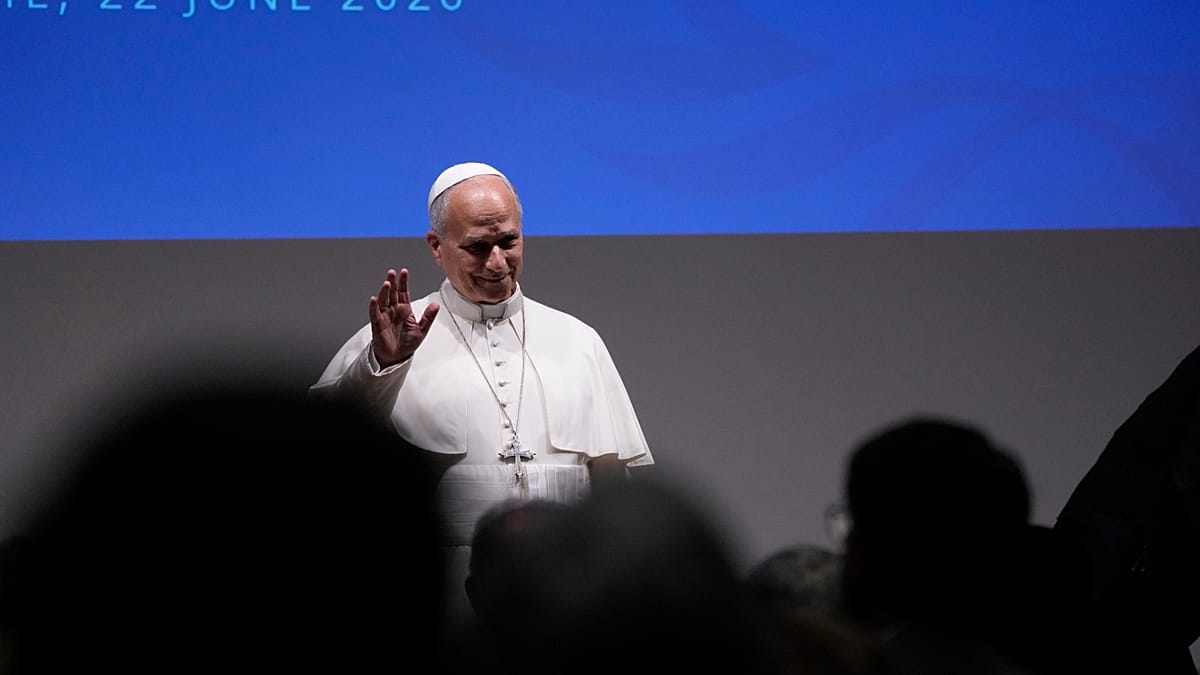
On Monday 22 June, Pope Leo XIV addressed staff at the United Nations World Food Programme (WFP) headquarters in Rome, delivering a pointed critique of global political and moral priorities. The pontiff thanked the organisation for its work in saving lives during emergencies and providing food assistance amid conflicts and natural disasters, noting that its mission aligns closely with the Catholic Church’s commitment to defending human dignity and promoting fraternity.
A System That Favours Conflict Over Nourishment
In his speech, Pope Leo XIV argued that aid schemes and development projects are frequently obstructed by what he called “involved and incomprehensible political decisions, skewed ideological visions and impenetrable customs barriers.” He contrasted this with the ease with which weaponry moves across borders. “Conflicts are fed more readily than people are nourished,” he said, describing this as evidence of “a fundamental imbalance in political and moral priorities.”
The Pope’s remarks come at a time when crises are multiplying across the globe—from conflict to hunger, from economic instability to climate change. He emphasised that hunger is not merely a humanitarian concern but a factor that erodes social cohesion, heightens the risk of conflict, and fuels forced migration. All of this, he warned, undermines the ability of states and societies to build resilient institutions, ensure effective education, and promote sustainable economic development.
Humanitarian support, in this context, represents a factor of international stability. The Pope stressed that “food, water and health care cannot be subordinated to markets or geopolitical interests.” He urged the international community to resist the commodification of basic human needs, calling for a reordering of priorities that places human dignity above profit and power.
The visit to the WFP headquarters in Rome—a city that hosts the headquarters of the UN’s food agency—underscores the Vatican’s longstanding engagement with global humanitarian issues. Pope Leo XIV’s predecessor, Pope Francis, had also frequently spoken out against the arms trade and the neglect of the poor. The new pontiff’s message echoes that tradition but with a sharper focus on the structural causes of hunger and the political decisions that perpetuate it.
As the European Union grapples with its own challenges—from trade imbalances with China to internal political tensions—the Pope’s critique resonates beyond the humanitarian sphere. It raises questions about how European nations balance their commitments to development aid with their own geopolitical and economic interests. The pontiff’s call for a fundamental reordering of priorities may find a receptive audience in some European capitals, even as others continue to prioritise defence spending and trade competitiveness.
In a world where crises have evolved from isolated events into persistent realities—prolonged conflicts, chronic food insecurity, economic volatility, and growing climate vulnerabilities—the Pope’s message is a reminder that the moral choices made today will shape the continent’s future. Whether European leaders heed that call remains to be seen.