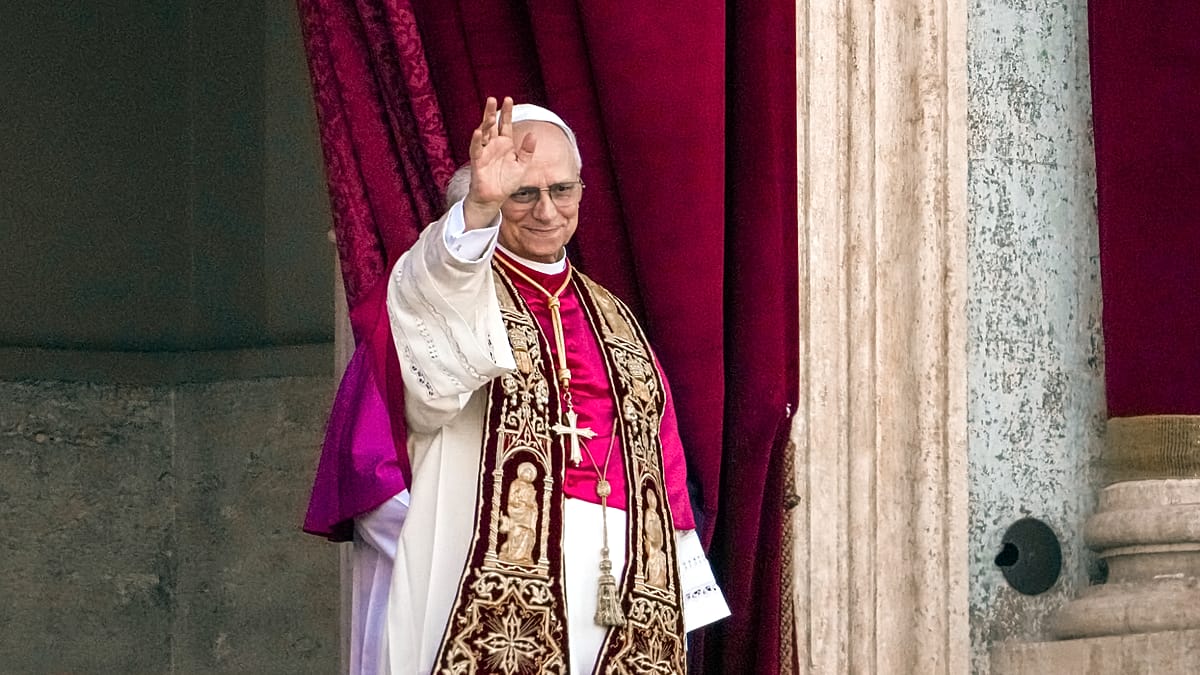
One year after emerging from the conclave as Leo XIV, Robert Francis Prevost marked the anniversary of his papacy with a pastoral visit to Campania, where he addressed thousands of faithful in Pompeii and Naples. The 70-year-old pontiff, the first American in history to lead the Catholic Church, used the occasion to renew his call for peace, a theme that defined the opening words of his reign.
In a homily delivered in the square before the Shrine of Pompeii, Leo XIV prayed for a "superabundant outpouring of mercy" from the God of peace, asking that it "touch hearts, appease grudges and fratricidal hatreds and enlighten those who have special governmental responsibilities." The message resonated against a backdrop of ongoing conflicts in the Middle East, Ukraine, and elsewhere, which the pope described as demanding "a renewed commitment not only economic and political, but also spiritual and religious."
"We cannot resign ourselves to the images of death that the chronicles propose to us every day," he declared, urging the faithful to reject despair. The visit, which drew an estimated 30,000 people to Piazza Plebiscito in Naples, also included meetings with volunteers and disadvantaged youth, underscoring the pontiff's focus on community engagement.
A Year of Balancing Tradition and Reform
Leo XIV's first year has been marked by deliberate efforts to navigate between the legacies of his predecessors, Benedict XVI and Francis. Elected as a compromise candidate, the former Prior General of the Augustinian order and head of the Vatican's bishop-appointing office quickly made concessions to the Church's conservative wing, particularly its influential U.S. base. He resumed wearing traditional papal vestments, reopened the papal apartments in the Apostolic Palace, and allowed ultra-conservative Cardinal Raymond Burke to celebrate a Latin Mass at St. Peter's in October 2025.
Yet the pope has also pursued a collegial approach, reviving the use of bishops' consistories, a consultative tool rarely employed under Francis. On financial matters, he moved swiftly to clarify the limits of the Institute for Religious Works (IOR), the Vatican bank, stripping it of exclusive authority over the Holy See's patrimony and transferring that responsibility to curial bodies.
The pontiff's calm demeanor has been tested by tensions with the Trump administration. In May 2026, amid a renewed Middle East war and Trump's fierce criticism of the Holy See, Leo XIV met with U.S. Secretary of State Marco Rubio in a tepid reparatory session. The pope has consistently rejected political pressure, stating, "I am not afraid of the Trump administration" and "I am not a politician." His anti-war message, first articulated from the central loggia of St. Peter's a year ago as a call for "unarmed and disarming, humble and persevering peace," has been overshadowed by bombings by Israel, the United States, Iran, and Russia, but remains central to his mission.
The Italian Episcopal Conference (CEI) praised the pope's first year, noting in a message that "his voice has called everyone to the responsibility of peace: not as an abstract formula, but as an evangelical requirement and daily task." Cardinal Matteo Maria Zuppi, president of the CEI and a key figure in the conclave, wrote in the daily Avvenire that Leo XIV is "a meek man who speaks of love and unity," quoting the pontiff's vision of "a missionary church, which builds bridges and dialogue, always open to receive with open arms."
As the pope moves into his second year, the challenges remain formidable. The wars that have defined his first twelve months show no sign of abating, and the geopolitical tensions with Washington persist. Yet in Pompeii and Naples, Leo XIV offered a message of hope, insisting that peace begins in the heart and that the Church must not resign itself to death. The anniversary visit, steeped in the history of a region marked by both destruction and resilience, served as a powerful symbol of his papacy's enduring call for reconciliation.