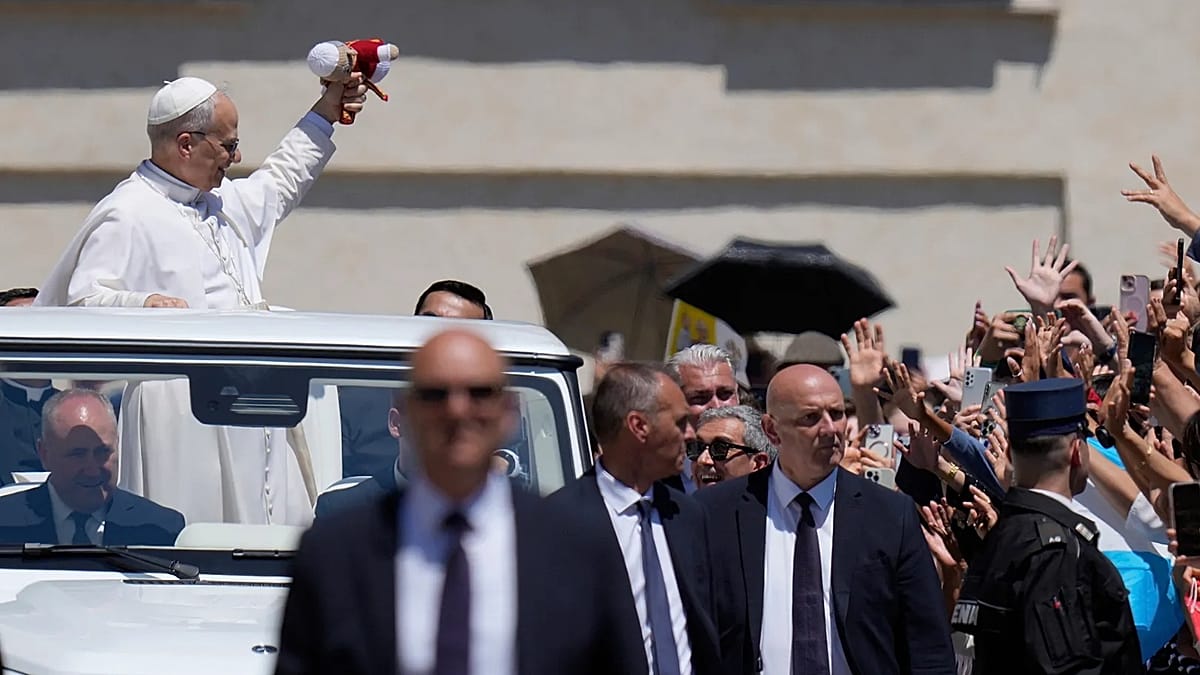
The Spanish Bishops' Conference (CEE) has released provisional figures for Pope Leo XIV's upcoming seven-day visit to Spain, estimating a cost of €25 million and an economic return of at least €150 million — a fivefold return on investment. Fernando Giménez Barriocanal, deputy general coordinator of the visit and deputy secretary for Economic Affairs of the CEE, described the financial projections during a press briefing in Madrid, though he stressed that the primary motivation remains spiritual and social.
Of the total budget, approximately 85% will fund scheduled events, with the remainder covering logistics, communications, and organisation. The CEE itself will contribute around €1.4 million for accommodation, transport for the papal entourage, accreditation, liturgical materials, and volunteer equipment. Funding sources include donations from benefactors and companies, contributions from dioceses, support from public authorities — particularly in the Canary Islands and Catalonia — and small donations from the faithful via platforms like Bizum. A specialist firm will audit the accounts after the visit.
ObservaTUR's More Cautious Estimate
A separate report from the tourism observatory ObservaTUR places the immediate economic impact between €90 million and €125 million, distinguishing between organisational costs and actual spending in sectors such as accommodation, food service, retail, and transport. The report notes that the visit — seven days across four venues with extensive international media coverage — is closer to an intermediate format than major events like World Youth Day in Madrid in 2011, which generated €354.3 million. However, ObservaTUR emphasises the 'showcase effect': the visit's ability to strengthen religious and cultural tourism in the medium term, beyond the immediate week. The report concludes that the trip should be understood in two stages: an immediate cash injection of around €100 million and a longer-term boost to interest in Spain.
Pope Leo XIV will celebrate Holy Mass in the Basilica of the Sagrada Família, a landmark that could see increased tourist interest. Hotels and restaurants are already feeling the impact. Booking.com reports a 52% rise in searches for accommodation in Barcelona and 46% in Madrid. Hotel associations expect high occupancy rates and rising average prices, especially in the capital, where international demand accounts for over half of bookings. In central Madrid and Barcelona, bars and restaurants report being fully booked for key days of the papal schedule. In the Canary Islands, the tourism sector highlights the promotional value amplified by hundreds of accredited journalists.
Bad Bunny Adds to Madrid's Boost
The Pope's visit coincides with concerts by Puerto Rican artist Bad Bunny in Madrid, creating an unusual overlap of major events. While the papal schedule draws faithful, pilgrims, and international media, the concerts attract a young audience with high spending propensity on leisure, accommodation, and food. Industry sources say this cumulative effect reinforces Madrid's image as a major events stage and multiplies the short-term economic impact. The combination of moderate spending, high international visibility, and strong tourist consumption explains why the visit is seen as exceptionally profitable.
For context, the economic impact of religious tourism in Europe has been significant in other cases, such as the 2011 World Youth Day in Madrid. The current visit, while smaller in scale, demonstrates the potential for such events to generate substantial returns. As Europe continues to navigate post-pandemic recovery, events like this can provide a boost to local economies, particularly in the tourism sector. The CEE's figures, though provisional, underscore the financial viability of large-scale religious gatherings, even as the Church emphasises their non-monetary value.