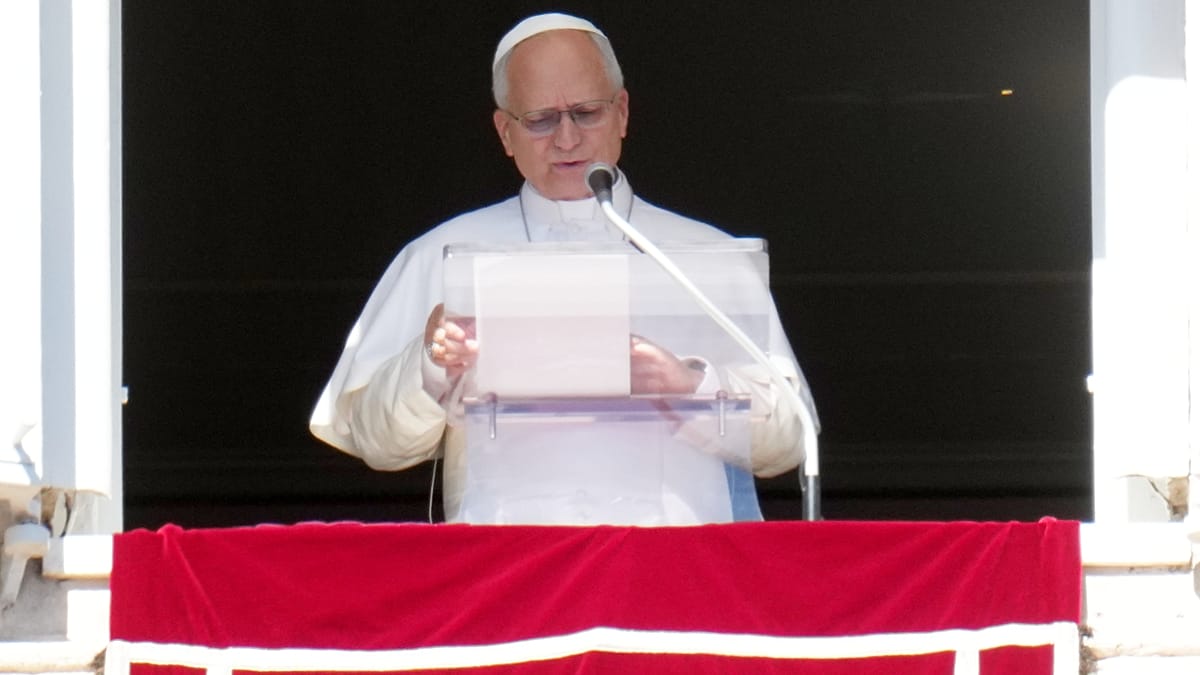
Pope Leo XIV told pilgrims gathered in St. Peter's Square on Sunday that he will undergo surgery in the coming days to remove a nodule from his lung, a disclosure that puts the health of the 71-year-old pontiff at the centre of attention in Rome and well beyond.
Speaking during his customary weekly address, the pope said the nodule had come to light during recent medical checkups and that his doctors had advised removing it. "It was detected at a very early stage and is well localised," he said, adding that he had decided to proceed with the operation and that it was already scheduled for the coming days.
The procedure is expected to take place at Rome's Gemelli University Hospital, the large Catholic teaching hospital on the city's northern edge that has long served as the default medical facility for the papacy. The Vatican press office said the surgery would likely fall early in the week and that the anticipated recovery period is roughly one week.
A nodule caught early
A lung nodule is a small area of dense tissue on the lung that typically shows up on a chest X-ray or a CT scan. According to the American Lung Association, the overwhelming majority of such nodules are benign, though a minority can prove cancerous. When a nodule appears malignant or a patient's history points to elevated cancer risk, physicians usually order further investigations, including additional imaging, biopsies of the nodule and nearby lymph nodes, and sometimes blood tests.
The pope's own description — detected early, well localised — suggests the medical team is acting from a position of relative advantage, though the Vatican has not released details about the nodule's size, its precise location or whether any preliminary tests have been carried out.
A short but consequential absence
Even a brief hospital stay carries symbolic weight for the Holy See. The papacy is a highly personalised institution, and any interruption to the pope's public schedule invites speculation about succession, governance and the wider direction of the Church. A recovery of about a week would be modest by the standards of recent papal history, but it will nonetheless focus attention on who manages day-to-day affairs in the interim and on how transparent the Vatican chooses to be about the pope's condition.
Leo, who was born in Chicago, assumed the papacy in 2025 after the death of his predecessor, Francis. His relatively short tenure has already been marked by an effort to put his own stamp on the office, and his health will now be watched closely by Catholics across Europe — from Poland and Ireland to Spain, Italy and France — as well as by the diplomatic corps accredited to the Holy See.
The Gemelli has become familiar to observers of the Vatican as the hospital where recent popes have been treated. Its proximity to the Vatican, its specialist departments and its experience with high-profile patients make it the natural choice for a procedure of this kind.
What happens next
The Vatican is expected to issue further updates once the surgery has been performed. In the meantime, the pope's public engagements are likely to be scaled back or delegated. For a continent that has grown accustomed to following the health of its political and spiritual leaders in real time, the coming days will bring a familiar ritual: official bulletins, medical language parsed for nuance, and prayers offered from parish churches in Rome to the cathedrals of northern Europe.
For now, the pope's own framing was calm and matter-of-fact. He presented the operation not as a crisis but as a prudent, pre-planned step — a message clearly intended to steady the faithful while the medical team at the Gemelli takes over.



