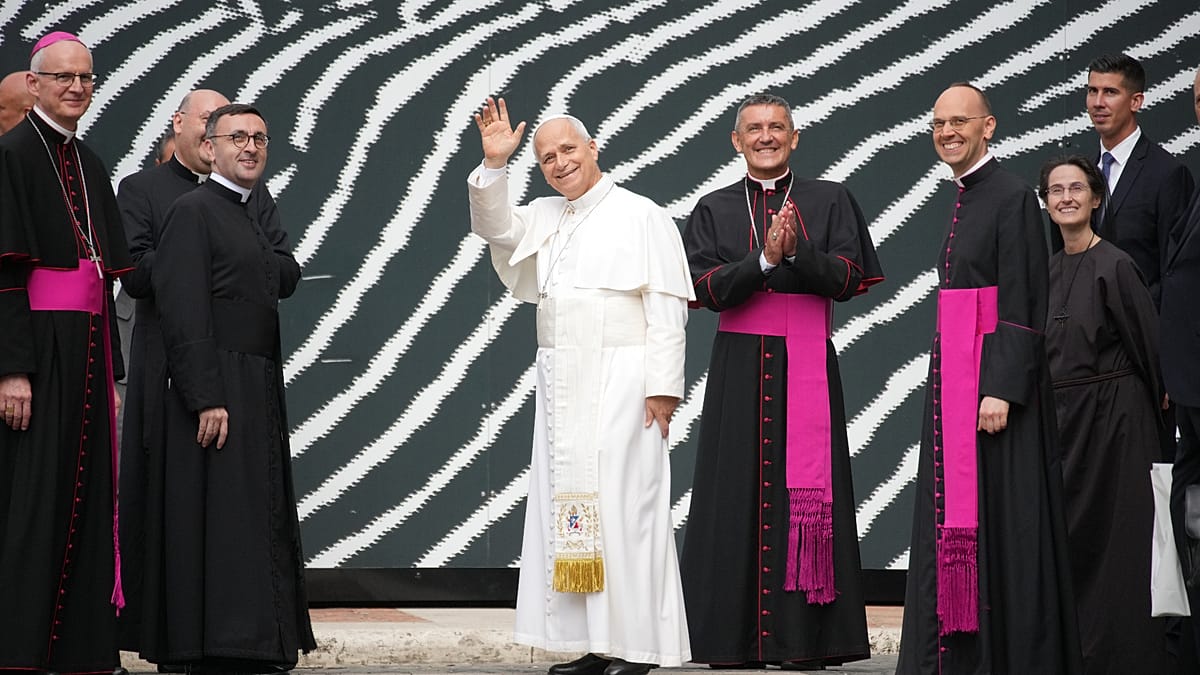
Pope Leo XIV has inaugurated a new exhibition at the Vatican Apostolic Library, dedicated to the many meanings of water across cultures and faiths. To mark the opening, a monumental wave artwork now sweeps across part of the library's historic façade, turning one of Rome's most recognisable architectural backdrops into a statement about the element that sustains all life.
The installation, visible from the Vatican's courtyards, is the visual centrepiece of the exhibition, which draws on the library's vast collections of manuscripts, maps, and illuminated texts to trace how water has shaped human thought, from ancient cosmology to contemporary environmental concerns.
Water as a bridge between faith and science
In his remarks at the opening, Pope Leo XIV described water as "a mirror of the soul and a call to responsibility," urging visitors to reflect on both its spiritual symbolism and the pressing global challenges of access and conservation. The exhibition, he said, aims to "reconnect humanity with the source of life, which we too often take for granted."
The Vatican Library, founded in the fifteenth century, holds over 180,000 manuscripts and millions of printed volumes. Curators have selected items ranging from medieval bestiaries to Renaissance treatises on hydraulics, illustrating how water has inspired both devotion and engineering across the centuries.
One of the highlights is a rare 16th-century map of the Nile, annotated by cartographers who accompanied early European expeditions. Another is a series of illuminated pages depicting the Flood narrative, rendered in vivid blues and greens that seem to move across the parchment.
The exhibition also addresses contemporary issues, with a section dedicated to water scarcity in the Mediterranean basin and the impact of climate change on southern Europe. This aligns with the Vatican's recent emphasis on environmental stewardship, following the tradition of Laudato si' and the broader Catholic engagement with ecological questions.
Visitors to Rome can see the wave façade from St. Peter's Square, though access to the exhibition itself requires a ticket. The display is expected to run for several months, with guided tours available in Italian, English, and Spanish.
The choice of a wave as the visual metaphor is deliberate, according to the exhibition's chief curator, who noted that water "does not respect borders, just as knowledge and faith should not." The artwork, created by a team of international designers, uses a lightweight, recyclable material that can be removed without damaging the Renaissance-era stonework.
This is not the first time the Vatican has used contemporary art to engage with modern themes. In recent years, the Vatican Museums have hosted installations on migration and digital culture, reflecting a broader effort to remain relevant in a rapidly changing world.
The exhibition opens at a time when water is a growing concern across Europe, from the drought-prone regions of Spain and Italy to the flooding that has affected central and eastern Europe. The Vatican's message, as Pope Leo XIV put it, is that water "unites us all, in both our fragility and our hope."
For those unable to visit in person, the Vatican Library has announced a virtual tour, allowing online audiences to explore the exhibition's key pieces. The digital component includes high-resolution scans of the manuscripts and a narrated walkthrough of the wave installation.
The exhibition is part of a broader cultural programme at the Vatican, which has recently seen a surge in visitors following the Jubilee year. The library's reading rooms remain open to accredited scholars, but the exhibition spaces are accessible to the general public, offering a rare glimpse into treasures normally reserved for researchers.
As the wave continues to draw attention, the Vatican hopes the exhibition will spark conversations about the role of water in both spiritual life and global politics. In a city where fountains and aqueducts have been central to daily existence for millennia, the message resonates deeply.