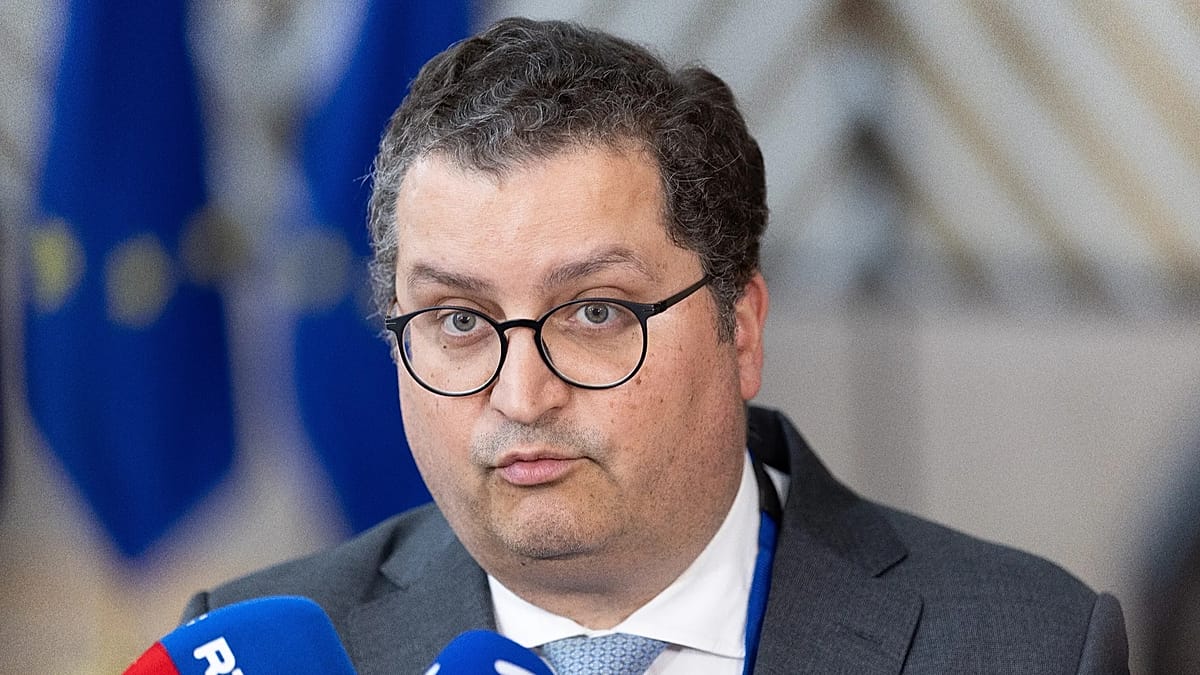
The Portuguese government formally submitted its draft state budget for 2027 to parliament on Thursday afternoon, just two days before the legal deadline. Finance Minister Joaquim Miranda Sarmento handed the document to the Speaker of the Assembly of the Republic, José Pedro Aguiar-Branco, following its approval in the Council of Ministers earlier that morning.
This is the third budget of Luís Montenegro's centre-right government, and its passage is once again secured by the abstention of the opposition Socialist Party (PS). Socialist secretary-general José Luís Carneiro announced last week that his party would abstain in the general vote scheduled for 28 October, after Prime Minister Montenegro agreed to four key conditions: a constitutional revision led jointly by the PS and the Social Democratic Party (PSD), protection of current and future pensions, funding for investment projects beyond the Recovery and Resilience Plan (PRR), and support for municipalities and regions recovering from recent storms.
The detailed committee debate and voting will run from 29 October to 24 November, with the final overall vote set for that day. The Communist Party (PCP) and the Left Bloc have already declared they will vote against the proposal. Chega, the far-right party, has threatened to oppose it unless the government lowers the retirement age, and has also demanded a cut in VAT on fuel and zero VAT on a basket of essential foodstuffs—red lines the government has rejected.
Fiscal outlook and spending pressures
The government projects economic growth of 2% for 2027, consistent with recent trends, and a budget surplus of between 0.1% and 0.2% of gross domestic product (GDP). Finance Minister Miranda Sarmento declined to estimate the room for negotiation, but confirmed the surplus target. The impact of measures already adopted, which will continue to affect public accounts, is estimated at €4.8 billion next year, before any new policies are added.
Pensions, public-sector wages, and debt-interest payments remain the main spending pressures, alongside tax measures such as updating income tax brackets, cutting the corporate tax rate, and housing initiatives. The budget includes a further reduction in personal income tax (IRS) by adjusting brackets, the specific tax deduction, and the minimum subsistence threshold—mechanisms that are legally required to be updated annually.
The PSD/CDS-PP government has decided to lower income tax rates in the first to sixth brackets by between 0.3 and 0.5 percentage points, a measure with an estimated cost of €400 million that will already be reflected in withholding at source in 2026. The reduction is 0.3 points in the first bracket, 0.5 points in the second to fifth brackets, and 0.3 points in the sixth bracket.
Social measures and wage increases
The budget also raises the solidarity supplement for the elderly (CSI) by €50 in 2027, bringing the reference amount to €720. The government's programme aims to reach €870 by 2029, up from the current €670. The minimum wage is set to rise from €920 to €970, following the tripartite agreement signed in October 2024 between the government, employers' confederations, and the UGT trade union, which envisages annual increases of €50 to reach €1,020 by 2028.
In the civil service, the multiannual agreement provides for pay rises of 2.30% in 2027, with a minimum increase of €60.52. This would lift the minimum basic wage in public administration to €995.51. The meal allowance, currently €6.15, is also set to increase by 15 cents per year through 2029.
President of the Republic António José Seguro expressed hope for a "fruitful debate" that would improve people's lives "at a very difficult time." The budget's passage, while not guaranteed until the final vote, appears secure given the Socialists' abstention. The broader European context, including debates over fiscal discipline and social spending, resonates in Lisbon, as seen in scepticism over growth forecasts in France and criticism of opposition budget plans in Paris.