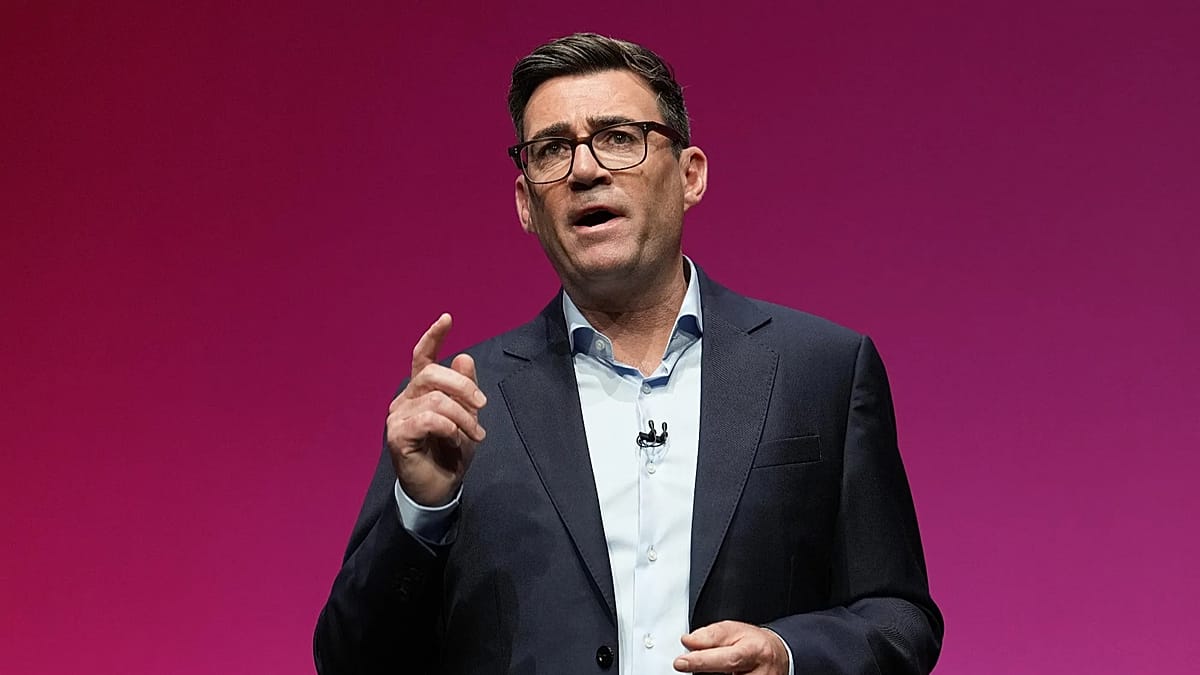
British Prime Minister Andy Burnham is set to meet German Chancellor Friedrich Merz in Berlin on Thursday, with the two leaders expected to announce a new joint effort to counter cyber-attacks, sabotage, and other hybrid threats that have become an increasing concern across Europe.
According to Downing Street, the UK and Germany will commit to deepening cooperation on cybersecurity and to jointly act on identifying and disrupting hybrid activity, wherever it originates. A government press release stated: "The hybrid threat from our adversaries – especially Russia – extends across Europe and beyond, threatening our collective security."
The new partnership will involve sharing intelligence and coordinating operational responses to monitor and disrupt threats, with the aim of "degrading hostile actors’ capacity to operate in Europe."
Burnham, who has been vocal about the need for a stronger European security architecture, said: "Attacks on our infrastructure, our businesses and our democracies are not a distant threat. They reach into people’s homes and workplaces, and they are designed to make us weaker and more divided." He added: "Britain and Germany are joining forces to find, expose and disrupt this activity. Security and growth go hand in hand, and both must be felt in every town and city in our two countries."
A pattern of sabotage and suspicion
The meeting comes amid rising warnings about hybrid threats across the continent. In August, a drone attack on Leipzig/Halle airport in eastern Germany caused significant disruption, and Berlin has accused Russia of orchestrating it. Similar incidents have been reported in other European countries, from undersea cable damage in the Baltic Sea to cyber intrusions targeting government and corporate networks.
European leaders have grown increasingly concerned about Moscow's willingness to use unconventional methods to destabilise Western societies. NATO Secretary General Mark Rutte recently rebuked Moscow's nuclear threats, underscoring the tense security environment.
Burnham's visit to Berlin also comes after his recent comments that rejoining the European Union is an option for the UK. Speaking at the Labour Party's annual conference in Liverpool in late September, he said that Brexit had "done more harm than good" and that the UK needed a clear strategy on its long-term relationship with the EU. His remarks have reignited debate about the UK's future direction, with some analysts pointing to the realistic options available to Britain.
The prime minister's willingness to engage with Berlin on security matters is seen as part of a broader effort to rebuild trust with European partners after years of strained relations following the Brexit vote. While the UK remains outside the EU, cooperation on defence and security has continued, and both London and Berlin have stressed the importance of unity in the face of shared threats.
Observers note that the UK's security relationship with Germany is particularly significant given Germany's central role in European defence and its exposure to hybrid attacks. The two countries have also been key supporters of Ukraine, and their joint stance on Russia is likely to be a topic of discussion.
Burnham's meeting with Merz is expected to produce a formal agreement on cybersecurity cooperation, which could serve as a model for other bilateral partnerships within Europe. The initiative reflects a growing recognition that hybrid threats require a coordinated, cross-border response.
As Europe faces an array of challenges – from disinformation campaigns to physical sabotage – the UK and Germany are positioning themselves as leaders in the fight to protect critical infrastructure and democratic institutions. Whether this partnership will extend to broader EU-UK security arrangements remains to be seen, but Thursday's talks mark a clear step forward in bilateral cooperation.