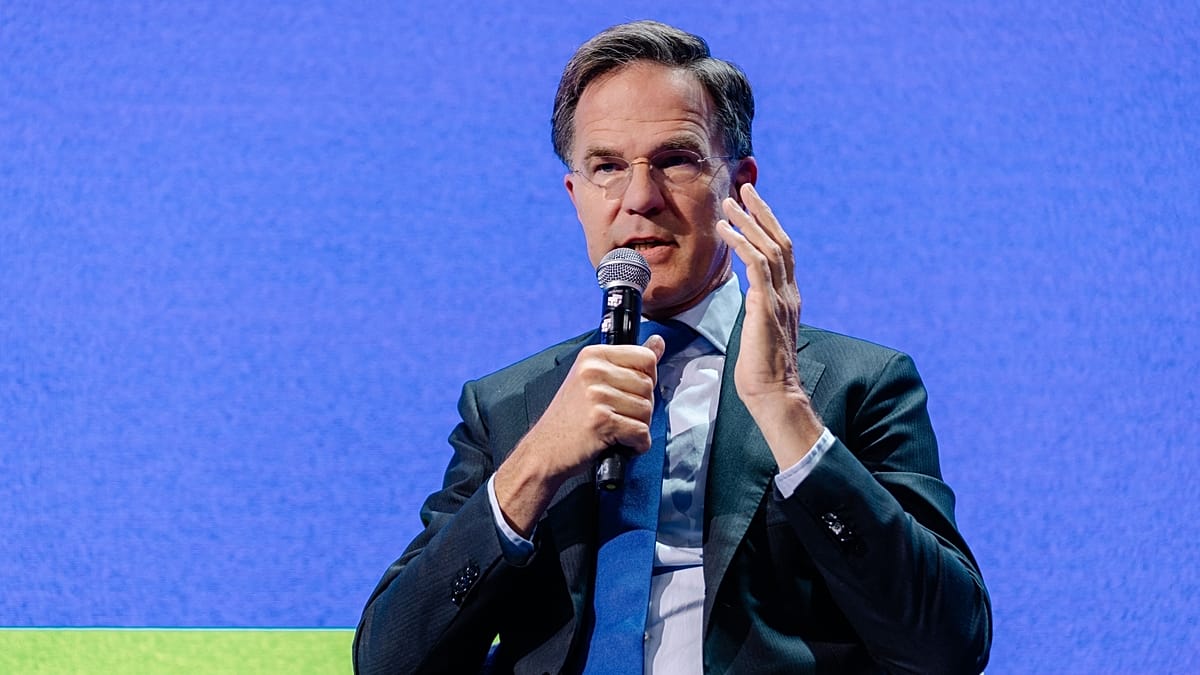
At the Euronews Defence and Space Summit in Brussels on Wednesday, NATO Secretary-General Mark Rutte delivered a blunt message to Moscow: stop the nuclear sabre-rattling. His comments came after Russia reportedly sent a letter to the alliance warning that it could deploy nuclear weapons if its territory, including the Kaliningrad exclave, were attacked.
"We are a defensive alliance. Stop the nuclear threats. This is absolutely not called for and not helpful," Rutte said, while downplaying any immediate danger to NATO members. "We will defend every inch of NATO territory," he added, stressing that the alliance was prepared to counter any aggression.
The warning follows a Reuters report that Russia had threatened strikes on "decision-making centres" in NATO member states from the outset of a conflict. Rutte's remarks were part of a broader debate on European defence, where he also criticised the EU's push to prioritise domestic arms procurement as a "luxury" given the continent's limited production capacity.
Diverging views on engaging Russia
Earlier in the day, Bulgarian Prime Minister Rumen Radev urged European leaders to open a dialogue with Russia to avert a nuclear escalation. While rejecting the Kremlin's rhetoric, Radev reminded his counterparts that nuclear weapons remain part of Russia's arsenal and could be used if Moscow felt cornered. "We cannot close our eyes to the fact that there are nuclear weapons on our continent," he said.
European Commissioner for Defence Andrius Kubilius pushed back against Radev's call for engagement, arguing that diplomacy with Putin would only embolden him. "Russians are standing with their position very clear: Ukraine needs to surrender - that is their diplomacy position," Kubilius told Euronews. He insisted that Putin must "feel that war is coming to Russia itself."
The debate over defence procurement also drew sharp criticism from the US Ambassador to the EU, Andrew Puzder, who slammed the "Buy European" initiative as "self-interest" that could harm the transatlantic defence industrial base. "One attack by a powerful adversary on a member state, and we'll all be glad that we focused on weapon superiority rather than regional economics," Puzder said.
For more on the summit's key takeaways, see our full debrief.
UK's Burnham opens door to rejoining EU
In a separate development, UK Prime Minister Andy Burnham has floated the possibility of the United Kingdom rejoining the European Union, a statement that drew immediate praise from French President Emmanuel Macron and Spanish Prime Minister Pedro Sánchez. Speaking at a press conference in Madrid, Macron said, "If the British want to come back and if the Prime Minister is moving in that direction, I think that is very good news, both for his country and for the Europeans." Sánchez echoed the sentiment, saying the UK would be welcome back.
Burnham, who has been less focused on international affairs than his predecessor Keir Starmer, outlined a range of options for future EU-UK ties, from maintaining the status quo to a customs union, single market membership, or going "all the way" and rejoining. He also confirmed that the postponed EU-UK summit would take place in November.
The remarks mark the clearest indication yet that Burnham's government is willing to consider a more ambitious overhaul of post-Brexit relations. EU officials have been cautious, but the positive reaction from Paris and Madrid suggests a potential opening. For more on this story, see our analysis.
Meanwhile, EU home affairs ministers are meeting in Luxembourg to discuss migration, with proposals expected to include a temporary suspension of asylum rights under a new European Emergency Response Framework. The meeting comes amid renewed tensions between Italy and Spain over border controls, following an unprecedented mass entry of migrants into the Spanish enclave of Ceuta.
As Europe grapples with these security and political challenges, the continent's leaders are clearly navigating a complex landscape of nuclear threats, defence procurement debates, and shifting alliances. The coming months will test whether the EU can maintain unity in the face of external pressures and internal divisions.