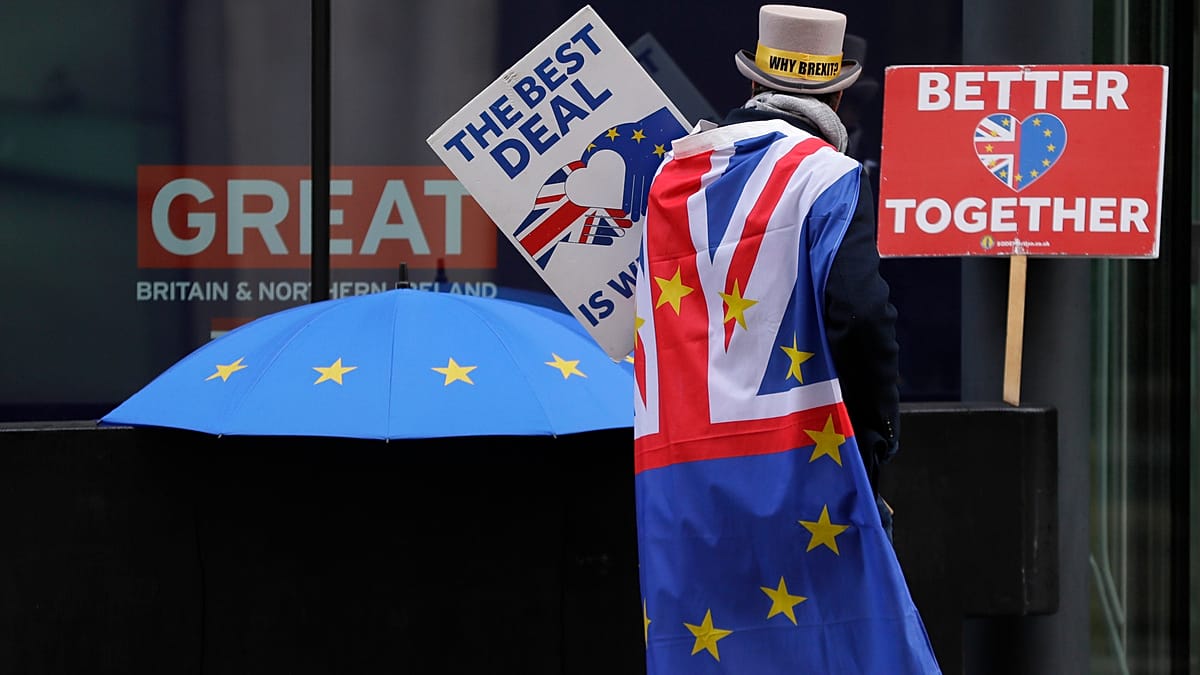
British Prime Minister Andy Burnham has acknowledged that rejoining the European Union is one of the options his government will consider as it seeks to redefine the UK's post-Brexit relationship with the bloc. In an interview with the BBC, Burnham said the country could “go all the way” back into the EU, though he stressed that a range of possibilities would be examined.
Speaking a day after telling a Labour Party conference that he would present “options” for the future EU-UK relationship, Burnham outlined a spectrum of choices: “We could stay as we are. We could look at what George Osborne has said about a customs union, we could look at what the Liberal Democrats said about the single market, or we could go all the way.” He added that each option would need to be assessed for its feasibility and its pros and cons.
The prime minister also recalled his earlier statements expressing a desire to see the UK rejoin the EU within his lifetime. His remarks come at a delicate moment in EU-UK relations, following the abrupt cancellation of a planned summit in July after the resignation of former Prime Minister Keir Starmer. That summit had been expected to finalise agreements on agri-food trade and youth exchanges.
Burnham has often been seen as less focused on international affairs than his predecessor, but his latest comments suggest the Labour government is now looking to craft a more durable strategy for resetting ties with Brussels. The shift in tone has been welcomed by those who favour closer alignment, while sceptics warn of the political and economic risks of reopening the Brexit debate.
EU's evolving orbit
The context for Burnham's remarks is a rapidly changing European landscape. European Commission President Ursula von der Leyen recently floated the idea of granting Canada a so-called “associate member” status, an unprecedented arrangement with no existing legal basis. Ottawa's push for closer ties with Brussels is driven partly by a desire to diversify trade relationships in the face of aggressive US trade policies under Donald Trump.
That openness has raised questions about where the UK might fit within the EU's wider orbit. Some analysts argue that a bespoke arrangement, short of full membership, could offer the UK many of the benefits of EU integration without the political baggage of rejoining. Others contend that only full membership would provide the economic and strategic advantages that many businesses and pro-European campaigners seek.
George Osborne, the former Conservative Chancellor who campaigned for Remain during the 2016 referendum, has recently advocated for the UK to rejoin the customs union. That would remove many trade barriers with the EU without requiring acceptance of freedom of movement. The centrist Liberal Democrats have gone further, calling for rejoining the single market as part of a broader “growth and defence partnership”.
Burnham's openness to “going all the way” is likely to reignite debate within his own party and across the country. While opinion polls have shown growing public support for closer ties with the EU, the political cost of reversing Brexit remains high. The prime minister will need to navigate a path that satisfies both those who want a clean break and those who see the EU as essential to Britain's future prosperity and security.
The coming months will be crucial. Burnham is expected to present his options ahead of an autumn summit with EU leaders. That meeting, which was originally scheduled for July, is now seen as a key moment for resetting the relationship. The EU has its own priorities, including enlargement and defence, but the UK remains an important partner on trade, security and climate action.
As the debate unfolds, the UK's position within Europe will be watched closely by other non-member states, including Norway, Switzerland and the Balkan countries. The EU's willingness to innovate, as seen with the proposed associate membership for Canada, could offer a template for a new kind of relationship with the UK. Whether Burnham is prepared to go all the way remains to be seen, but his words have already shifted the terms of the conversation.