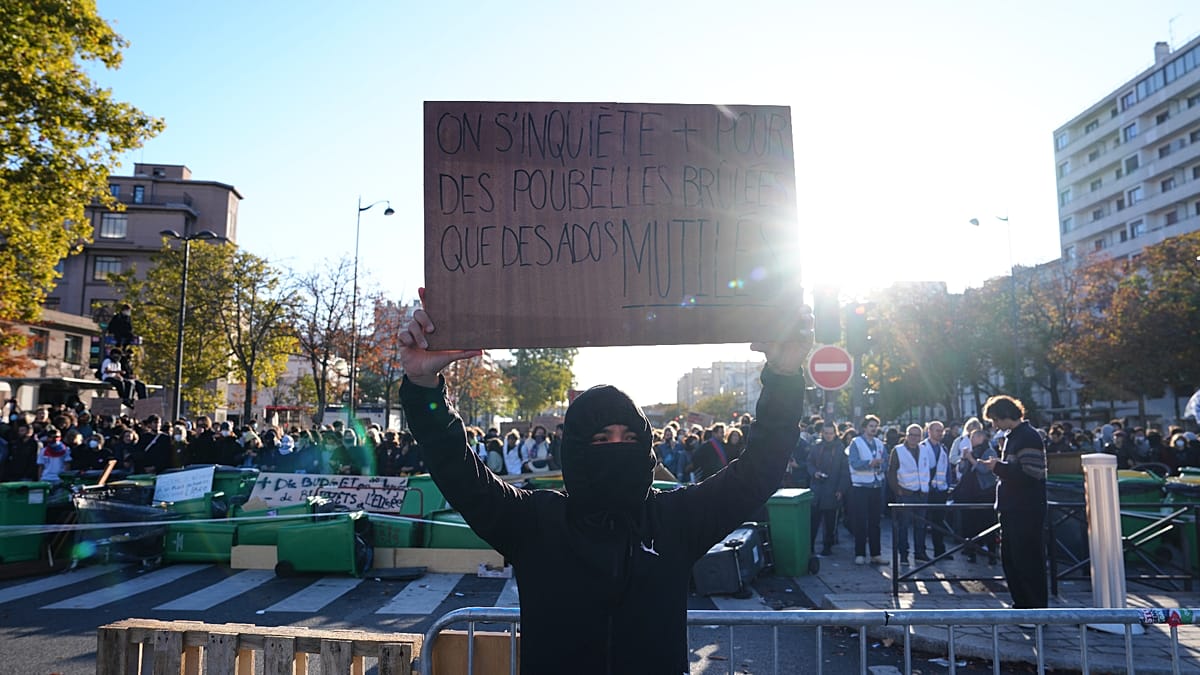
France is bracing for another day of student unrest as high school pupils take to the streets in cities across the country, demanding action on chronic teacher shortages, dilapidated buildings, and overcrowded classes. The movement, which began in late September with blockades at suburban lycées, has now spread to the capital and other urban centres, with a major rally scheduled in Paris on Thursday.
In the 5th arrondissement, a Euronews reporter described streets filled with students from early morning, some dragging bins into the road and chanting since 6:30 am. Outside the prestigious Lycée Henri-IV, one student said they had come to blockade the school "to show our full support for the suburban secondary schools. They were the ones who started this movement and were immediately cracked down on by the police."
Another student, from a technological school in the same district, highlighted the personal impact of the crisis: "For six months we've had no teacher, there's no supply teacher, and we're sitting our baccalauréat in that subject." They added, "At school, to be honest, our living conditions aren't great. Personally, I don't think it's normal to finish at 5.45 pm – or rather, 6 pm."
Government responds with promises, but tensions remain
Prime Minister Sébastien Lecornu addressed the nation on Wednesday evening, seeking to defuse the crisis. He promised that the government would present a plan by the end of October to address the protesters' grievances, and denied that police had been "instructed to confront secondary school pupils." He insisted that law enforcement's role is "to protect property, but above all people; to ensure that the law is upheld; and to allow access to schools."
Education Minister Édouard Geffray announced on Thursday that he would unveil an "emergency plan" to tackle teacher absences within "the coming hours or days." The pledge comes after weeks of disruption, during which some protests have turned violent, leading to clashes with riot police. One teenager lost his hand in an incident involving a stun grenade, an injury that has drawn widespread condemnation.
Interior Minister Laurent Nuñez has defended the police response, stating that authorities would "continue to do what we are doing: maintaining order and intervening proportionately whenever violence breaks out." However, the government has moved to temporarily suspend the use of stun grenades in policing the demonstrations, a decision welcomed by human rights groups but seen as insufficient by critics.
Anne Savinel-Barras, president of Amnesty International France, said the suspension was a positive step but argued that more needs to be done. "Protests should not be battlefields. Stun grenades are designed to shock, disorient, and sow panic, often among dense crowds at demonstrations," she said. "Some can cause permanent hearing loss as well as life-changing mutilations due to the blast and shrapnel."
The protests have drawn attention to the broader challenges facing the French education system, which has seen years of budget cuts and a growing shortage of qualified teachers. Students and unions argue that the government's response has been too slow and that the promised plan must include concrete measures to improve conditions in schools, particularly in disadvantaged areas.
As the rally in Paris gets underway, the question remains whether the government's promises will be enough to quell the unrest. Similar movements in recent years have often fizzled out after initial concessions, but the determination of these students suggests that the pressure on the Élysée and the education ministry is far from over.
For now, the streets of Paris and other cities remain a flashpoint, with students vowing to continue their actions until their demands are met. The government's plan, due by the end of October, will be closely scrutinised by protesters and observers alike.