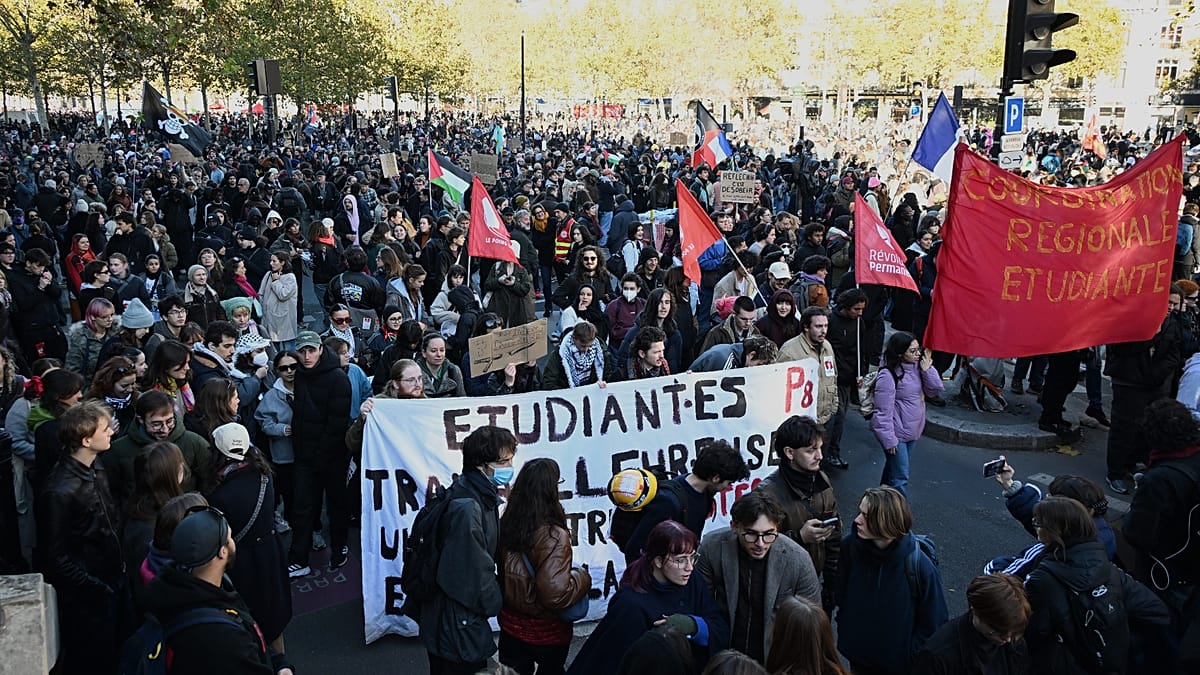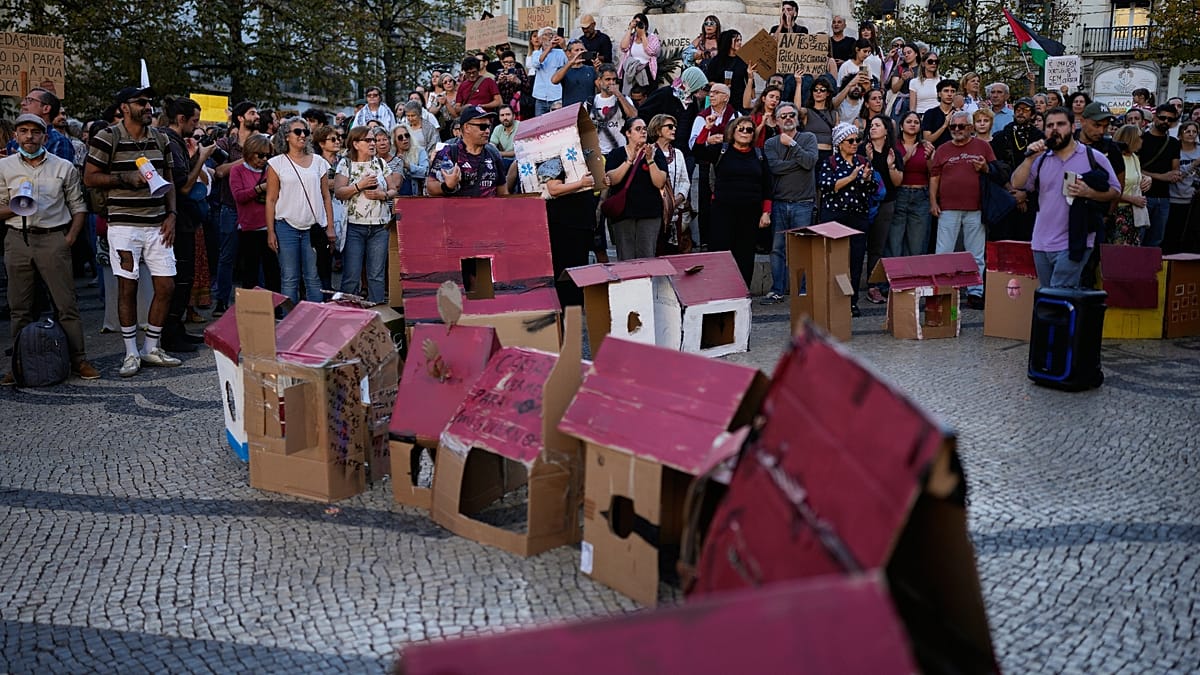
Thousands of demonstrators took to the streets across Portugal on Saturday, voicing anger over a housing crisis that has priced many locals out of the market. Under the slogan “they will not steal our right to live here,” rallies were held in Lisbon, Porto, and dozens of other towns, with marchers calling for urgent government action.
The protests, organized by housing-rights groups including Casa Para Viver, focused on demands for rent caps, stronger protection against evictions, and a major expansion of public housing. Activists also urged authorities to crack down on property speculation, which they say has fueled the crisis.
“We need homes to live in, not homes to speculate on. Public housing needs to be built and the price of rents needs to come down,” Raquel Ferreira of Casa Para Viver told local media at the start of the demonstration in Porto.
Government’s new housing bill under fire
The protests come as Portugal’s government advances a new housing bill that critics argue will worsen the situation. The proposed legislation aims to make it easier and faster for landlords to evict tenants, remove rent caps, and allow higher upfront payments such as deposits and advance rent. It also changes rules for older rental contracts signed before 1990.
“What should happen, and what this massive mobilisation across the country is demanding, is the withdrawal of this draft law,” said José Manuel Pureza, coordinator of the Left Bloc.
The government defends the bill as a way to encourage landlords to bring more properties onto the rental market. But Casa Para Viver argues it will leave tenants more vulnerable and instead calls for rent regulation tied to people’s incomes.
The group has also criticized the government’s classification of €2,300 as a “moderate” income, noting that “more than half the people working in this country earn less than 1,000 euros.” Similarly, properties worth up to €660,000 are now deemed “moderate” in value, a threshold activists say normalizes absurd price levels.
Housing costs soar across Portugal
Portugal has seen one of the steepest rises in housing costs in Europe. According to EU data, housing prices relative to incomes jumped 60.8% between 2015 and 2025, the third-largest increase in the bloc, behind only the Netherlands (34.3%) and ahead of other member states. The highest spikes were recorded in Lisbon and Porto.
Between the first quarter of last year and the first quarter of 2026, house prices rose by almost 20%, according to the National Statistics Institute (INE). Rents have also climbed sharply, with an increase of 68% since 2020, the government reported.
Economist Mike Langen told Euronews Business that Portugal “experienced a tourism boom, and their golden visa program attracted foreign investors, so house prices grew partly because of foreign capital.” Foreign buyers and investment funds have been purchasing Portuguese properties, including buildings in poor condition, driving up prices.
The country’s pleasant climate and long coastline have made it a magnet for digital nomads, remote workers, and retirees from abroad. Tourism has also surged, with many city-centre flats converted into short-term rentals, removing them from the long-term market.
Locals squeezed out
The average salary in Portugal is around €2,200 a month, according to official statistics. Yet a one-bedroom apartment in central Lisbon typically costs at least €1,100, making it impossible for many households to afford a family-sized flat on a single income.
A report by the Deutsche Bank Research Institute (DBRI) found that disposable income after rent across 28 European cities ranges from €253 in Lisbon to €9,140 in Zurich. Lisbon and Milan were identified as the most challenging cities for couples. In Lisbon, net pay averages €1,408, but rents can reach €2,561 per month, leaving residents with just €253 to live on.
Young people say they cannot get onto the property ladder, while parents worry that their children must move far away to find a home. At the same time, some Portuguese homeowners have made substantial profits from selling their properties.
The government is attempting to address the crisis with measures such as cutting taxes on new builds, restricting short-term rentals, and promising to build 145,000 new homes. However, it acknowledges that the effects will not be immediate.
Similar housing pressures are being felt across southern Europe, with Spain's housing crisis prompting cooperative living alternatives, and Barcelona clashes following peaceful marches. In France, repeated protests have highlighted deep social discontent over living costs.