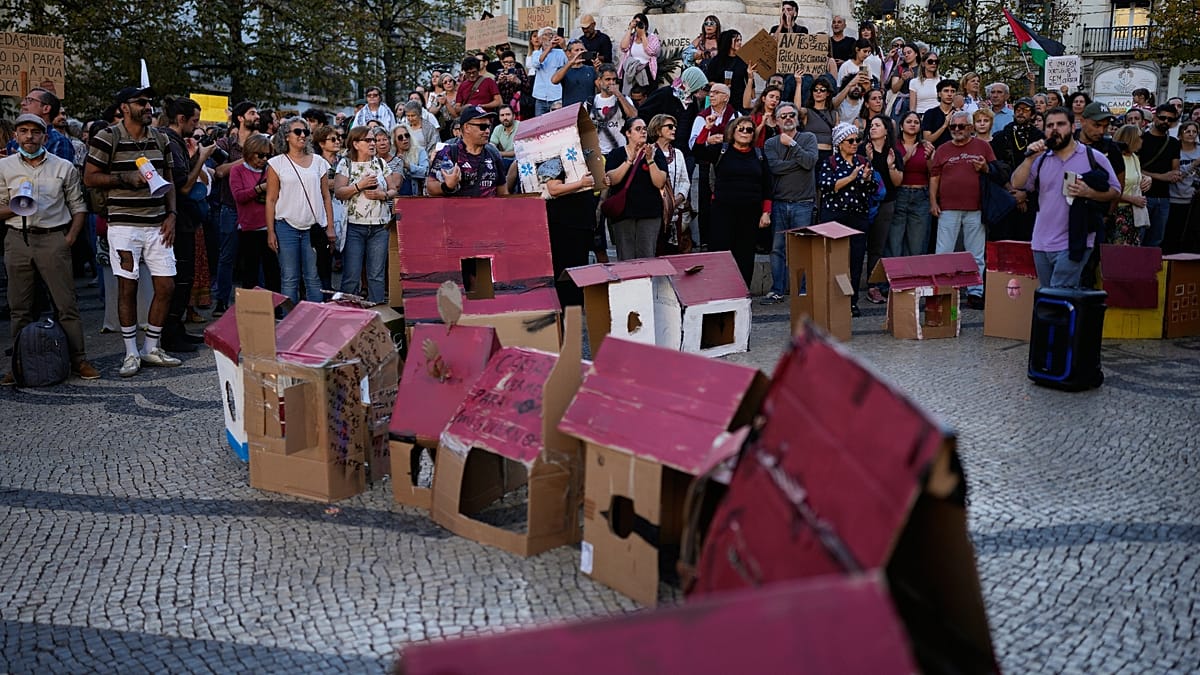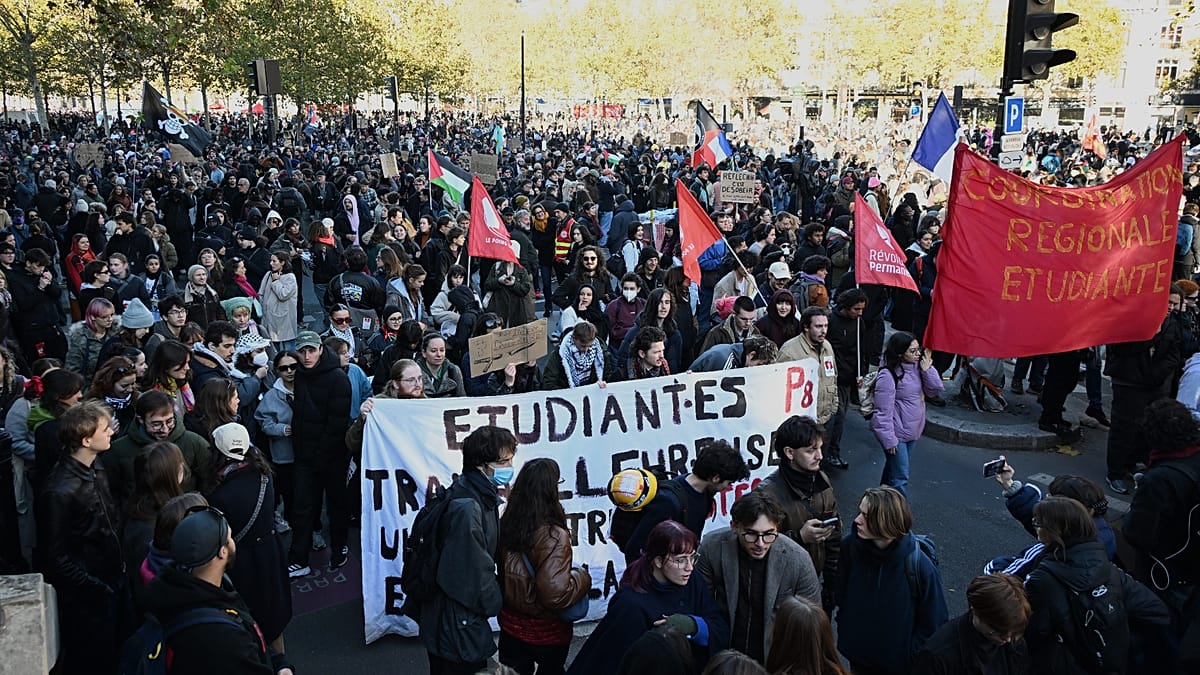
For the fifth consecutive Saturday, tens of thousands of demonstrators gathered across France, from Paris to Toulouse, to voice a broad range of grievances. The protests, which have become a weekly ritual, brought together Yellow Vests, students, and education unions, all united by a sense that the government is not listening.
In Paris, the Place de la République served as the symbolic heart of the movement, as it has for many recent mobilisations. Similar scenes unfolded in Lyon, Bordeaux, Marseille, and other cities, with marchers carrying banners calling for better school conditions, stronger protections for minors, and a rejection of a proposed police law.
Education under strain
Students and teachers have been at the forefront of the protests, with school blockades and demonstrations disrupting campuses for over a month. Marius Mesnil, Co-Secretary-General of the Union Syndicale Lycéenne, highlighted the daily realities driving students to the streets: "We're asking to have teachers when we go to class. We're asking to not have ceilings collapsing on us when we eat in the canteen. We're asking, when we get our A-levels, despite conditions getting worse every year, to be able to carry on our studies at university."
The education system, long underfunded and struggling with teacher shortages, has become a flashpoint for broader frustration with public services. The government's recent reforms, which students say fail to address the root causes, have only intensified the anger. As student protests escalate, the pressure on the Élysée and the education ministry continues to mount.
Police bill sparks outrage
Another major point of contention is the proposed police law, which would grant officers and gendarmes additional legal protection when using firearms in the line of duty. Supporters, including Marine Le Pen's far-right Rassemblement National, argue that the bill is necessary to prevent law enforcement from being automatically presumed guilty of excessive force. However, critics, including the Student Union, describe it as a "license to kill."
Sabrine Kharbach, spokesperson for the Student Union, was blunt: "What the so‑called 'licence to kill' law, which is being put to the vote next week, provides for is literally that a police officer who fires will first be presumed to have acted lawfully. Yet another layer of impunity for those who club us, gas us and maim us. Yet another layer of impunity for this police force that acts as the armed wing of the state."
The bill has become a lightning rod for broader concerns about police accountability. In recent weeks, lawyers representing at least 18 people injured during protests have announced plans to sue the interior ministry over alleged police brutality, which they say has resulted in "mutilations," including injuries to hands, feet, and eyes. Kenza, a 28-year-old protester in Toulouse, summed up the mood: "The repression of protesters is unacceptable, especially when children are involved."
Wages and the cost of living
The protests also reflect deep economic anxiety. The government's promise to raise the minimum wage by 0.6% has been dismissed as insufficient by unions and the Yellow Vests. Benjamin Ball, a Yellow Vest activist, put it colourfully: "The government has only given us crumbs, and we want the whole bakery."
Unions have called for another day of strike action next Tuesday, following a massive mobilisation on Thursday that saw more than half a million people take to the streets. The interior ministry estimated Saturday's turnout at around 106,000 nationwide, including 24,000 in Paris, while organisers claimed 200,000 and 100,000 respectively. The lower numbers suggest some fatigue, but the movement shows no signs of fading.
The political stakes are high. With the presidential election approaching, the protests have become a test of President Emmanuel Macron's ability to manage social unrest. The government's recent minimum wage increase and payroll tax cuts have done little to quell the anger. Meanwhile, the far right, which supports the police bill, is staking out rival visions for the country's future, as seen on Armistice Day.
As the protests enter their sixth week, the question is whether the government can find a way to address the underlying grievances, or whether the streets will remain the primary venue for political expression. For many demonstrators, the answer is clear: they will keep coming back until their demands are met.