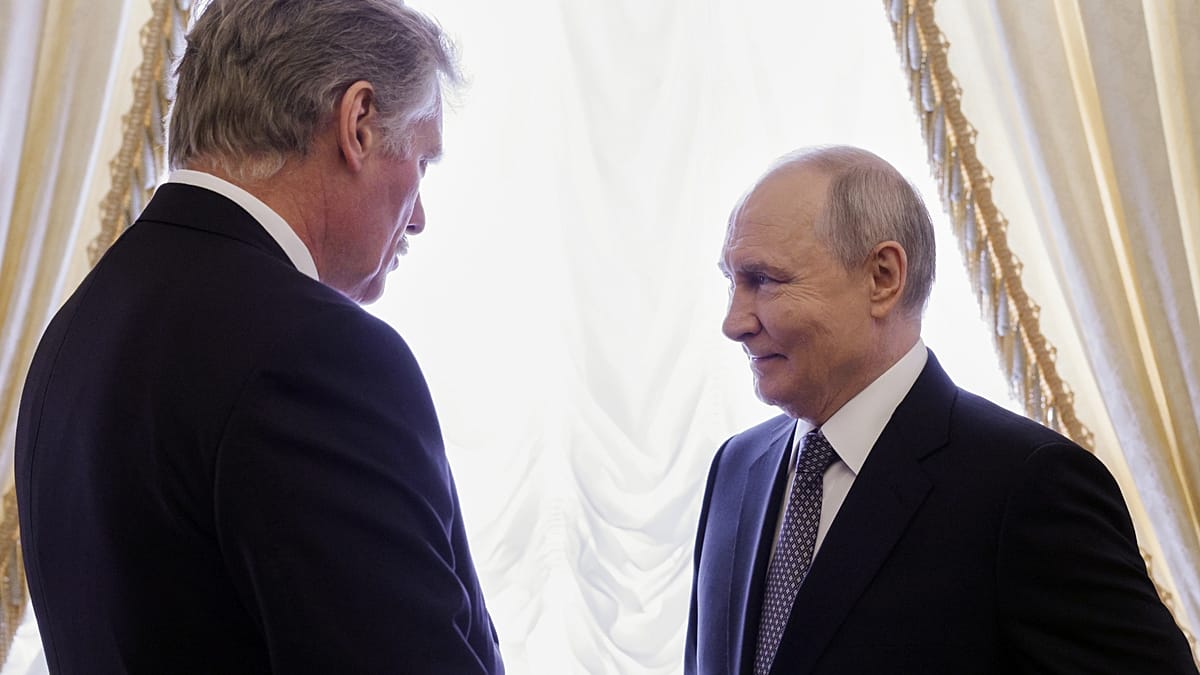
In a notable shift, Moscow has indicated it would not stand in the way of European representatives joining negotiations on Ukraine, opening the door to possible EU participation in the next round of peace talks. Kremlin spokesperson Dmitry Peskov said on Saturday that Russia had no intention of dictating who should represent the European Union at the negotiating table, a departure from its previous position that EU officials had “no business” there.
“We cannot and do not want to set conditions for their negotiating team. This is a completely wrong way to put it,” Peskov told local media. He added that Moscow would first need to speak with European representatives to gauge “to what extent their position could potentially contribute to the peace process.”
A shift in Kremlin rhetoric
The statement marks a clear evolution in Russia’s tone toward Brussels, which has been a staunch supporter of Kyiv since the full-scale invasion began in February 2024. Russian officials have repeatedly accused European nations of “prolonging the war” and “multiplying the suffering of ordinary people” by providing military and financial aid to Ukraine.
Earlier this week, negotiators from the United States, Ukraine, and Russia held trilateral talks in Abu Dhabi, with European representatives conspicuously absent. That exclusion had fueled concerns in European capitals, particularly in Paris and Berlin, that the continent was being sidelined in shaping the future of European security.
On Thursday, US envoy Jared Kushner announced that Russia had agreed to expand the next round of talks to include European participation. The announcement came amid growing US pressure for a European role in the negotiations, a stance echoed by several EU leaders.
Peskov’s latest remarks suggest that Moscow is willing to accept a European presence, though it remains unclear which countries or institutions would be represented. The EU has been seeking a unified position, with discussions at the recent Dublin summit focusing on how to coordinate a single European voice in the talks. However, internal divisions have surfaced, with some member states, such as Italy and Poland, pushing for a more prominent role, while others have questioned the effectiveness of the EU’s chief diplomat, Kaja Kallas.
The prospect of EU involvement comes as Ukraine continues to face daily Russian strikes. At least three people were killed in recent attacks, even as US envoys visited the region. The human cost of the war remains a central concern for European governments, many of which are also grappling with the economic and energy consequences of the conflict.
Analysts note that Moscow’s softened stance may be a tactical move rather than a genuine commitment to inclusivity. By appearing open to European participation, Russia could seek to divide the transatlantic alliance or to gain leverage in negotiations over territorial concessions. Earlier reports suggested that US proposals have included Ukraine ceding land in exchange for NATO membership, a scenario that remains highly contentious.
European leaders have stressed that any peace deal must respect Ukraine’s sovereignty and territorial integrity. The EU’s foreign policy chief has called for a coordinated approach, but the bloc’s ability to speak with one voice has been tested by differing national interests. The expansion of the EU’s peace team to include Italy and Poland was seen as a snub to Kallas, highlighting the internal frictions.
For now, the next round of talks is expected to take place in the coming weeks, with the format still to be finalized. Whether the EU will secure a seat at the table remains uncertain, but Moscow’s latest signal suggests that the door is no longer firmly closed.