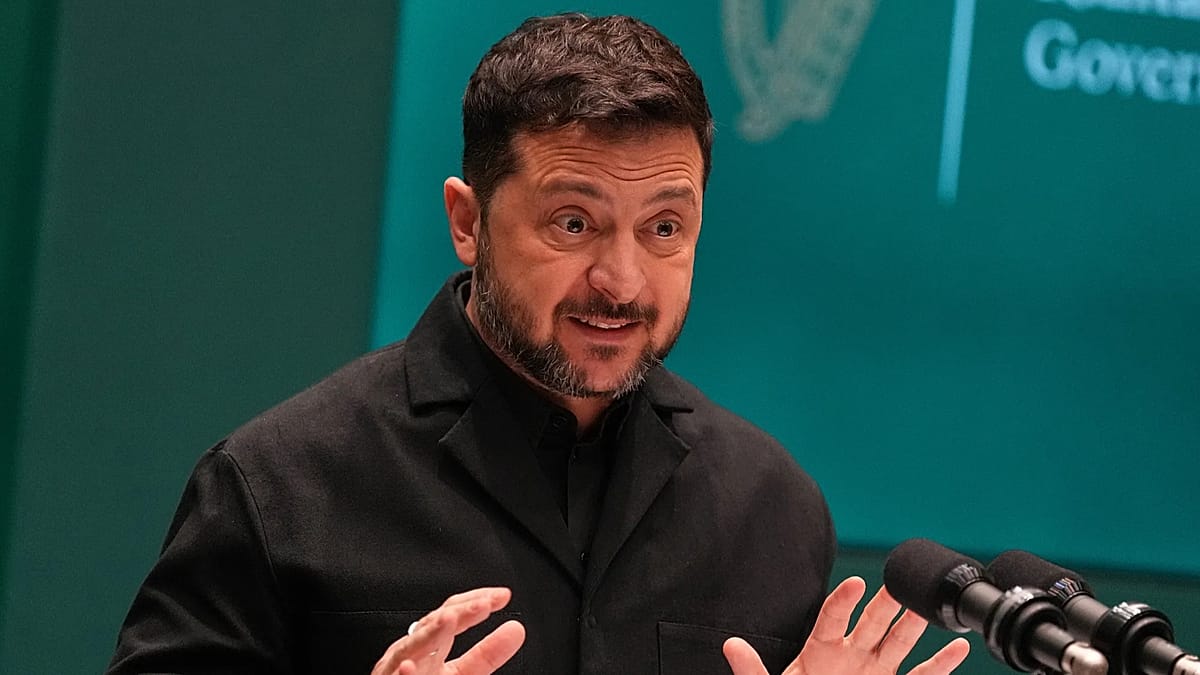
Ukrainian President Volodymyr Zelenskyy has disclosed that Washington raised the possibility of Ukraine ceding territory to Russia in exchange for NATO membership, a proposal that marks a significant shift in the public framing of peace efforts. Speaking to reporters on Friday, with comments embargoed until Saturday, Zelenskyy said: "The Americans raised a question: 'What if Ukraine joins NATO? Would Ukraine withdraw from Donbas?' This was the first time this had been raised."
The revelation comes amid intensified diplomatic activity, including a meeting in Moscow between Russian President Vladimir Putin and US special envoys Steve Witkoff and Jared Kushner earlier this week. During those talks, Putin reiterated that Russia would not soften its territorial demands and rejected the idea of foreign peacekeeping troops being deployed in Ukraine. The US envoys subsequently met Zelenskyy in Ireland on Thursday, where they announced that Europe would have a "voice" in future peace negotiations.
Zelenskyy stressed that any such arrangement would require the consent of the Ukrainian people. "I have no right to make that decision on my own," he said, adding that Kyiv is discussing "specific security guarantees" with NATO and the European Union. Should Western nations confirm the terms, he would put the question to Ukrainians in a referendum or similar consultative process.
The proposal, if confirmed, would represent a dramatic departure from NATO's long-standing position that Ukraine's path to membership is irreversible, and from Kyiv's insistence that it will not trade land for security. It also raises profound questions for European capitals, many of which have pledged unwavering support for Ukraine's territorial integrity. The expansion of the EU peace team to include Italy and Poland, while sidelining EU foreign policy chief Kaja Kallas, underscores the delicate balancing act Brussels faces.
Russia's stance and European reaction
Russian officials have sought to downplay the significance of the US proposal. Foreign ministry spokesperson Maria Zakharova said on Friday that, as far as her department was aware, "the issue was not discussed during the talks with Steve Witkoff and Jared Kushner in Moscow." Presidential aide Yuri Ushakov added: "For our part, the position of the Europeans has been comprehensively outlined."
These statements suggest that Moscow may be unwilling to publicly acknowledge any flexibility, even as it continues to press its territorial claims. The Kremlin has long insisted that any peace deal must reflect "new realities" on the ground, a euphemism for its annexation of Ukrainian provinces. Putin's rejection of foreign peacekeepers further complicates any potential settlement, as European nations have floated the idea of a monitoring mission.
European leaders have reacted cautiously. While some, particularly in Central and Eastern Europe, view NATO membership as the only credible security guarantee for Ukraine, others worry that ceding territory would set a dangerous precedent and reward Russian aggression. The EU's chief diplomat Kaja Kallas has been vocal in her support for Ukraine's sovereignty, but her influence may be waning as larger member states take the lead in peace efforts.
The push for a European role in the talks reflects a broader concern that Washington and Moscow could strike a deal over the heads of both Kyiv and Brussels. Kushner's post on X after the Ireland meeting sought to reassure: "This will allow us to address the broader postwar European security arrangements alongside the territorial issues between Ukraine and Russia."
Yet the devil is in the details. What exactly would "ceding land" mean in practice? Would it involve a formal transfer of sovereignty, or simply a freeze on the current front lines? And how would NATO membership be squared with Article 5's mutual defense clause, given that Russia would likely view any NATO presence in Ukraine as a direct threat?
For now, Zelenskyy's revelation has injected a new element of uncertainty into an already volatile situation. The coming weeks will be critical as diplomats test whether the US proposal is a serious negotiating position or a trial balloon. Meanwhile, Ukrainian cities continue to endure Russian strikes, as recent attacks on Kyiv and Odesa have shown. The human cost of the war remains the starkest backdrop to any diplomatic maneuver.
As the debate unfolds, one thing is clear: the fate of Ukraine's territorial integrity and its place in the Euro-Atlantic security architecture will be decided not only in Washington and Moscow, but also in European capitals from Berlin to Warsaw. The coming months will test whether Europe can speak with one voice on the most consequential security question since the Cold War.