European Union leaders meeting in Dublin on Friday agreed to expand the group that will represent Europe in negotiations to end Russia's war in Ukraine. The new format brings Italy and Poland into the existing E3 framework, which comprises France, Germany and the United Kingdom, alongside the EU institutions and NATO.
The decision, taken at an informal summit hosted by Irish Taoiseach Micheál Martin, formalises a structure that has been taking shape in recent rounds of talks in Miami, Oslo, Brussels and Abu Dhabi. Italy participated in the Abu Dhabi session, and Poland is expected to join the next round.
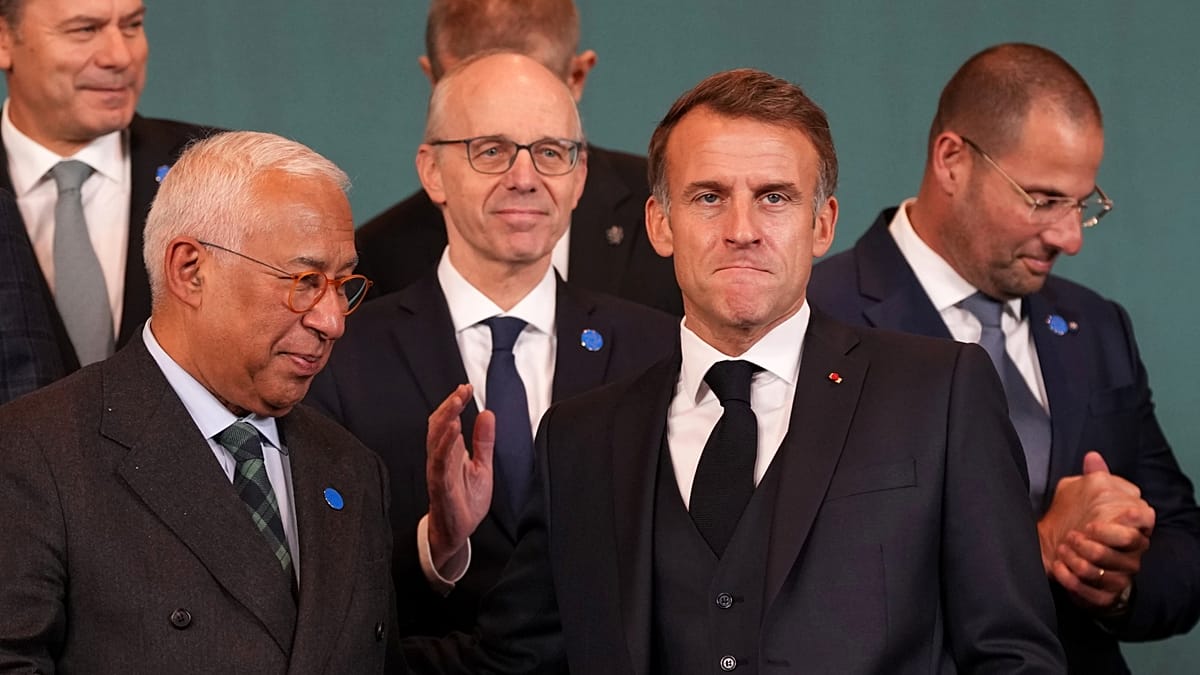
European Council President António Costa said the leaders had agreed that the European team for the negotiations would be the EU institutions and the E5 of the Coalition of the Willing. "We are fully engaged in supporting the ongoing process, and we hope it will deliver concrete results," he told reporters.
The move comes after weeks of pressure, including from Ukraine, the United States and even Russia, for the EU to appoint a single special envoy. Italian Prime Minister Giorgia Meloni had publicly criticised the "disarray" of European voices and called for one representative. But leaders ultimately opted to broaden the existing group rather than create a new post.
Warsaw had been particularly vocal in warning against Western European countries making decisions on behalf of the East. The inclusion of Poland addresses that concern, though it also reflects the reality that the E3 format has proven effective, as German Chancellor Friedrich Merz noted. "Incidentally, we always include Italy and Poland," he said in Dublin. "In that regard, I don't see any need to have an institutional debate at the moment."
Kallas left out
The decision leaves EU foreign policy chief Kaja Kallas without the special envoy role she had publicly sought. On Friday morning, she made a forceful case for taking on the job, arguing that representing the bloc on foreign policy was part of her mandate.
"In June 2024, there was a decision by the leaders on who is representing the EU when it comes to security and foreign policy. And it was the discussion that in these five years there is going to be a negotiation with the Russians," she said. "If the leaders want to change that agreement, of course, they may, because it is the leaders' decision, but I think we should focus our energy actually on the substance."
Kallas acknowledged that "Russians do not want me" because of her "strong" views. Her remarks echo her earlier comments that Russia's rejection of her as envoy is not their call.
Costa appeared to dismiss her claim, pointing to the EU treaties. "The treaties are very clear. The president of the European Council represents the European Council and represents the Union when it comes to the common foreign and security policy at the level of head of state and head of government," he said. "The president of the European Commission represents the Commission, and the Commission represents externally the Union in community issues."
However, the negotiations have yet to reach the level of heads of state and government, taking place so far among national security advisers and senior officials. European Commission President Ursula von der Leyen also declined to back Kallas, despite her serving as a vice-president in the Commission. "We decide on who represents us, and that's what we've done today," she said. "We have taken our decision."
The key question now is whether Russia will agree to negotiate directly with European representatives, having repeatedly refused to sit at the same table as them. US special envoys Steve Witkoff and Jared Kushner travelled to Moscow on Thursday to persuade Russian President Vladimir Putin to engage. After the meeting, both said Moscow had indicated it was willing to hold face-to-face talks with Europeans.
That development, reported by US envoys meeting Putin, offers a glimmer of hope for the expanded European team. But as Moscow downplays the European role, the path to meaningful negotiations remains uncertain.