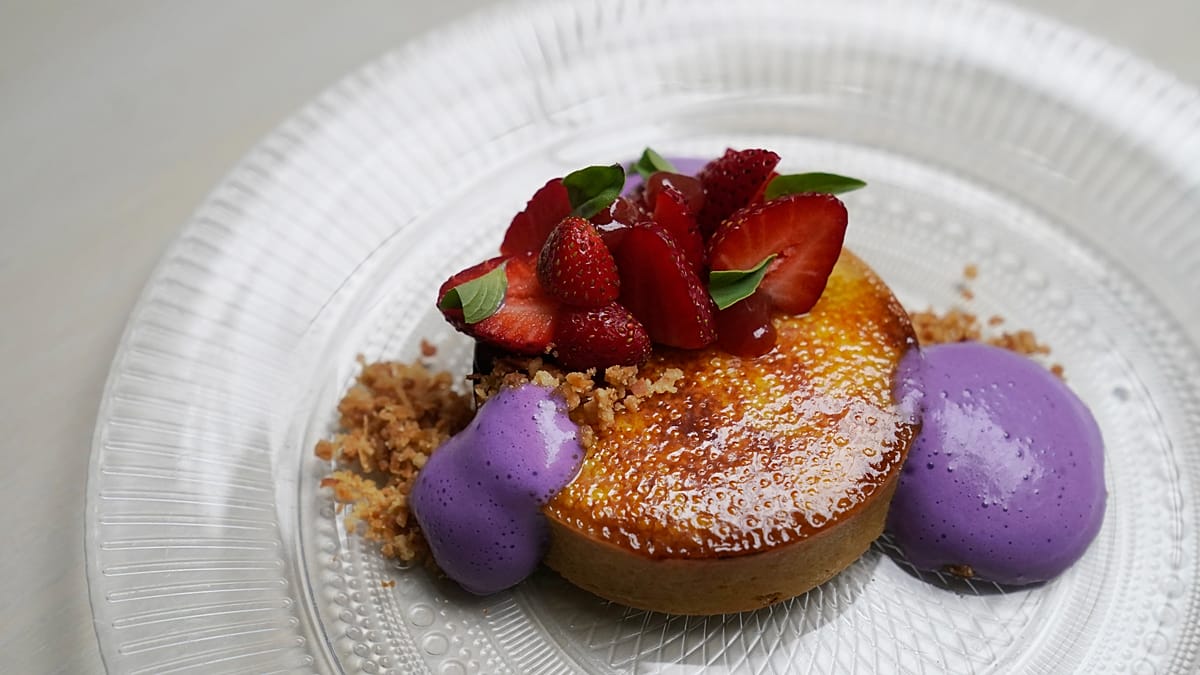
Across European cities, from Berlin to Paris, a striking purple hue is appearing in coffee cups and pastry displays. This color comes not from artificial dyes but from ube, a purple yam native to the Philippines, which is being hailed as the next matcha. The tuber, pronounced "oo-beh," has been a staple in Filipino cuisine for centuries, but its global journey is now reshaping menus in the continent's cafes and bakeries.
What Is Ube and Why Is It Trending?
Ube, also known as water yam or purple yam, belongs to the yam family and is distinct from purple sweet potatoes. Its deep violet to lavender flesh provides a natural, Instagram-worthy color without additives. In Europe, it is commonly available as purée, powder, paste, or syrup, often sourced from Asian supermarkets. According to Der Feinschmecker, ube's flavor is mild and nutty, with notes of vanilla and pistachio, and a natural sweetness reminiscent of cooked carrot or sweet potato. Unlike matcha, which can be divisive due to its grassy bitterness, ube is broadly appealing, giving it a strategic edge in culinary trends.
The managing director of the food marketing agency Spoonful, quoted in Lebensmittel Zeitung, noted that ube "looks radically new with its purple colour, but tastes of things we have loved since childhood." This accessibility has driven its adoption in patisserie, where macarons, cheesecakes, ice cream, and chiffon cakes gain both flavor and spectacle from the tuber.
Ube in European Cafes and Kitchens
The most visible sign of the trend is the ube latte. Major chains like Starbucks and Costa Coffee have added ube-flavored drinks to their menus in several European markets. The preparation involves mixing ube powder with hot water, then adding frothed milk or a plant-based alternative and espresso. In summer, iced versions are popular, their cool purple color performing well on social media. In Germany, a branch of Edeka in Berlin has pioneered ready-made ube latte drinks at its coffee bar, while Asian supermarkets in cities like Munich and Hamburg stock the tuber in various forms. Home cooks are also experimenting with ube bread, ice cream, and the traditional Filipino ube cake, which relies on ube halaya (purée).
Health Claims and Reality
Ube's intense purple comes from anthocyanins, natural pigments with antioxidant, antiviral, and anti-inflammatory properties, according to Germany's Federal Centre for Nutrition (BZfE). A 2019 review by Wuhan Polytechnic University highlighted potential anti-tumor and liver-protective effects in lab tests, as well as benefits for gut flora. The tuber is also a source of vitamins A, C, and E, fiber, potassium, and copper. However, claims about hormonal effects due to diosgenin, a progesterone precursor found in yams, are overstated. The BZfE stresses that the body cannot convert dietary diosgenin into progesterone, so consumers should not expect hormonal benefits.
The Dark Side of the Hype
The trend has a significant downside. "Whenever suddenly far more of a food is needed than before, it destroys long-established farming structures," warned Britta Klein from the BZfE. "This time it is happening in the Philippines. Hypes amplified by social media are largely responsible for such developments." Rising demand is altering agriculture in the Philippines and tempting other tropical countries in Asia and Africa to start cultivating ube. For the European market, this means a product with a long supply chain and a poor climate footprint, raising questions about sustainability. As social media overtakes traditional outlets as a primary news source, such trends can spread rapidly, amplifying both benefits and harms.
While ube offers a novel and visually appealing ingredient for European consumers, its rise mirrors other global food fads that strain local economies and environments. The challenge for the continent will be balancing culinary curiosity with responsible sourcing, ensuring that the purple yam's popularity does not come at an unacceptable cost.