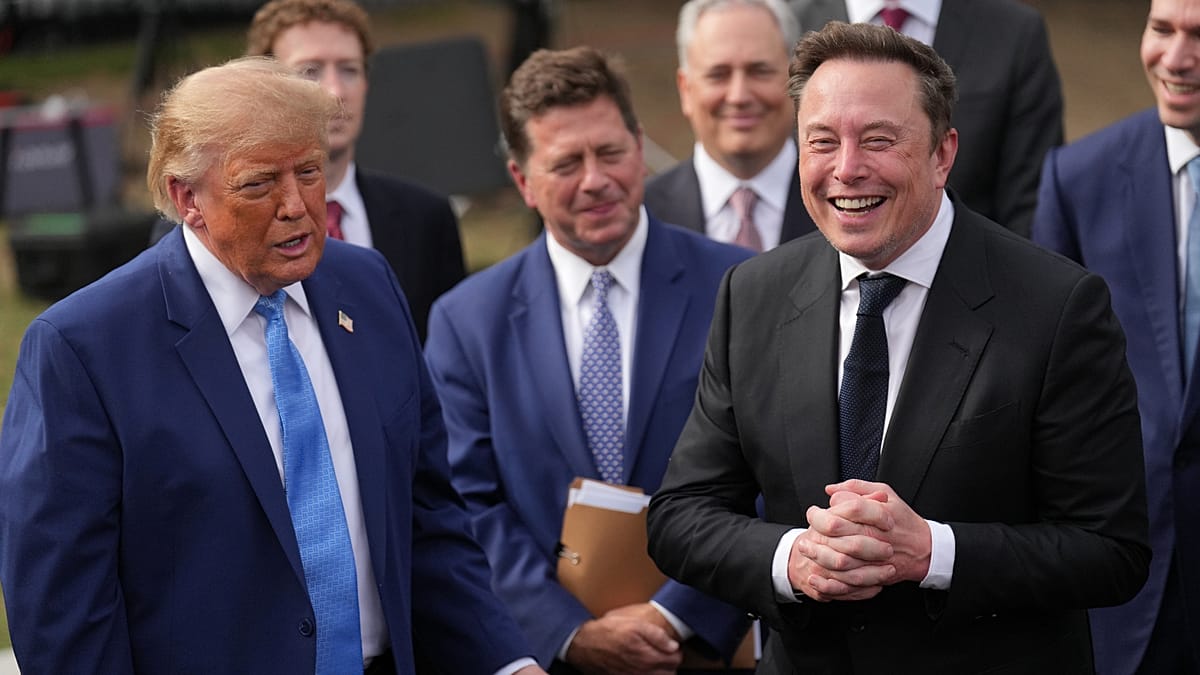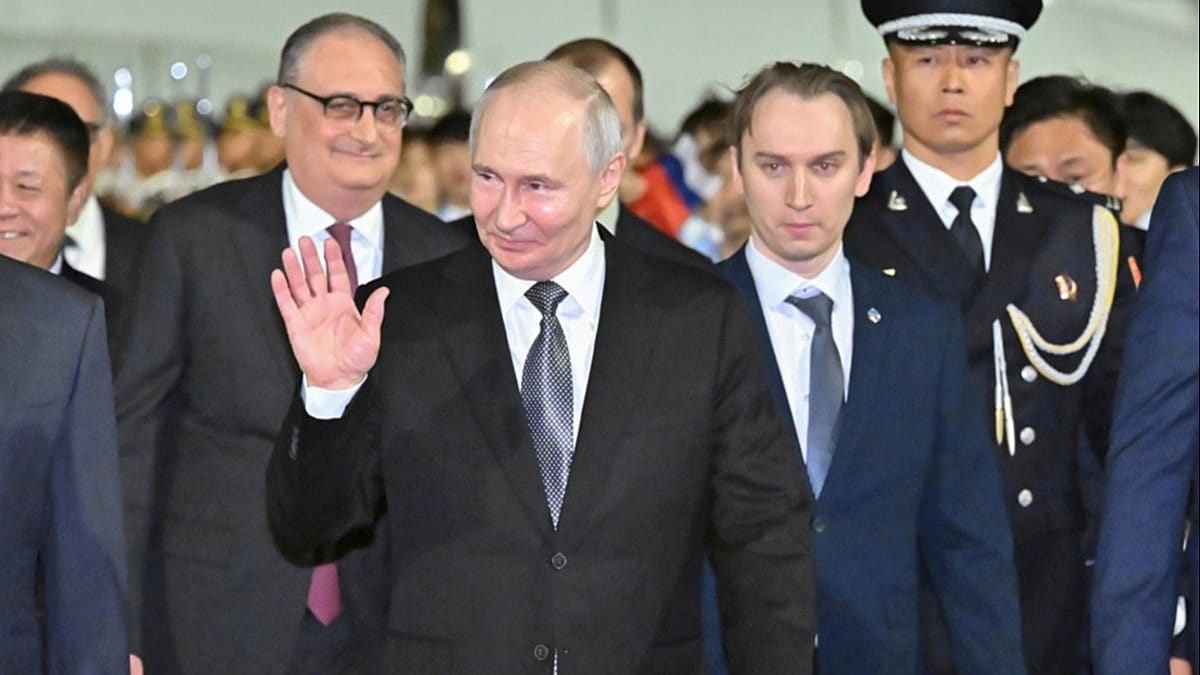
Russian President Vladimir Putin arrived in Beijing on Tuesday evening for a two-day state visit, just days after US President Donald Trump concluded his own high-profile trip to the Chinese capital. The timing underscores Beijing’s delicate balancing act between its long-standing strategic partnership with Moscow and its desire to manage the world’s most consequential bilateral relationship with Washington.
Putin’s plane touched down at Beijing Capital International Airport, where he was greeted by Chinese Foreign Minister Wang Yi and an honour guard. Young people in light blue shirts waved Chinese and Russian flags, chanting “Welcome, welcome, warmly welcome!” — a scene reminiscent of the carefully choreographed welcomes that have become a hallmark of Xi Jinping’s diplomacy.
The visit coincides with the 25th anniversary of the Sino-Russian Treaty of Friendship, signed in 2001. The Kremlin has said the leaders will discuss economic cooperation as well as “key international and regional issues.” On the agenda are the wars in Ukraine and Iran, energy disruptions caused by the closure of the Strait of Hormuz, and the broader global fallout from these conflicts.
China’s Diplomatic Two-Step
For Beijing, the back-to-back visits by Trump and Putin represent a test of its ability to maintain stable ties with both powers. During Trump’s stay, Xi described the US-China relationship as the world’s most important and called for the two countries to see each other as partners rather than rivals. By the end of that summit, the two sides agreed to work on a new framework for “a constructive China-US relationship of strategic stability.”
“The Trump visit was about stabilising the world’s most important bilateral relationship; the Putin visit is about reassuring a long-standing strategic partner,” said Wang Zichen, deputy secretary-general of the Beijing-based think tank Center for China & Globalisation. “For China, these two tracks are not mutually exclusive.”
Kremlin spokesman Dmitry Peskov said over the weekend that Putin’s trip would also allow Russia to receive direct updates on the US-China talks and exchange views with Beijing. Yuri Ushakov, a Russian presidential aide, insisted there was “no connection” between the two visits, noting that Putin’s trip had been agreed in advance, several days after a video conference between Putin and Xi on 4 February.
European diplomats are watching closely. The European Union has been preparing defensive measures as trade tensions with China escalate, and Brussels and Washington remain at odds over a potential trade deal as Trump’s deadline approaches. The G7 finance talks in Paris this week are focusing on the energy shock and the enforcement of Russian sanctions, which Beijing has largely ignored.
Trade and Energy Ties Deepen
China has become Russia’s top trading partner since the full-scale invasion of Ukraine in 2022, and the largest customer for Russian oil and gas. Ushakov said Moscow’s oil exports to China grew by 35% in the first quarter of 2026, and described China as a “responsible consumer.” Russia is also one of the biggest exporters of natural gas to China.
In a video address released shortly before his arrival, Putin said bilateral ties were at a “truly unprecedented level” and that the relationship plays an important role globally, according to China’s official Xinhua News Agency. Xi has previously called Putin an “old friend” — a rare diplomatic term reserved for favoured foreigners — while Putin addressed Xi as “dear friend.”
Putin last visited China in September 2025 for the Shanghai Cooperation Organisation summit in Tianjin, where he watched a military parade marking the 80th anniversary of the end of World War II. In April, Russian Foreign Minister Sergey Lavrov visited Beijing and met Xi, who described the bilateral relationship as “precious” in the current international context and said the two countries needed to strengthen and defend their shared interests.
The deepening economic ties come as the EU prepares defensive measures against Chinese trade practices and as the US and Europe continue to pressure Beijing to stop providing high-tech components for Russia’s weapons industries. So far, China has ignored those demands.
Putin is set to meet Xi on Wednesday for talks that will also cover the wars in Ukraine and Iran, as well as energy disruptions caused by the closure of the Strait of Hormuz. The outcome of these discussions will be closely watched in European capitals, where the implications for energy security and the broader geopolitical order are significant.