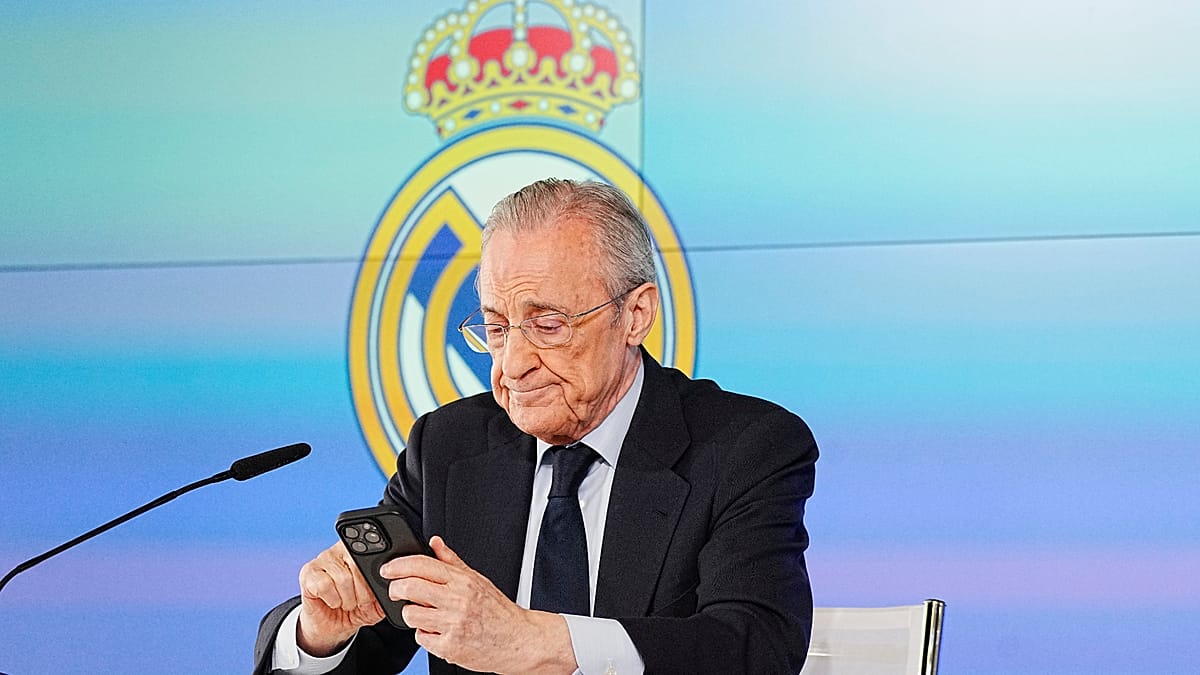
Florentino Pérez, the 79-year-old president of Real Madrid and one of the most influential figures in European football, has ignited a political and media firestorm in Spain with an explosive press conference. The event, intended to address a disappointing season, quickly devolved into a series of attacks on journalists, sexist remarks, and unsubstantiated accusations against arch-rival Barcelona.
Pérez began by announcing he would not resign despite Real Madrid failing to reach the Champions League final and losing La Liga to Barcelona. He declared the club would hold elections and that he would stand as a candidate. But it was his subsequent comments that dominated headlines across the continent.
Visibly agitated, Pérez criticised recent media coverage of internal tensions, including a reported dressing-room incident involving players Aurélien Tchouaméni and Federico Valverde. He then engaged in a heated exchange with David Sánchez de Castro of the conservative daily ABC, announcing he would cancel his subscription to the newspaper—a subscription he said his father had started—in his father's honour.
The sexism row erupted when Pérez, referring to two recent articles about the club, said: “One of them was written by a woman. I don’t know if she knows anything about football.” He later pointed to another journalist and said: “That girl there, ask a question. The rest of you are very ugly.”
Spain’s most listened-to radio station, Cadena SER, condemned the remarks as reflecting “arrogance and sexism”. The targeted journalist, María José Fuenteálamo of ABC, said she “did not expect this” and noted she had only written an opinion column. ABC itself described Pérez’s comments as “outrageous attacks” intended to “cover up the club’s failures”.
A Calculated Diversion or a Genuine Meltdown?
Some Spanish commentators argued that Pérez lost his sense of proportion. El Mundo compared his appearance to a “Trumpist exercise”, while others suggested it was a calculated attempt to divert attention from a second consecutive trophyless season. If so, the strategy may have backfired.
Pérez also accused Barcelona of corruption, calling it “the biggest scandal in football history” and claiming that “seven league titles were stolen” from Real Madrid. He announced that a 500-page dossier would be submitted to UEFA, European football’s governing body. Barcelona is reportedly considering legal action in response.
While much of the Spanish media focused on Pérez’s outbursts, some outlets highlighted what was not said. MARCA, traditionally Spain’s most widely read sports newspaper, noted that Pérez avoided any self-criticism regarding the club’s own crisis. It described the press conference as “confusing” and “chaotic”.
The incident has broader implications for European football governance and the relationship between powerful club presidents and the press. It also echoes a wider trend of populist rhetoric in public life, as seen in other European contexts. For more on how European institutions are grappling with media influence, see our coverage of the Cannes Film Festival protests against Bolloré's media influence.
As the political and media storm continues, Pérez’s future at the helm of Real Madrid remains uncertain. The club’s elections, expected later this year, will be a key test of whether his combative style still resonates with the membership. For a deeper look at the conspiracy claims and election dynamics, read our earlier piece: Florentino Pérez Claims Conspiracy, Calls for Elections at Real Madrid.