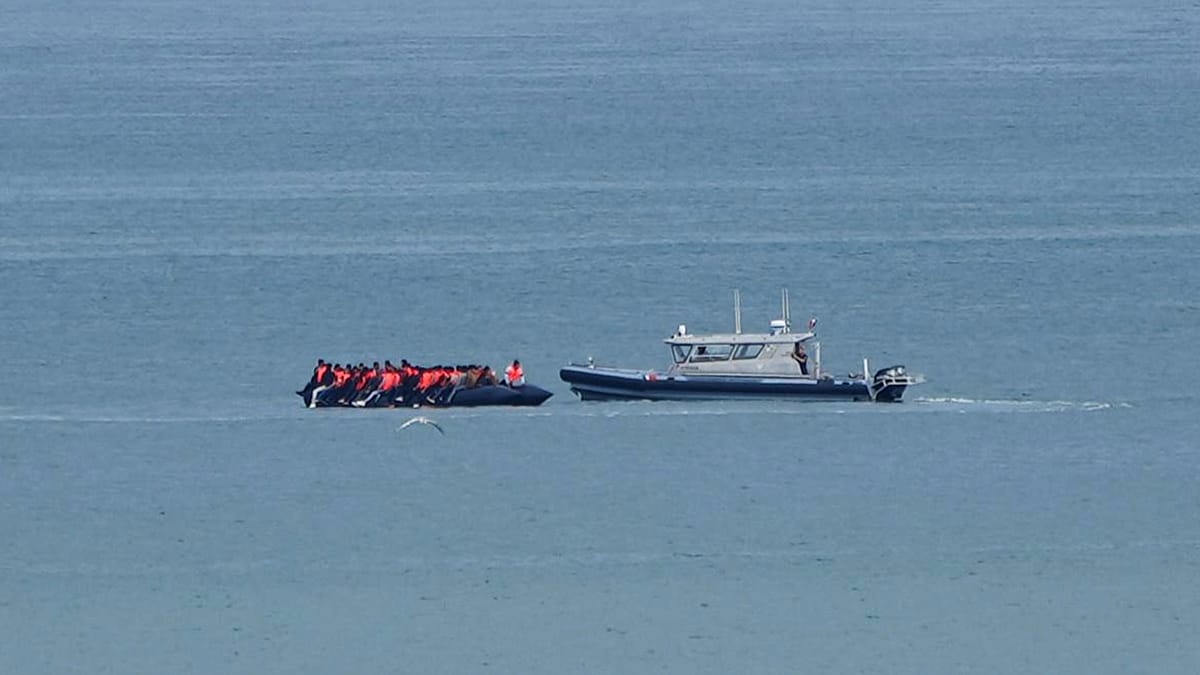
In a stark illustration of the escalating risks on one of Europe's busiest sea routes, French rescuers said on Monday that a single small boat carried 230 migrants across the English Channel to Britain — the highest number ever recorded on one vessel.
The rubber dinghy, roughly 15 metres long, departed the northeastern French coast late on Sunday amid chaotic scenes, according to the SNSM, France's voluntary lifeboat service. Among those aboard were more than 20 children, the service said in a statement.
The figure surpasses the previous record set just last month, when 165 people made the crossing in a single boat. Jean-Marc Lamblin, director of the SNSM's local branch, described the development as "a new and sad record for the number of people crammed onto these flimsy boats."
French lifeboats escorted the dinghy to the boundary of British waters, where UK rescue services took over, Lamblin told the AFP news agency. He noted that the 15-metre vessels have become increasingly common over the past three months.
"We recently passed the record of 150 people; we didn't think there could be more, but now there really are no limits anymore," he said.
Deadly risks and political fallout
The crossing comes just days after a UK-bound dinghy carrying more than 150 people capsized in the Channel after its engine caught fire, triggering a major search-and-rescue operation. Such incidents highlight the perilous nature of the journey, which has become a defining political issue in Britain.
The UK interior ministry, while not confirming the exact number aboard the latest boat, condemned "the reckless and dangerous tactics employed by the criminal gangs facilitating these crossings." A spokesperson for Prime Minister Andy Burnham said it was "shocking" to see "appalling images ... of young babies being put into these unseaworthy craft."
"They show the reality behind the ruthless smuggling gangs that are prepared to risk human lives for profit," the spokesperson added.
Britain has struggled for years to curb the crossings, which have brought tens of thousands of migrants annually to the shores of southeast England. Since taking office in 2024, the centre-left Labour government has pledged to "smash the gangs" behind the trade, including through closer cooperation with Paris.
In April, London and Paris signed a new three-year agreement under which Britain will pay up to €766 million to bolster French law enforcement efforts along the coast. The UK government argues the strategy is working, pointing to a 42% year-on-year drop in small boat arrivals in the first half of 2026, to just over 14,000 people.
However, recent weeks have seen a sharp uptick, with a daily record for the year set on 29 July when 752 people crossed. The latest single-boat record underscores the adaptability of smuggling networks, which continue to pack ever larger numbers into increasingly unsafe vessels.
The situation is not unique to the Channel. Across the continent, migration routes remain under pressure, from the western Mediterranean approaches to Ceuta to the Balkan corridors. European governments are grappling with how to balance border security with humanitarian obligations, a debate that shows no sign of easing.